
One Piece Card Game market 2026: the underlying trends to buy smart
One Piece Card Game market in 2026: what holds value, what fades, Japanese vs English, reprints, and a clear method to buy smart.
Published on November 13, 20267 min read

Key points
- In 2026, the One Piece Card Game market is mature and segmented: prices move set by set and card by card, never as a single block.
- Playable cards (C, UC, R) follow the meta and reprints, while high rarities (parallels, SEC, SP, alternate art leaders) generally hold up better.
- Sets release in Japan first: the Japanese version sets the pace for prices and generally remains the most consistent choice for a collection.
- Buying smart in 2026 means targeting a specific version as a single card, avoiding the release peak, checking condition (A, A-, B, C) and working out the total cost.
Maybe you have followed the One Piece Card Game for a few years, or maybe you are just getting started, and one question keeps coming back: in 2026, is it still a good time to buy, and above all, what should you buy? Sets keep coming, parallel cards keep multiplying, some prices have climbed and then pulled back, and it is getting hard to tell a real trend from a passing hype. Alarmist takes sit next to easy promises, and neither helps you decide.
Our answer is clear: the 2026 market is a mature, segmented market, no longer one where everything rises at once. Common playable cards erode with reprints and meta shifts, while rare, iconic and well kept pieces, especially in Japanese, keep collectors interested. To buy smart, target the exact card rather than luck, buy outside release peaks and take care of condition. Here are the underlying trends, followed by the method.
In this article
- 1. Where does the One Piece Card Game market stand in 2026?
- 2. Which cards hold their value in 2026, and which ones fade?
- 3. Japanese or English cards: will the gap last?
- 4. Booster boxes and preorders: what role in a mature market?
- 5. Reprints and the price cycle: how do you avoid buying at the peak?
- 6. How do you buy smart in 2026: which method should you follow?
- 7. Why do condition and storage matter more than ever?
Where does the One Piece Card Game market stand in 2026?
The game is no longer new. The Japanese catalogue now spans a long run of main sets, from OP01 to OP18 in our database, plus extra boosters (EB01 to EB05), Premium Boosters (PRB01 and PRB02), P promo cards and more than thirty starter decks, up to ST36. That volume changes the nature of the market: supply is wide, players and collectors alike have to choose, and attention is spread across far more cards than in the early days.
The direct consequence is that the market no longer behaves as one block. The earliest sets often hold a special status among collectors, because they mark the start of the game and their rare cards circulate less. Recent releases follow a more predictable cycle, with strong demand at launch followed by a settling period. Talking about the price of the One Piece Card Game as a whole makes little sense now: you have to think set by set, and card by card.
Japan remains the starting point. Every set releases there first, and that is where the first prices take shape. Europe follows with a delay and its own demand, often focused on Japanese cards for their print quality and their standing among collectors.
Which cards hold their value in 2026, and which ones fade?
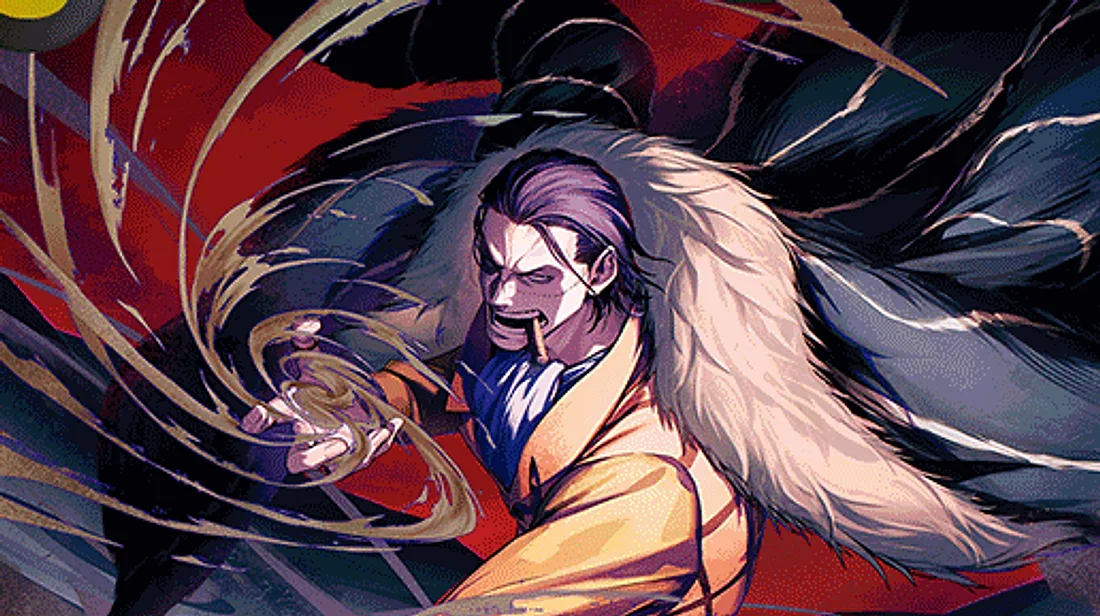
The clearest trend is the split between playable cards and collector cards. A common or rare card used in tournaments can see demand surge when it enters a dominant deck, then drop as soon as the format shifts or a reprint arrives. Its price follows the meta, not collecting, and that makes it risky ground if you want a lasting piece.
On the other hand, cards that combine genuine rarity with a strong character tend to hold up better: parallel or alternate versions of major characters, Secret Rares, SPs, alternate art leaders and rare manga cards. Their supply does not grow at the same pace as base cards, and their demand comes from collectors who keep what they buy. This is not a guarantee, it is a tendency: even a rare card can fall if the excitement fades or if it was overpaid at launch.
The table below sums up the logic by segment. It gives no prices, because those move all the time; it gives criteria so you know what kind of ground you are on before you buy.
| Segment | Price driver | Sensitivity to reprints | Buyer profile |
|---|---|---|---|
| Playable commons and rares (C, UC, R) | Tournament meta | High | Player |
| Super Rare (SR) | Meta and character | Medium | Player and collector |
| Parallels and alternates | Character and artwork | Low to medium | Collector |
| Secret Rare (SEC) and SP | Rarity and character | Low | Collector |
| Alternate art leaders (L) | Artwork and leader popularity | Low to medium | Collector and player |
| Promos (P) | Distribution method and character | Depends on the promo | Collector |
Japanese or English cards: will the gap last?
In 2026, the Japanese version keeps its structural strengths. It releases first, so you can play and collect before everyone else; its print and finish quality has a strong reputation; and it benefits from an international collector base. The starting price is often gentler in Japan because local supply is plentiful, but access from Europe involves fees and a reliable intermediary.
The English version has its own logic: tournament players in Europe and America look for it, and its price reacts strongly to the local meta. For a collector who wants to display or keep cards, Japanese generally remains the most consistent choice, especially since Japanese collector cards keep a broad resale market. The price gap between the two is not fixed: it depends on each card, and you have to compare card by card.
Booster boxes and preorders: what role in a mature market?
A Japanese booster box contains 24 packs of 6 cards. It remains the joy of opening and the most direct way to discover a set. But in 2026, with such a rich catalogue and highly sought after high rarities, opening packs to chase a specific card is rarely the most economical strategy: luck decides, and most of the cards you pull are base cards.
A sealed box plays a different role: that of a sealed product some collectors keep intact. That choice requires a long horizon, careful storage and acceptance of real risk, especially if a reprint comes. Preorders mainly serve to get a set right at release without chasing stock. On OPCG.Shop, a preorder is paid in full and fully refunded if the product does not reach us.
- You enjoy opening and discovering a set: booster box or packs.
- You want a specific card: buy it as a single.
- You keep sealed product long term: closed box, careful storage, long horizon.
- You want a set from day one: preorder from a reliable seller.
Reprints and the price cycle: how do you avoid buying at the peak?

A set's cycle often follows the same pattern. At announcement and release, excitement pushes the prices of chase cards upward because supply is still thin. In the following weeks, heavy pack opening puts more cards into circulation, and many prices settle. After that, each card finds its level, depending on its real rarity and how long the interest around it lasts.
Reprints add a layer of uncertainty. They mainly aim to keep products available and weigh first on base cards and playable cards, much less on high rarities. Starter decks and some special products also reuse existing cards, sometimes with new artwork: the same card can therefore exist in several versions, and what matters is the code, the rarity and the exact artwork.
Buying smart therefore means avoiding the first days if value is your goal, unless it is a card you absolutely want right away, and accepting that the fair price only becomes readable after the euphoria phase.
How do you buy smart in 2026: which method should you follow?

The best protection in a segmented market is a simple, repeatable method. It promises no profit; it limits costly mistakes, which are almost always the same: buying in a rush, buying a name rather than a version, ignoring condition and total cost.
For a European collector, buying Japanese single cards is often the most direct route to the card you want. That is how our Japanese cards work: every card listed is genuinely for sale in Japan, bought to order, with its stated condition and its price in euros including VAT. Shipping costs €4.20, free from €100, and is only paid once per order.
- Define your goal: playing, collecting a character, completing a set or displaying.
- Choose the exact version: code, rarity, artwork.
- Watch the price over several weeks, outside the release peak.
- Check the stated condition (A, A-, B, C) and what it means for your use.
- Work out the total cost, shipping included, before confirming.
Why do condition and storage matter more than ever?
The more a market matures, the more demanding buyers become. On a collector card, the gap between a near mint copy and a marked copy widens, because collectors who keep their cards want the best ones. Conditions stated by Japanese shops range from A (near mint) to C (fair): choosing A or A- for a display piece and B for a budget card is already a value decision.
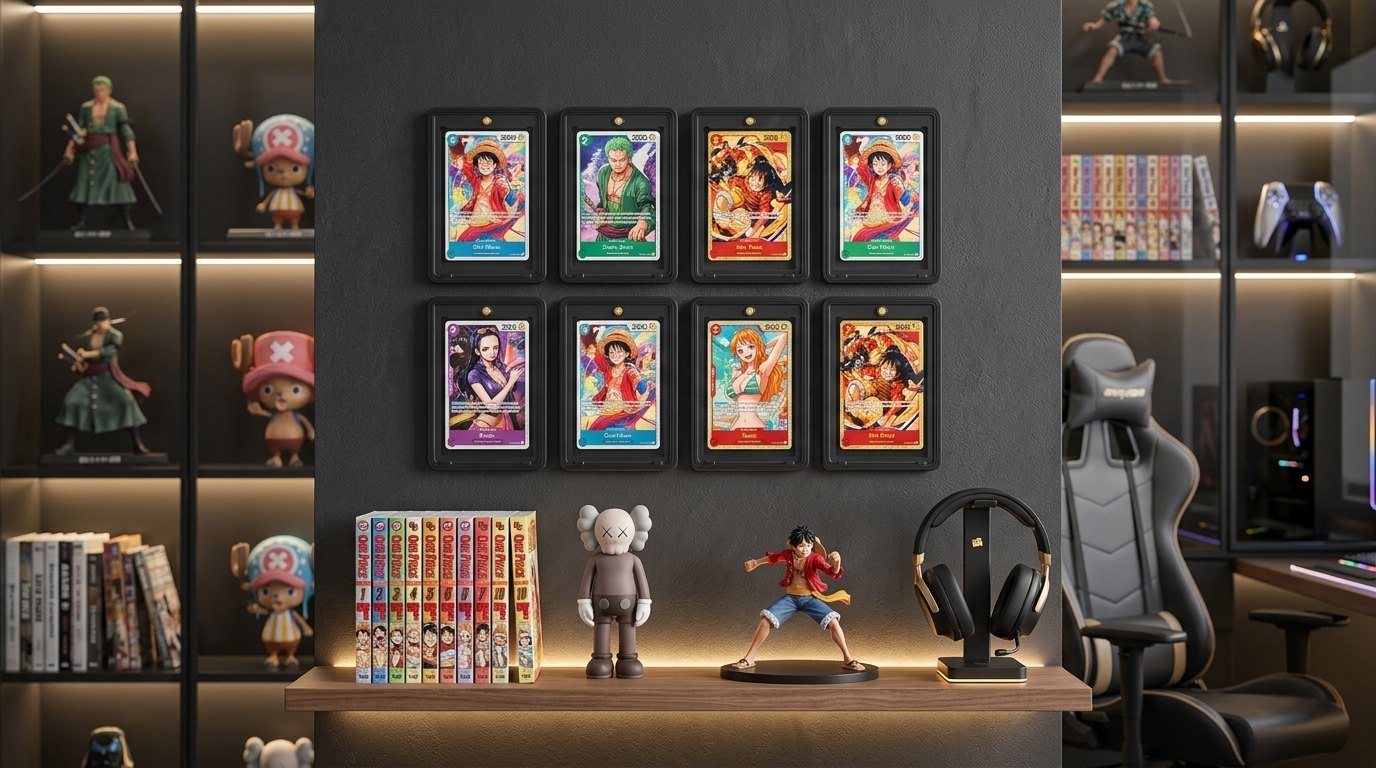
Once the card arrives, everything depends on storage: a sleeve, rigid protection, away from direct light and humidity. Our aluminium one-touch magnetic frame with double glass, at €24.80, protects the card while displaying it; frames snap together face to back to stack and attach side by side on the wall with the adhesive magnetic strip, no drilling required.
Displaying your cards is not just an aesthetic detail: a visible, protected and carefully chosen collection is also a collection you maintain, document and resell more easily when the day comes.
Verdict: the One Piece Card Game market in 2026 is neither a bubble about to burst nor a money machine; it is a mature market where selection makes all the difference. Playable cards follow the meta and reprints, while rare and iconic Japanese pieces generally keep collectors interested, as long as they are bought at the right time and in good condition. Your next step: pick a character or set you care about, identify the exact version you want, then compare it among our Japanese single cards before protecting it in a frame.
Frequently asked questions
Will the One Piece Card Game market crash in 2026?
Nobody can predict that with certainty, so be wary of anyone who claims to. What we see is a segmented market: common playable cards can drop sharply, while rare and sought after pieces generally hold up better. Buying cards you like, in a specific version, limits the risk.
Is it still a good time to buy One Piece cards in 2026?
Yes, if you buy with a method: a specific version, outside the release peak, in a condition you have chosen. A mature market offers more choice and often more readable prices than at launch. Buy for the collection first, not for an expected profit.
Are Japanese cards better than English ones in 2026?
For a collection, the Japanese version generally remains the most sought after: first release, renowned finish, international market. For tournament play in Europe, the English version may be required depending on the format. Always compare card by card, because the gap varies.
Do reprints lower the value of One Piece cards?
They mainly weigh on base cards and playable cards, whose supply increases. High rarities are generally less affected. Always check the code, rarity and exact artwork to know which version you are buying.
Read next
 Value and investing
Insuring a card collection: protect and cover your valuable One Piece cards
November 13, 20267 min read
Home insurance, scheduled valuables, inventory and protection: the method to insure a trading card collection without nasty surprises.
 Value and investing
One Piece anniversary card value: lasting collectible or passing trend?
November 13, 20267 min read
One Piece anniversary cards: what keeps their value, what is just hype, and how to buy the Japanese version at the right moment.
 Value and investing
One Piece card ex leader value: rarity and worth of parallel leaders
November 13, 20267 min read
Parallel One Piece leaders: what really drives their value, how to check the version and which condition to target before buying Japanese.