
One Piece card ex leader value: rarity and worth of parallel leaders
Parallel One Piece leaders: what really drives their value, how to check the version and which condition to target before buying Japanese.
Published on November 13, 20267 min read
Key points
- A One Piece leader card exists in a standard version, rarity L, and for many characters in a parallel version with alternate art: the parallel is where the collector value sits.
- The value of a parallel leader depends mainly on four criteria: the character's popularity, the quality of the artwork, the card's condition and, more temporarily, its place in competitive play.
- The standard and parallel versions of the same leader share the same card code: only comparing the artwork proves that a card is really the parallel.
- A Japanese parallel leader in A or A- condition should be kept sleeved, in a rigid double-glass frame, away from direct sunlight, to preserve the condition that makes its value.
You have spotted a leader in a special version, called an “ex leader”, “alt leader” or “parallel leader” depending on the seller, and the price surprises you: sometimes close to a common card, sometimes far above it. You want to know what it is really worth, whether it deserves a place in your collection and how to avoid paying parallel prices for a standard card.
The short answer: a leader gains value when it is the parallel version, depicts a highly sought-after character, is in excellent condition and, as a bonus, has made its mark on competitive play. A standard leader stays an affordable card made for playing. This guide gives you the criteria to value a Japanese leader, the method to check its version and the right way to store it.
In this article
- 1. What is a parallel leader, and why is it worth more than a standard one?
- 2. Which criteria drive the value of a parallel leader?
- 3. Standard, parallel or promo leader: which version for your collection?
- 4. How do you check that a leader really is a parallel before buying?
- 5. Which condition should you target for a valuable leader: A, A- or B?
- 6. Does a parallel leader gain value over time?
- 7. How should you display and protect a parallel leader?
What is a parallel leader, and why is it worth more than a standard one?
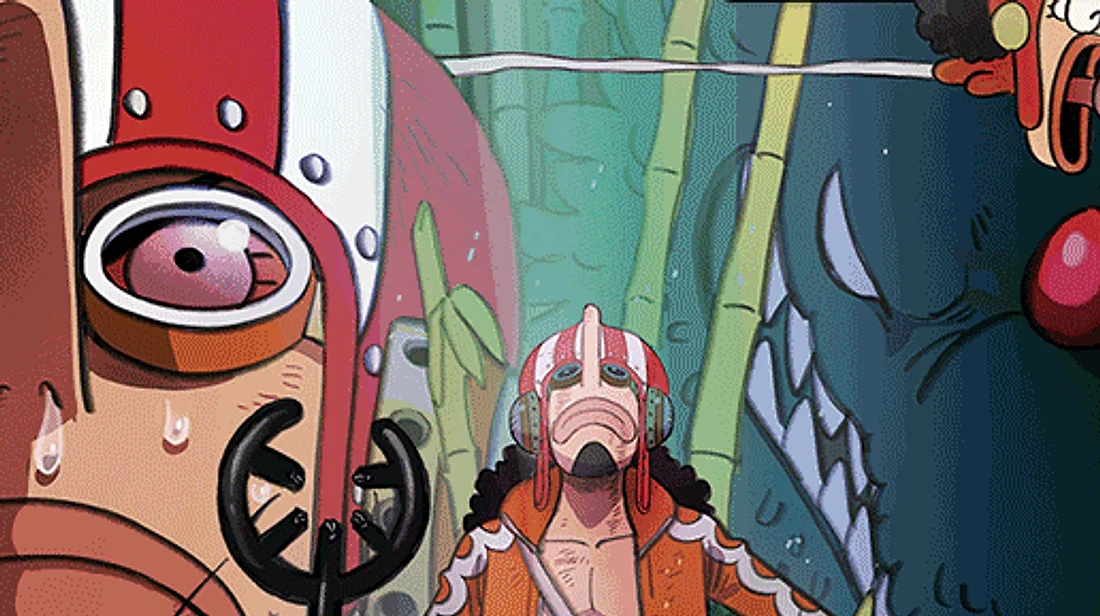
In the One Piece Card Game, every deck is built around a leader card, rarity L. It is not played like other cards: it stays in play from start to finish, sets the deck's colour or colours and shows your life total. Each Japanese set brings its own leaders in a standard version, and many of them also get a parallel version with alternate art, found in boosters.
The standard version is the most common: it also appears in starter decks or in several copies when you open a display, and its main purpose is play. The parallel has exactly the same effects and the same code, but different artwork, often wider, more detailed and with a shiny finish. It is much rarer to pull, and it is the one collectors chase.
In practice, two cards with identical text can have very different prices. The gap does not come from power in the game, but from the rarity of the version and the appeal of its art. That is the very first thing to establish before talking about value: which version are you looking at?
Which criteria drive the value of a parallel leader?
Not all parallel leaders are equal. Two cards from the same set, with the same rarity, can trade at very different levels. What makes the difference comes down to a few simple criteria you can check yourself before every purchase, without any special tool.
The character weighs the most: Luffy, Zoro, Shanks, Ace or the great villains of the story attract far more buyers than a secondary character. Then comes the artwork: a memorable scene, a full-art illustration, a style the community loves. Finally, condition can move the price of the same leader a lot, especially on a shiny finish.
Competitive play adds another layer: a leader that sees heavy tournament play in Japan also attracts players who want a beautiful version of their main card. But this effect is volatile and fades when the leader loses its place in the format. For a lasting collection, character and artwork matter far more than the current meta.
- Character: popularity in the story and among collectors
- Artwork: scene, style, look of the finish
- Version: parallel, promo (P) or standard (L)
- Condition: A, A-, B or C as listed by the Japanese shop
- Tournament use: a demand bonus, rarely lasting
- Set: older or recent, reprinted or not
Standard, parallel or promo leader: which version for your collection?
To choose well, you need to know what each version offers. The standard leader is the entry point: inexpensive, it lets you play or have the character in a binder. The parallel is the collector's version above all. Promo leaders, coded P, follow their own logic: their rarity depends on how they were distributed, through tournaments, events or special products.
For a display, the parallel of a character you love remains the best choice: it combines rarity, artwork and visual impact. The standard makes sense to complete a set or to play. A promo is worth a look when it is tied to a specific event, but you need to check its origin carefully before buying.
One last nuance: some sets offer several special versions of the same character. For a coherent collection, many collectors pick a common thread, such as one character across all their leader versions, or all the parallel leaders of a single set. It helps you buy with a method rather than on impulse, and judge each price better.
| Criterion | Standard leader (L) | Parallel leader | Promo leader (P) |
|---|---|---|---|
| Availability | Common (boosters, starter decks) | Rare to pull | Depends on distribution |
| Artwork | Base version | Alternate, often full art | Varies, sometimes unique |
| Use for playing | Yes | Yes, same effect | Yes, if legal in the format |
| Appeal for a display | Low | High | Depends on the character |
| Risk of confusion when buying | Low | High, with the standard | Medium, origin to check |
How do you check that a leader really is a parallel before buying?
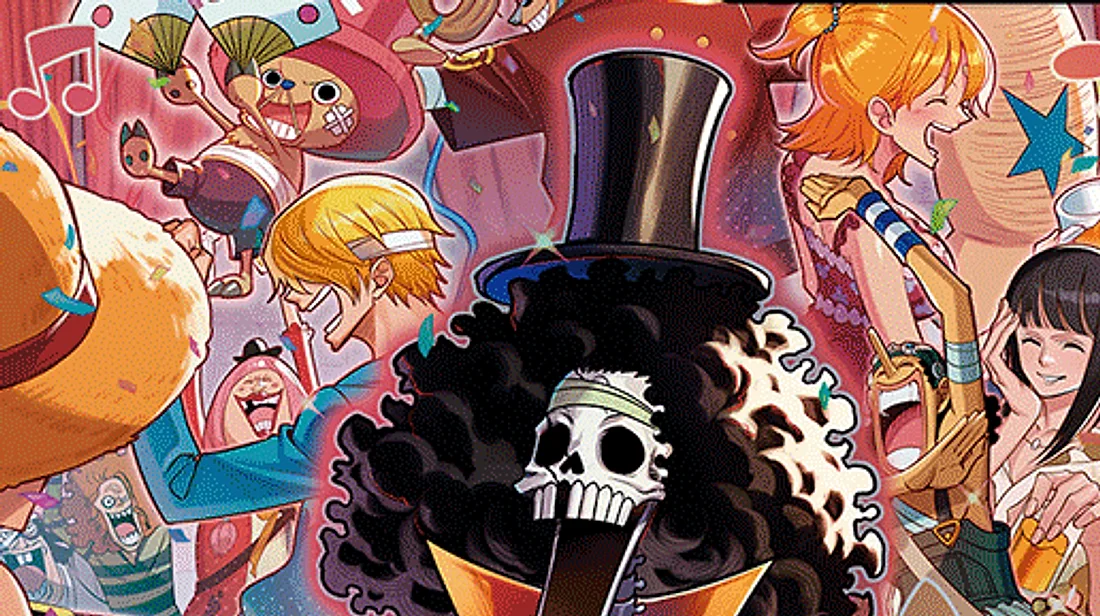
This is the most common trap: a poorly titled listing, a tiny photo, and you receive the standard version paid at the price of a parallel. The card code is not enough, since standard and parallel share the same one. The check has to go through the artwork.
On our Japanese cards, each listing shows the card actually for sale in Japan with its stated condition, which removes that uncertainty. Elsewhere, apply the method below every time, especially for an expensive leader.
Also keep a record of every purchase: a screenshot of the listing, the photos you received, the stated condition. If you ever resell or have your collection valued, these details make everything easier, and they let you compare what you paid with completed sales observed later.
- Note the card code and the set it comes from.
- Find the artwork of the standard version of that code in an official card database.
- Compare: the parallel shows different artwork, often extended, with a shiny finish.
- Ask for a sharp photo of the front and back in natural light.
- Check the language: Japanese text for a Japanese card.
- Check the stated condition and look at the corners and surface in the photo.
Which condition should you target for a valuable leader: A, A- or B?
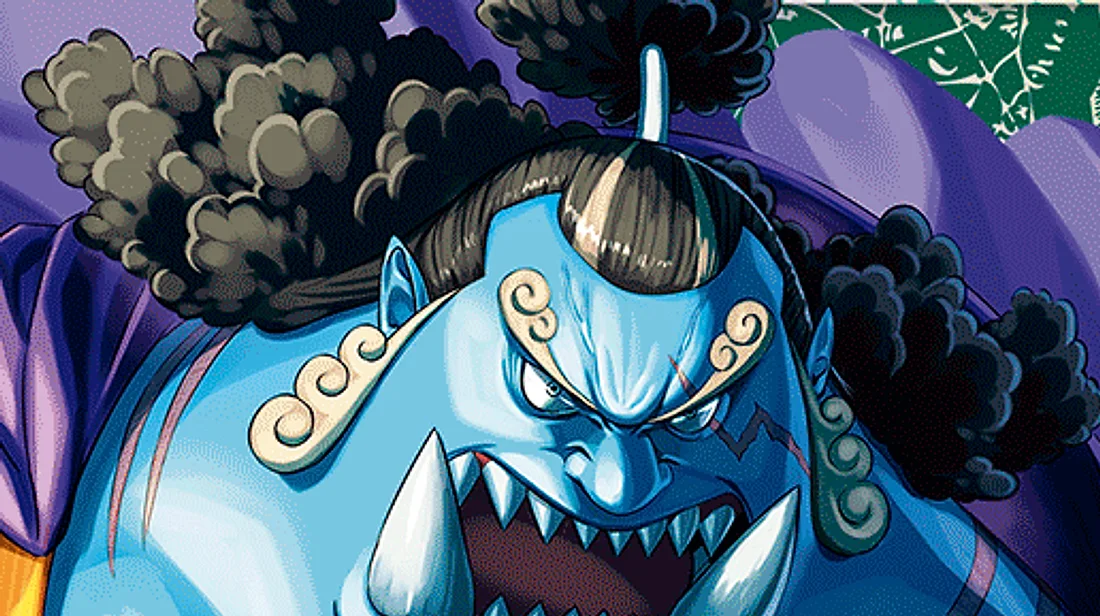
Japanese shops state a condition: A for a near-mint card, A- for very good, B when wear is visible, C for fair. On a parallel leader, the shiny finish makes scratches and surface marks more visible than on a standard card, which widens the gap between grades.
For a display piece, aim for A or A-: the price difference with B is often justified for a card you will look at every day. If you might have it graded one day, only A condition really makes sense. B suits a tight budget or a leader meant to be played in a sleeve.
Once the card arrives, protect it right away: a fitted sleeve, then a rigid holder. This simple step preserves the condition you paid for, and therefore the card's value.
Does a parallel leader gain value over time?
Sometimes, not always. Parallel leaders of major characters, from older sets and in good condition, tend to hold up better than the rest of the market, because supply shrinks as cards are opened, played or damaged. But nothing is guaranteed, and the past promises nothing.
Several factors can push a price down: a reprint, a better-looking new version of the same character, a leader dropping out of the competitive format or simply a trend running out of steam. A leader bought at the peak of the excitement after a release is the riskiest case.
The sensible method: buy a leader because you love it, at the price of completed sales, in good condition, and treat any rise as a bonus. It is not an investment product, it is a collector's piece. That mindset protects both your budget and your enjoyment.
How should you display and protect a parallel leader?
A parallel leader is made to be seen. Leaving it at the back of a binder means giving up what makes it special. The right holder is a rigid frame that protects both sides, puts no pressure on the card and shows the whole artwork.
Our aluminium one-touch magnetic frame, with double glass, in black or white, costs €24.80 each, and if you buy 2 the 3rd is free. The frames stick front to back to stack, stand upright like books and attach side by side on the wall with an adhesive magnetic strip, no drilling needed.
Finally, think about light: avoid direct sunlight, which can fade ink over time. A shelf or a wall away from a window is enough to keep a leader in the condition you received it in, for years.
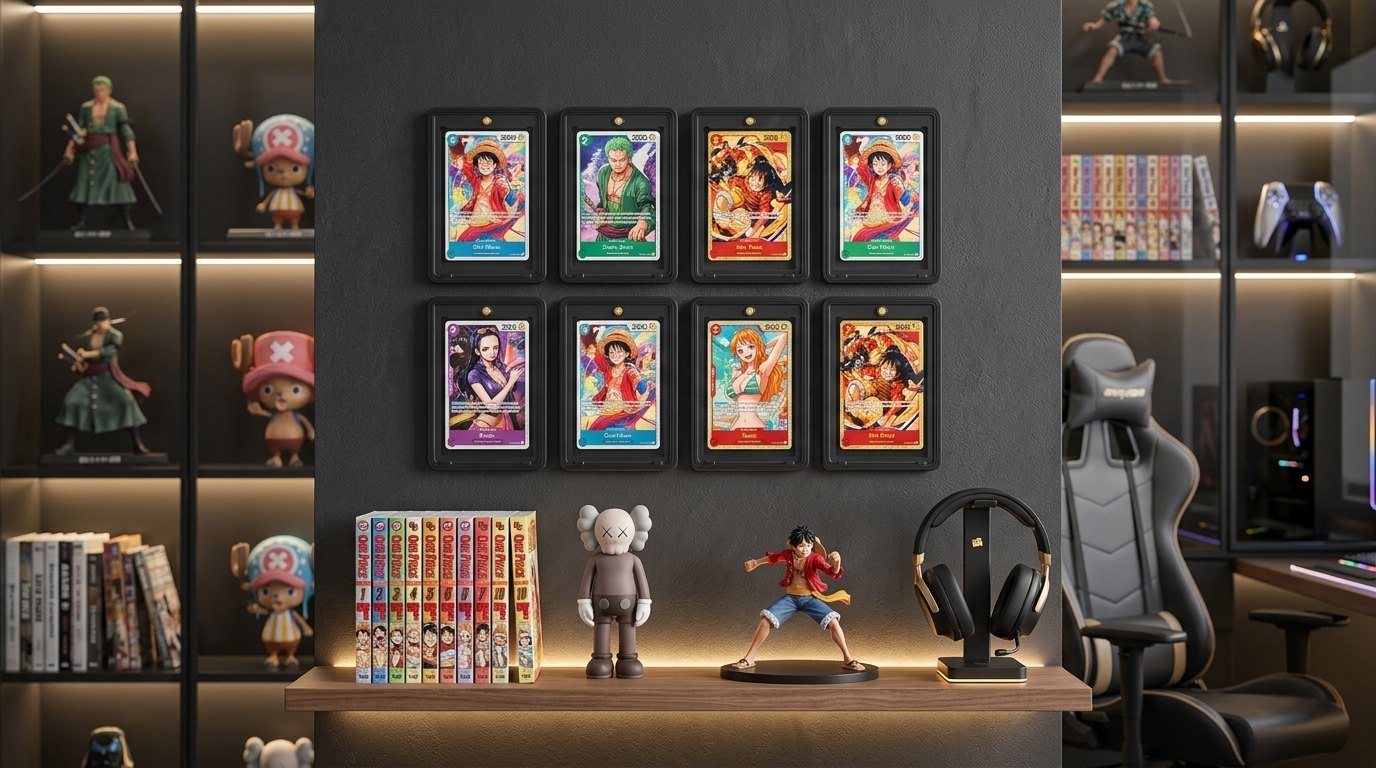
The verdict: a leader is only worth a lot in its parallel version, on a sought-after character and in excellent condition; the standard version remains an affordable game card. Before buying, compare the artwork with the standard version of the same code, rely on completed sales and aim for A or A- condition. Your next step: browse our Japanese single cards, pick the leader of your favourite character and plan a frame to protect it as soon as it arrives. Shipping costs €4.20, free from €100.
Frequently asked questions
What does “ex leader” mean for a One Piece card?
It is not an official rarity in the game: sellers use the term loosely to describe a leader in a special version. Rely instead on the stated rarity (L or P) and compare the artwork with the standard version of the same code.
Can a standard leader be worth a lot?
Generally not: it is widely available and mainly used for playing. Its price may rise briefly when the leader dominates tournaments, then drop again. For collector value, go for the parallel version.
Should you get a parallel leader graded?
Only if it is in A condition and its value justifies the cost and waiting time of grading. For a card displayed at home, a rigid double-glass frame protects it very well. There is also a version of our frame that fits a PSA slab, at €34.80, sold empty.
Japanese or English leader: which should you choose for a collection?
Both have their collectors. The Japanese version comes out first and is often more accessible to buy from Japan. For a collection, pick one language and stick to it: consistency matters more than the language itself.
Read next
 Value and investing
Insuring a card collection: protect and cover your valuable One Piece cards
November 13, 20267 min read
Home insurance, scheduled valuables, inventory and protection: the method to insure a trading card collection without nasty surprises.
 Value and investing
One Piece anniversary card value: lasting collectible or passing trend?
November 13, 20267 min read
One Piece anniversary cards: what keeps their value, what is just hype, and how to buy the Japanese version at the right moment.
 Value and investing
Japanese One Piece card resale value in Europe: the real market
November 13, 20268 min read
A Japanese One Piece card resells well in Europe when it is a collector piece. Which cards find buyers, who buys them, and the math to do first.