One Piece anniversary card value: lasting collectible or passing trend?
One Piece anniversary cards: what keeps their value, what is just hype, and how to buy the Japanese version at the right moment.
Published on November 13, 20267 min read
Key points
- A One Piece anniversary card gets its value from how widely it was actually distributed, the character, the artwork and the condition, not from the word anniversary or a commemorative logo alone.
- Commemorative cards that are widely distributed or reprinted often drop after the release peak, while cards limited to an event or a short period generally hold up better.
- For a widely distributed Japanese anniversary card, it is usually wiser to wait until the release hype fades and to compare several listings before buying.
- Condition A or A-, plus a sleeve and a closed frame, preserves the appeal of a commemorative card, whether you buy it for your collection or for display.
You have spotted a One Piece card labelled as an anniversary card: a commemorative logo, a special illustration, a promo handed out at an event. Now you are wondering whether it is really worth the asking price. Maybe you are torn between buying it right away, while everyone is talking about it, or waiting for things to calm down. That is exactly the right question, because the word anniversary sells very well, and not always at a fair price.
The short answer: an anniversary card is not valuable because it is commemorative. It is valuable when it combines genuinely limited distribution, a sought-after character, strong artwork and good condition. Without those criteria, it is a trend that often fades within a few months. In this guide, we give you a grid to tell the two apart, the right moment to buy in Japanese, and how to protect the card so it keeps its appeal.
In this article
- 1. What exactly is a One Piece anniversary card?
- 2. Lasting collectible or passing trend: which criteria make the difference?
- 3. How do you check that a Japanese anniversary card is genuine and accurately described?
- 4. Should you buy an anniversary card at release or wait?
- 5. Which condition should you aim for, and is grading worth it?
- 6. How do you protect and display a commemorative card?
- 7. How much of a collecting budget should go to anniversary cards?
What exactly is a One Piece anniversary card?

The term covers several things. It can be a promo card (P rarity) handed out to celebrate an anniversary of the game or the franchise, a card carrying a commemorative logo or stamp, a special illustration released for the occasion, or a version included in an event product. What they share is a design that points to a date, far more than any new game mechanic.
This variety explains why prices vary so much. Two cards both sold as anniversary cards can have almost nothing in common: one was given to a small number of players at a tournament, the other slipped into a widely distributed product. The market always ends up telling them apart, even if the label is the same at first.
So before anything else, find out how the card you want was distributed. That is the first piece of information that separates a collectible from a simple souvenir, and it can usually be read from the code, the marking or the card description.
Lasting collectible or passing trend: which criteria make the difference?
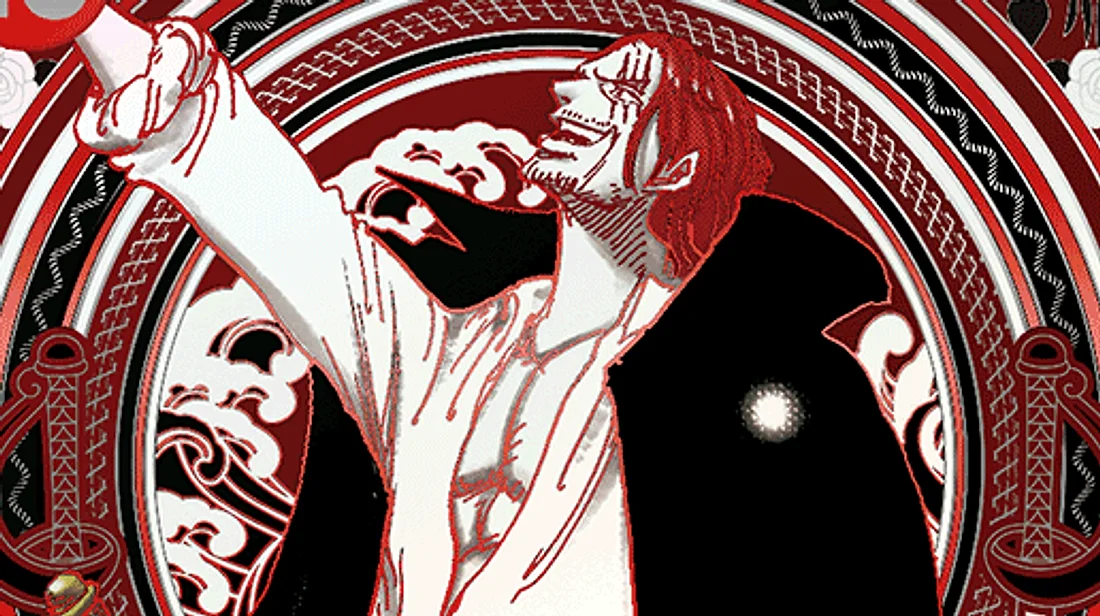
A commemorative card keeps its appeal when several criteria stack up. Distribution first: a card reserved for an event, a contest or a short period stays rarer than a card found in every product. Then the character: Luffy, Shanks, Ace, Zoro or Nami attract buyers well beyond players. Finally the artwork, which has to stand on its own once it is on the wall.
Hype has recognisable signs: heavy social media exposure on release day, a flood of listings at high prices, then supply that swells as copies circulate. When a card is reprinted or distributed in several waves, its perceived rarity erodes quickly, and the price follows.
The table below sums up the grid we use. It predicts no prices: it helps you classify a card before you reach for your wallet. A card that ticks at least three boxes in the left column deserves your attention; one that mostly ticks the right column can wait.
| Criterion | More of a collectible | More of a trend |
|---|---|---|
| Distribution | Event, contest or short period | Included in a mass-market product |
| Reprint | None or very rare | Several waves or a close version released again |
| Character | Major figure of the saga | Secondary character with little demand |
| Artwork | New, strong, recognisable | Reuse of a familiar visual |
| Price after release | Tends to stabilise | Falls as supply grows |
| Link to the game | Playable card or popular leader | No in-game use, purely decorative |
How do you check that a Japanese anniversary card is genuine and accurately described?
The value of a commemorative card lies in details: the marking, the finish, the code. These are exactly the details that counterfeits and sloppy listings overlook. A methodical check takes a few minutes and avoids the most expensive mistake: paying for a special version and receiving a standard one.
On our Japanese cards, the condition stated by the Japanese shop (A, A-, B or C) is shown on every product page, along with a photo of the card. That is the foundation: an anniversary card in condition B is generally worth noticeably less than the same card in condition A, because buyers of this kind of card are above all demanding collectors.
- Compare the code and rarity with the standard version of the same character.
- Find the commemorative marking (logo, stamp, mention) and its exact position.
- Examine the finish: shine, texture, sharpness of the Japanese text.
- Check the stated condition and look at the corners and surface in the photo.
- Compare several listings before settling on a price.
Should you buy an anniversary card at release or wait?
In most cases, waiting is the wiser choice. At release, supply is low, attention is at its peak, and the first sellers set prices that reflect excitement more than real scarcity. Once copies circulate, prices adjust, sometimes sharply downward for widely distributed cards.
The exception is cards with truly restricted distribution, tied to a one-off event: their supply does not grow over time, and waiting can actually shrink the choice of copies in good condition. Here again, the distribution grid decides. If the card was handed out in small numbers, do not wait too long; if it sits in a common product, let the wave pass.
Buying in Japanese helps in both cases. Cards generally come out in Japan first, where supply is often deeper, which lets you choose the condition instead of taking the first copy available. Also think about total cost: with us, card shipping is 4.20 €, free from 100 €, and you only pay shipping once per order.
Which condition should you aim for, and is grading worth it?
For a card bought as a collectible, aim for condition A or A-. Condition B can work if you simply want the artwork at a lower cost, but it will weigh on value if you ever resell. Condition C is for cards you absolutely want in your binder, with no value ambitions.
Grading (PSA or equivalent) only makes sense when two conditions are met: a card that is already in demand and flawless condition. For a widely distributed commemorative card, grading fees and turnaround times often exceed the hoped-for price gap. For a rare card in perfect condition, grading can secure authenticity and make resale easier.
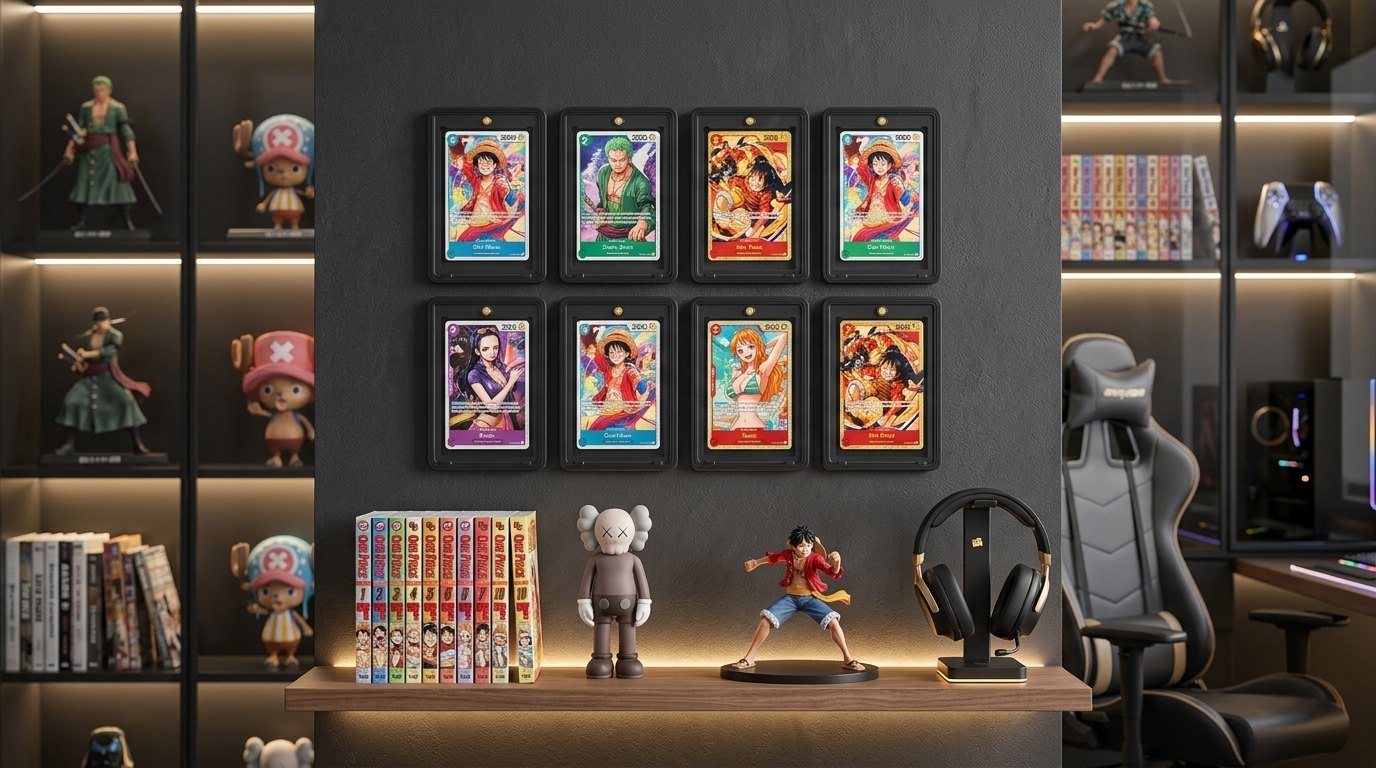
If you already own a graded card, our PSA slab compatible frame, at 34.80 € (sold empty), lets you display it without taking it out of its case. You keep the protection of the slab and the pleasure of seeing the card every day.
How do you protect and display a commemorative card?
An anniversary card is meant to be looked at. But displaying it unprotected means accepting dust, direct light and repeated handling. The right sequence is simple: a sleeve first, then a rigid, closed holder that keeps it flat.
Our aluminium one-touch magnetic frame, with double glazing, in black or white, costs 24.80 € each, and the third is free when you buy two. The frames snap together face to back to stack, stand upright like books, and fix side by side on the wall with an adhesive magnetic strip (1 m for 5.99 €, 3 m for 9.99 €), with no drilling.
For a commemorative series, this kind of display has another benefit: it forces you to choose. Three or four strong cards, properly framed, beat a pile of average versions bought in the excitement of release. Just avoid direct sunlight, which can fade colours over time.
How much of a collecting budget should go to anniversary cards?
Treat a commemorative card like any valuable card: a purchase for pleasure first, which can keep its appeal if you chose it well, never a promise of profit. The card market remains volatile, and cards driven by an anniversary sometimes even more so, because their demand depends on a specific moment.
A simple rule works well: devote only a limited share of your budget to these cards, and favour those that tick at least three criteria in the table. If you are new to the game, the Mystery Box, a draw of real Japanese cards bought in Japan and then shipped, can also be a fun way to grow your collection before targeting a specific piece.
- Set a price ceiling before you start looking for the card.
- Check the distribution: event, common product or reprint.
- Choose condition A or A- for a collectible.
- Wait for the hype to fade if the card is widely distributed.
- Plan protection from the moment you buy: sleeve, then frame.
Verdict: a One Piece anniversary card is neither a guaranteed investment nor a mere gimmick. It is a real collectible when its distribution is genuinely limited, the character and artwork are strong and the condition is excellent; it is a trend when it is everywhere, reprinted or bought at the release peak. Your next step: take the card you want, run it through the table, compare its condition and price among our Japanese cards, then plan a sleeve and a frame so it stays beautiful on your wall.
Frequently asked questions
Does a One Piece anniversary card always gain value?
No. Being commemorative is not enough: real distribution, character, artwork and condition are what count. Many widely distributed anniversary cards drop once the release hype is over.
How can I tell whether an anniversary card is truly limited?
Find out how it was distributed: event, contest, short period or mass-market product. Also check that no reprint or very similar version has come out, as that is often what makes perceived rarity collapse.
Is a Japanese or English anniversary card better?
For a collection, the Japanese version is often easier to find in good condition, because cards generally come out in Japan first and supply there is deeper. The choice mainly depends on your display preferences and the consistency of your collection.
Should I get a One Piece anniversary card graded?
Only if the card is already in demand and in flawless condition. Otherwise, fees and turnaround times often outweigh the expected gain, and a sleeve plus a closed frame are enough to protect and display it.
Read next
 Value and investing
Insuring a card collection: protect and cover your valuable One Piece cards
November 13, 20267 min read
Home insurance, scheduled valuables, inventory and protection: the method to insure a trading card collection without nasty surprises.
 Value and investing
One Piece card ex leader value: rarity and worth of parallel leaders
November 13, 20267 min read
Parallel One Piece leaders: what really drives their value, how to check the version and which condition to target before buying Japanese.
 Value and investing
Japanese One Piece card resale value in Europe: the real market
November 13, 20268 min read
A Japanese One Piece card resells well in Europe when it is a collector piece. Which cards find buyers, who buys them, and the math to do first.