
One Piece card value: how to price a Japanese card without mistakes
Published on November 13, 2026 · 6 min read
Key points
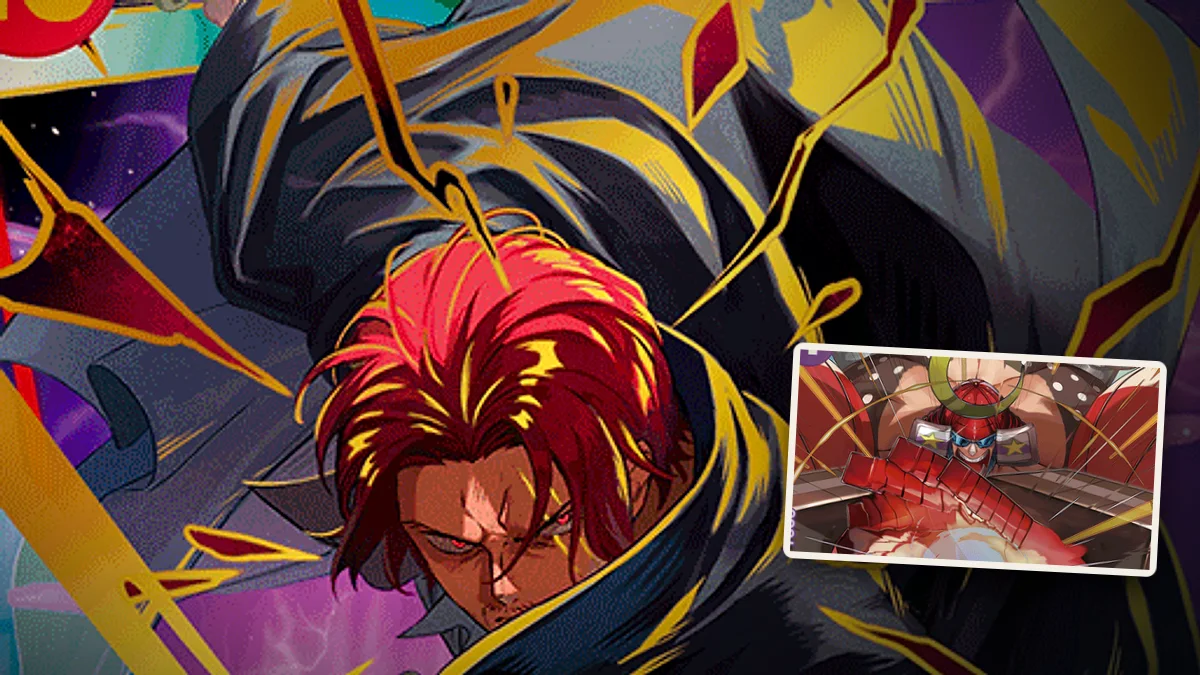
- A One Piece card has no official price guide: its value is the price it actually sells for. That price depends on the version, the rarity, the character, demand from players and the condition.
- The same card, with the same code, can exist as a regular version and as a parallel version. The parallel is usually worth far more, and mixing them up is the most common valuation mistake.
- To value a Japanese card, compare only completed sales of the same card, in the same language, the same version and the same condition. Asking prices in listings are not enough.
- For the same version, condition (A, A-, B, C) moves the price a lot. Keeping the card in a sleeve and then in a rigid holder or closed frame protects its value.
You are holding a Japanese One Piece card, or you have your eye on one, and you want to know what it is really worth. The trouble is that online prices for the same card vary wildly, listings mix Japanese and English versions, and every seller describes condition in their own way. As a result, many collectors overrate a card they own or overpay for the one they buy.
The short answer: a One Piece card's value comes down to five things, always checked in the same order. First the exact identification (code, rarity, version), then the character, the real rarity of the version, current demand and finally the condition. You then confirm that value against prices from completed sales, never against asking prices. This guide gives you the full method, a criteria table and the mistakes that skew an estimate.
What gives a One Piece card its value?
A One Piece Card Game card has no official value. Bandai does not publish a price guide and there is no fixed scale: a card's value is simply the price a buyer and a seller agree on at a given moment. That is why two cards of the same rarity can sell for very different prices, and why the same card can rise or fall within a few weeks.
That price is the balance between supply and demand. Supply depends on how many copies are in circulation, so on the rarity of the version and how many boosters get opened. Demand comes from two different groups: players, who want strong cards for tournaments, and collectors, who want artwork, characters and rare versions.
The cards that hold their value best appeal to both groups at once: a rare version of a major character with striking artwork. A card that is only played can drop as soon as it leaves tournament decks. A card that is only beautiful depends on the popularity of its character.
Which criteria really matter when pricing a card?
To estimate a card, run it through five criteria. None is enough on its own, but together they explain most of the price gaps you see from one card to another.
The most underrated one is the version. In the One Piece Card Game, the same card with the same code can exist as a regular version and as a parallel (or alternate art) version, with different artwork and a much higher rarity. Confusing the two is the number one source of valuation errors, in either direction.
Keep a simple hierarchy in mind. Version and rarity set the price level. Character and demand push it up or down. Condition decides where your copy sits within that range. A parallel of a minor character can therefore be worth less than a less rare version of Luffy or Shanks in flawless condition.
| Criterion | What to check | Effect on value |
|---|---|---|
| Version | Regular, parallel, manga rare, SP, promo (P) | Strongest: a parallel is usually worth far more than the regular |
| Rarity | C, UC, R, SR, SEC, L, SP, P | Strong: the higher the rarity, the smaller the supply |
| Character | Luffy, Shanks, Emperors, Straw Hat crew or minor character | Strong: a popular character also attracts non-players |
| Play demand | Played in tournaments or not | Variable: rises fast, can fall when decks change |
| Condition | A, A-, B or C: corners, edges, surface, centering | Decisive for the same version: a B trades well below an A |
Is a Japanese card worth as much as an English one?
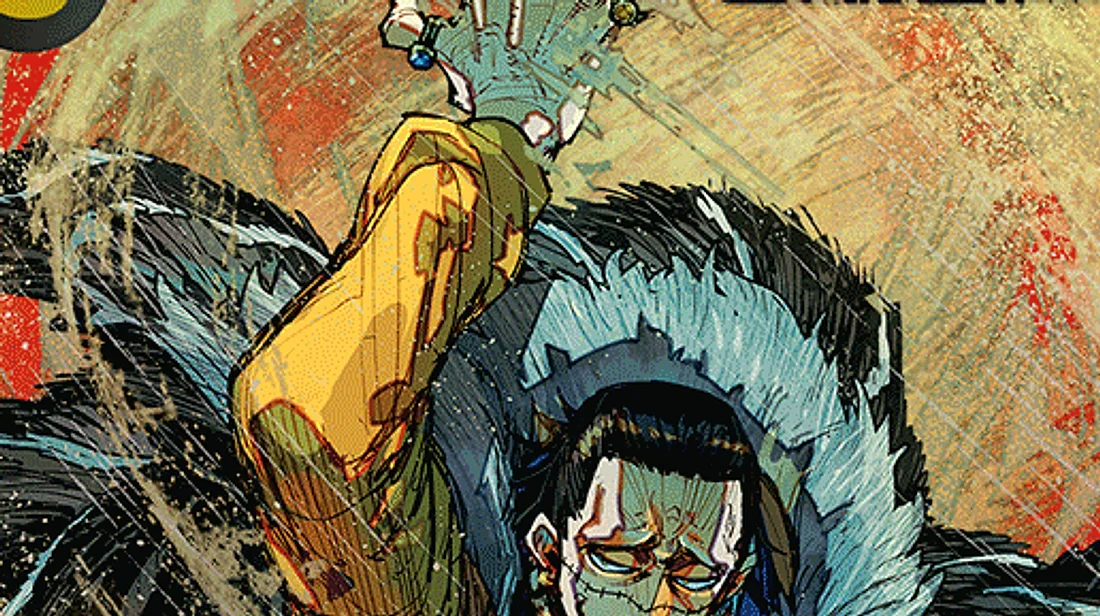
Not necessarily, and not necessarily less. The Japanese and English versions of the same card are two separate markets with their own buyers. Sets are released in Japan first, which gives Japanese cards a head start: when a card becomes sought after, demand often shows up in Japanese first.
Depending on the card, the Japanese version can cost less, the same or more than the English one. The rule that matters for you: never compare a Japanese price with an English price. Value a Japanese card only from sales of Japanese cards, same code, same version.
Many European collectors choose Japanese for the well regarded print quality, artwork available earlier and an often gentler entry price on rare versions. That is exactly what our single Japanese cards offer, bought in Japan to order.

How do you value a card step by step?
Here is the method we use ourselves before buying a card in Japan. It takes a few minutes and avoids most unpleasant surprises, whether you are buying, selling or simply taking stock of your collection.
The result is not a single price but a range. That is normal: a card sells within a price zone, and that zone moves. Your estimate is reliable if it rests on several comparable sales rather than one, and if it includes what the card really costs once it reaches you.
If you find very few comparable sales, that tells you something too: the card is either very rare or in low demand. In both cases, stay cautious and keep a margin, because the final price will mostly depend on whichever buyer turns up.
- Identify the card: set code and number, printed rarity, language.
- Determine the version: regular, parallel, manga rare, SP or promo, by comparing artwork and markings.
- Assess condition honestly: corners, edges, surface, scratches, centering, then place it on the A, A-, B, C scale.
- Look for recent completed sales of the same card, same language, same version, similar condition.
- Discard the extremes: the most expensive listing and the lowest sale are rarely representative.
- Add the real costs (shipping, possible customs, protection) to get a delivered price.
How much does condition change the value?
For the same version, condition is the criterion that moves the price most. A whitened corner, a scratch on the shiny surface or a slight bend takes a large share of value away from a rare card, because collectors above all want near mint copies. Be wary of flattering photos too: a straight-on shot in soft light easily hides flaws.
Japanese shops grade condition on a simple scale, which we use for every card sold on our site so you know exactly what you are buying. If you care about long term value, go for A or A-. If you plan to play the card, B is often the best value for money.
| Condition | Description | Best for |
|---|---|---|
| A | Near mint, no flaw visible to the naked eye | Collection, display, possible grading |
| A- | Very good, possible tiny flaws | Demanding collection on a lighter budget |
| B | Good, visible wear | Play, binder, first copy |
| C | Fair, clear wear | Play only or set completion |

How do you protect a card's value after buying it?
A card loses value much faster than it gains it. A trip in a pocket, some sunlight or a few unprotected handlings are enough to turn an A copy into a B. Protecting the card as soon as it arrives is the first way to preserve what you paid.
The basic rule: a fitted sleeve, then a rigid holder. For cards you want to look at, a closed frame keeps out dust and repeated handling. Our aluminium one-touch magnetic frame, with double glass, holds the sleeved card, stacks face to back and attaches to the wall without drilling thanks to the adhesive magnetic strip.
Finally, avoid direct sunlight, humidity and big temperature swings. A card kept behind glass, away from a window, stays in the condition you received it in, and so keeps its value.
Should you grade a card to know its value?
Grading, by PSA or another company, gives a card's condition a score and seals it in a rigid case, the slab. It does not create value, it makes it readable: the buyer knows exactly what they are getting, which can make reselling a rare card in excellent condition easier.
For a common card or one in B condition, grading often costs more than it brings back. Keep it for rare versions in A condition whose value justifies the fees, the wait and the risk of a disappointing grade. If you do grade a card, our PSA slab compatible frame lets you display the case afterwards.
Remember that an estimated value is not a guaranteed sum. The market moves with new releases, reprints and character popularity. Buy a card you like at a fair price first, rather than a bet.

To know the value of a Japanese One Piece card, identify it precisely (code, rarity, version), judge its condition without wishful thinking, then compare it only with completed sales of the same Japanese card. You will get a reliable range, not a magic number. Next step: browse our single Japanese cards, with condition graded from A to C and prices shown in euros including VAT, and run them through this method before you choose.
Frequently asked questions
How do I know if my One Piece card is valuable?
Start with the printed rarity and the version: an SR, SEC, SP, a parallel or a manga rare is more likely to be valuable than a C or UC. Then check the character and the condition. Finally, look for completed sales of the same card in the same language to get a price range.
Do Japanese One Piece cards go up in value?
Some do, others do not: it depends on demand, reprints and the character's popularity. Rare versions of major characters in excellent condition usually hold up better. No rise is guaranteed, so it is better to buy a card for itself than as an investment.
Where can I find the real price of a One Piece card?
In the completed sales of marketplaces and specialist shops, filtered on the same card, the same language and the same version. Asking prices in active listings only give a rough ceiling. Several comparable sales are worth more than one.
Does a card in B condition lose a lot of value?
For a collector, yes: for the same version, a B card trades well below an A because the wear is visible. For a player the gap matters less, and B is often a good compromise. It all depends on how you plan to use the card.
Read next
Value and investing
Insuring a card collection: protect and cover your valuable One Piece cards
Home insurance, scheduled valuables, inventory and protection: the method to insure a trading card collection without nasty surprises.
November 13, 2026
Value and investing
One Piece anniversary card value: lasting collectible or passing trend?
One Piece anniversary cards: what keeps their value, what is just hype, and how to buy the Japanese version at the right moment.
November 13, 2026
Value and investing
One Piece card ex leader value: rarity and worth of parallel leaders
Parallel One Piece leaders: what really drives their value, how to check the version and which condition to target before buying Japanese.
November 13, 2026