
OP16 One Piece: which cards to buy, singles or a display
Published on November 13, 2026 · 7 min read

Key points
- OP16 is a main Japanese set of the One Piece Card Game: its value is concentrated in leader parallels, SEC cards, SP cards and parallel SRs of popular characters.
- To get one specific OP16 card, buying the single is safer than a display, which holds 24 boosters of 6 cards and guarantees no particular rare card.
- Prices of the headline cards in a recent set like OP16 are often at their highest right after release, then ease as more displays are opened.
- For an OP16 card meant for display, condition A or A- is recommended, and a sleeve followed by a frame protects the card for the long term.
You have seen the first OP16 cards appear and you are torn: open a Japanese display, buy a few boosters, or go straight for the cards you actually like? Most collectors face this question with every new main set, and OP16 is no exception. Between parallel leaders, Secret Rares and alternate art cards, it is easy to spend a lot without ever landing the card you really wanted.
Our answer is clear: for a specific OP16 card, buy it as a single, in Japanese, in condition A or A-. A display only makes sense if you enjoy opening packs, want a full base for the set, or plan to keep it sealed while accepting the risks. Here is how to pick the right cards, read their price, and then receive and display them properly.
What is OP16 and how do you read its Japanese cards?
OP16 is a main set in the OP series of the One Piece Card Game, the line that has structured the game since OP01. Like every set, it is released in Japan first, with any English version coming later. Each card carries a code made of OP16 followed by a number, printed at the bottom of the card. That code, not the character's name, is what identifies the exact card you are looking for.
Rarity is printed next to the code: C and UC for commons and uncommons, R for rares, SR for super rares, SEC for secret rares, L for leaders. On top of these come parallel, or alternate art, versions, which reuse an existing card with a different, often extended illustration and sometimes a special surface finish. Depending on the set, there are also SP cards, which show characters with a special artwork.
For a collector, the consequence is simple: the same OP16 card can exist in several versions with completely different prices. Before searching for a character, decide which version you want, the regular one for fun or the parallel for your display, then check the code and rarity on the listing photo.

Which OP16 cards should you target first?
In an OP set, value almost always sits in a small number of cards: leader parallels, SEC cards and their parallels, SP cards and parallel SRs of the most popular characters. Commons and uncommons, even attractive ones, stay affordable because they are pulled in large numbers. For OP16, as for any other set, the top of that pyramid is where to look first.
The character matters as much as the rarity. Luffy, Zoro, Shanks, Ace, Nami or the Emperors usually attract broader demand and therefore firmer prices, while a parallel of a secondary character can stay accessible despite its rarity. Artwork counts too: an extended illustration that reads well from a distance looks far better in a frame than a busy card.
Our method comes down to four criteria, applied in order. It stops you from buying a card simply because it is expensive, or because everyone talks about it in the weeks after release.
- Character: one you genuinely love, ideally a name with lasting, broad demand.
- Version: parallel, SEC or SP for a showcase piece, regular version to complete a set cheaply.
- Artwork: an illustration that reads well in a frame at eye level.
- Condition: A or A- for a card you want to keep and display for years.
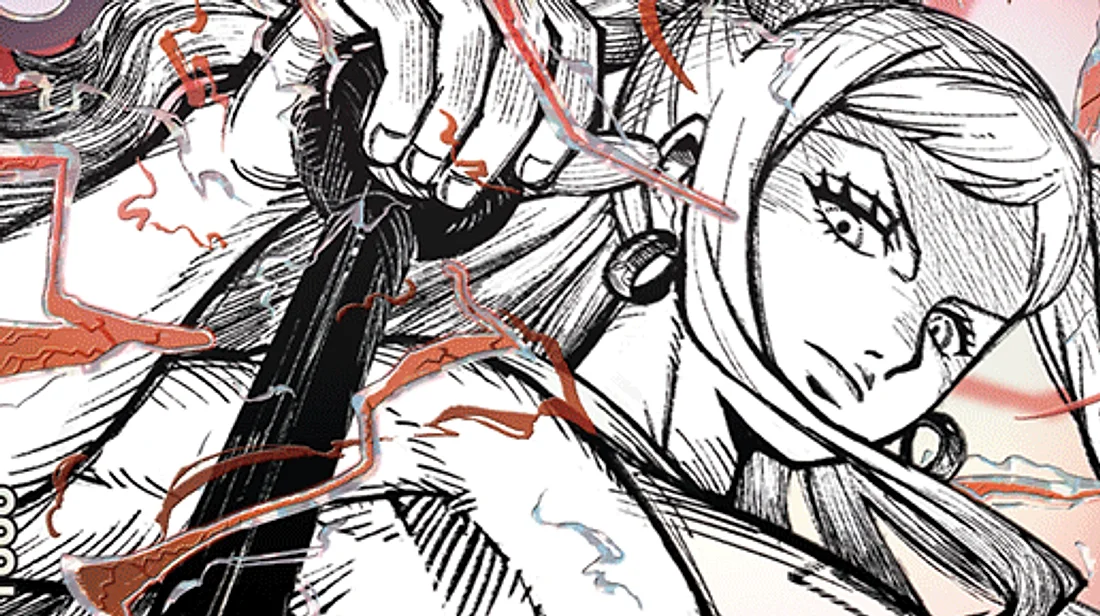
OP16 singles or a display: what should you buy?
A Japanese display (booster box) contains 24 boosters of 6 cards, so 144 cards. That means plenty of commons and uncommons, a few SRs and, with luck, one or more of the most sought-after cards. But nothing guarantees that the exact parallel you want will be in your box: the distribution of rare cards varies from one display to another.
Buying singles flips the problem. You pay for the exact card, in the condition you chose, with no gamble. If you want two or three OP16 cards for your shelf, it is almost always the cheapest and fastest route. A display still makes sense for the joy of opening, to build a full base for the set, or to keep sealed with a long horizon and a real tolerance for risk.
The table below sums up the decision. It does not compare prices, which move, but what each option actually gives you depending on your goal.
| Criterion | Single card | A few boosters | Display (24 boosters) |
|---|---|---|---|
| Getting one specific card | Yes, guaranteed | Very unlikely | Not guaranteed |
| Fun of opening | No | Yes | Yes, to the fullest |
| Base to complete a set | No | Weak | Yes, a good base |
| Budget control | Total | Good | Bigger commitment |
| Keeping it sealed | Not applicable | Not very relevant | Possible, with risks |

How do you read the price of an OP16 card without overpaying?
Prices in a recent set follow a well-known cycle. Right after release, supply is still thin and excitement is high, so headline cards often hit their highest prices at that point. Then, as displays get opened, supply grows and many prices ease before settling. A reprint can also weigh on certain cards.
For OP16, this means there is no rush to buy a card in its release week, unless you absolutely want it right now. Compare several listings for the same version in the same condition, and look at prices that actually sell rather than the highest asking price. A large gap between two listings often hides a difference in version or condition.
Also keep the full cost in mind: the card price, shipping, and the benefit of grouping several cards into one order. On our site, cards are shown in euros including VAT, and shipping for cards and frames costs €4.20, free from €30, paid only once per order.
Which condition should you choose for an OP16 card?
Japanese cards are sold with a condition stated by the Japanese shop: A for near mint, A- for very good, B for good with visible marks, C for fair. On a recent card like those from OP16, a large share of available copies are A or A-, because they have barely circulated yet.
For a parallel or SEC card meant for your display, aim for A, or A- if the price gap is noticeable: under glass and to the naked eye, the difference is often hard to see. Condition B makes sense for a card you want to play, or for a regular version you simply want for its artwork. Condition C is best kept for playing cards.
If you might one day get the card graded, condition becomes the priority: only an A card has a reasonable chance of a good grade, and even then nothing is guaranteed. When in doubt, pay a little more for better condition rather than choosing a rarer but damaged version.
How do you buy Japanese OP16 cards from Europe?
Buying directly in Japan means going through Japanese shops and platforms, often with a middleman, fees at every step and sometimes long delays. Our job is to make this simple: every card shown on our site is genuinely for sale in Japan, we buy it when you order, then ship it to you in Europe.
In practice, the method fits in a few steps. It works for a single card as well as for a small selection of OP16 cards meant to complete a display.
If you would rather open the next set yourself, OPCG.Shop offers Japanese displays, boosters and pre-orders. The Japanese OP18 Display is available for pre-order at €129, paid in full and refunded in full if the product does not reach us; shipping for sealed products costs €6.90, free from €199.
- Pin down the exact version: OP16 code, rarity, regular or parallel.
- Choose the condition: A or A- for display, B for play.
- Group your cards in one order so you only pay shipping once, free from €30.
- Plan the protection: a sleeve, then a frame if the card is meant to be displayed.
Pre-order
OP18 booster display (Japanese)
129,00 €
View the productHow do you protect and display your OP16 cards?
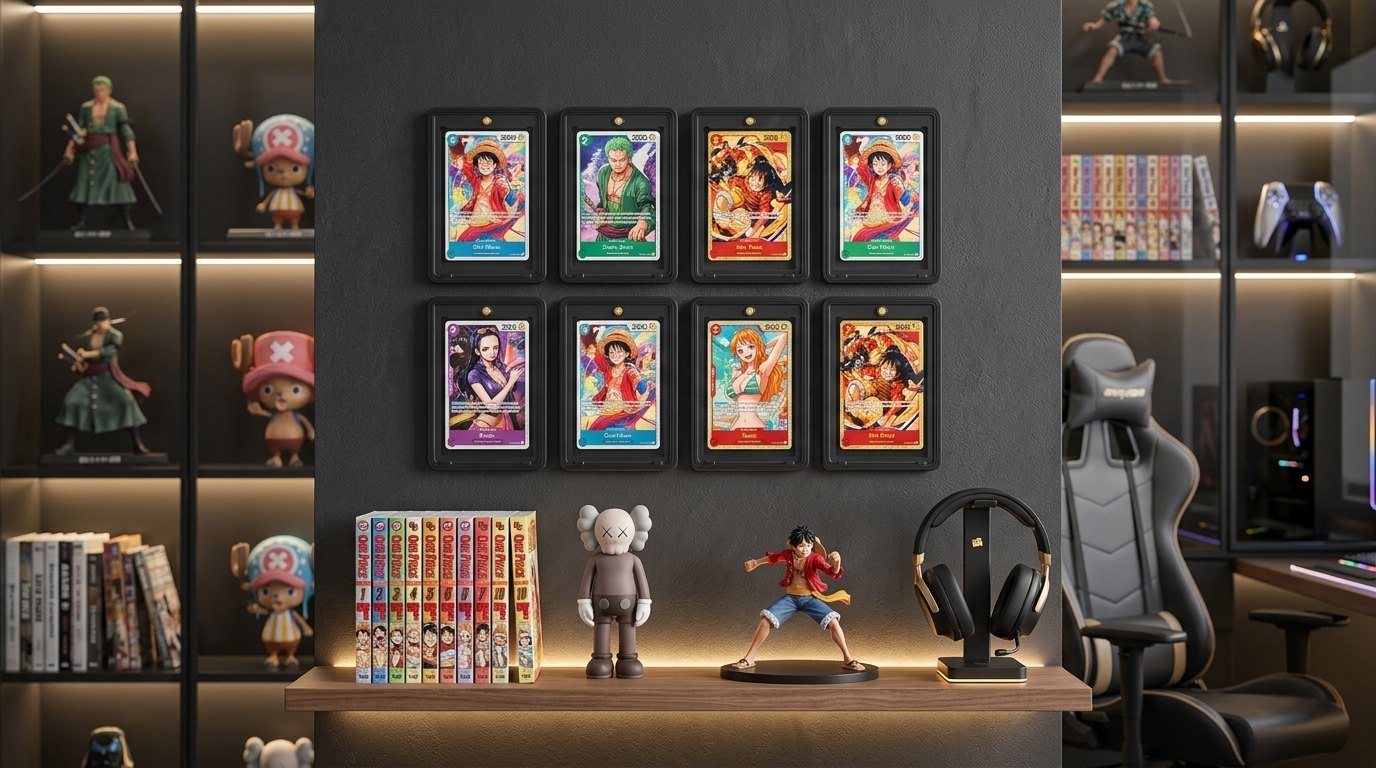
An OP16 parallel or SEC card deserves better than a binder at the back of a drawer. The first step is always the same: a sleeve to protect the surface and corners. After that, it all depends on use: storage, transport or long-term display.
For display, our one-touch magnetic aluminium frame, with double glass, in black or white, costs €24.80 each, and the third one is free when you buy two. The frames snap together face to back to stack, stand upright like books, and attach side by side on the wall with an adhesive magnetic strip (1 m for €15, 3 m for €29), with no drilling. For a graded card, a PSA slab compatible version is available at €34.80, sold empty.
Displaying also changes how you buy: you choose fewer cards, but better ones. Three or four strong OP16 pieces lined up on a wall say more than a stack of commons, and that is often where buying singles makes the most sense.
For OP16, the verdict is clear: if you know which card you want, buy it as a single, in Japanese, in condition A or A-, after checking its code and version, and without rushing in at the early-weeks peak. A display remains a choice for fun or for the long term, not the surest path to a specific card. Next step: pick the two or three OP16 cards you really like, compare their versions, group them in a single order and plan their frames. For the next set, the OP18 display pre-order is waiting for you at OPCG.Shop.
Frequently asked questions
Is it better to buy an OP16 display or single cards?
To get one specific card, singles are almost always safer and cheaper, because a display guarantees no particular rare card. A display makes sense for the fun of opening or to build a base for the set.
How many cards are in a Japanese OP16 display?
A Japanese display contains 24 boosters of 6 cards, so 144 cards. The distribution of rare cards varies from one box to another, and no specific parallel is guaranteed.
Which OP16 cards are usually worth the most?
Generally, leader parallels, SEC cards and their parallels, SP cards and parallel SRs of popular characters. The real price depends on version, condition and timing, so always check current listings.
Are Japanese OP16 cards different from English ones?
The code and artwork are the same; the text language changes, and the Japanese version comes out first. For collecting and display, many collectors prefer Japanese; for an official tournament in Europe, check the organiser's rules.
Read next

Sets and releases
One Piece Card Game Japan release schedule: how to read it and plan ahead
One Piece Card Game Japan release schedule: how to read it, how far ahead of Europe Japan runs, when to preorder and what reprints change.
November 13, 2026

Sets and releases
EB01 Memorial Collection: the cards that matter and how to buy them
EB01 Memorial Collection: what makes this set different, which rarities to target and why buying singles is usually the smartest move.
November 13, 2026

Sets and releases
EB02 One Piece: the most wanted cards and how to buy them right
EB02 One Piece: which Japanese cards to target (SEC, parallels, SP), how to identify them, and why buying singles is usually the safest route.
November 13, 2026