
EB01 Memorial Collection: the cards that matter and how to buy them
Published on November 13, 2026 · 8 min read

Key points
- EB01 Memorial Collection is the first Extra Booster of the One Piece Card Game. It sits outside the main OP numbering, and every card in it carries the EB01 code.
- In EB01, collector interest is concentrated on high rarity cards (SR, SEC, L leaders) and above all on their parallel versions with alternate artwork.
- To get a specific EB01 card, buying the Japanese single is generally cheaper and safer than opening boosters, whose contents are random.
- Before buying an EB01 card, check the printed code, the rarity, the version (regular or parallel) and the stated condition (A, A-, B or C): these four criteria set the price.
You have come across the name EB01 Memorial Collection on a listing, in an opening video or in a set list, and you want to know what makes it different, which cards are actually worth it and how to get them from Europe without overpaying. It is a fair question: EB01 does not behave like a regular OP set, and collectors who treat it as just another OP often end up buying the wrong thing.
The short answer: EB01 is the game's first Extra Booster, a set apart whose collecting appeal rests on a handful of high rarity cards and their parallel versions. If you want one specific card, buy it as a Japanese single and check the code, the version and the condition. If you enjoy opening packs, do it for the fun, not as a calculation. Here is the full method, step by step.
What exactly is EB01 Memorial Collection?
EB01 is the code of the first Extra Booster in the One Piece Card Game, subtitled Memorial Collection. Extra Boosters form a line separate from the main sets numbered OP01, OP02 and onwards. They have their own numbering, from EB01 to EB05 so far in our Japanese catalogue, and a different role in the release calendar: they complement the main sets rather than replace them.
The name Memorial Collection sets the tone: a set designed as a curated collection, which collectors approach for chosen cards rather than as a full set to fill a binder. Every card carries the EB01 prefix followed by a number, printed at the bottom of the card. That code, not the character's name, is what tells you for certain that a card comes from this set.
As with every set in the game, the Japanese version comes out first. That is the version we offer as singles: cards genuinely on sale in Japan, bought to order for you, with a condition stated by the Japanese shop. For the exact card list and release details, the official Japanese website of the game remains the reference to check before any significant purchase.

How is EB01 different from a regular OP set?
An OP set introduces a new block of cards and shapes the game for several months. An Extra Booster like EB01 comes as a complement: it slots in between two main releases, with a tighter identity. For a collector, that changes how you buy. You do not chase a whole set card after card, you target the pieces that matter.
The practical consequence is simple. In an OP set, the breadth of the card pool sometimes pushes people to open a lot of boosters to complete everything. In EB01, interest is concentrated on fewer cards, and those are exactly the ones collectors compete for. Opening at random in the hope of hitting the right card is even less rational here than elsewhere.
One more difference to keep in mind: the pack and box configuration of an Extra Booster may differ from that of an OP set. A standard Japanese booster box generally holds 24 packs of 6 cards, but always check the official product sheet of the EB release before reasoning about cards per box or about your odds.
| Criterion | EB01 Memorial Collection | Regular OP set |
|---|---|---|
| Product line | Extra Booster, EB numbering | Main set, OP numbering |
| Place in the calendar | Between two main releases | Main release of the cycle |
| Collecting logic | Target a few strong cards | Follow a broader set |
| Printed code | EB01 followed by a number | OP followed by the set number |
| Most rational purchase for a specific card | Single | Single |
Which cards make EB01 worth collecting?
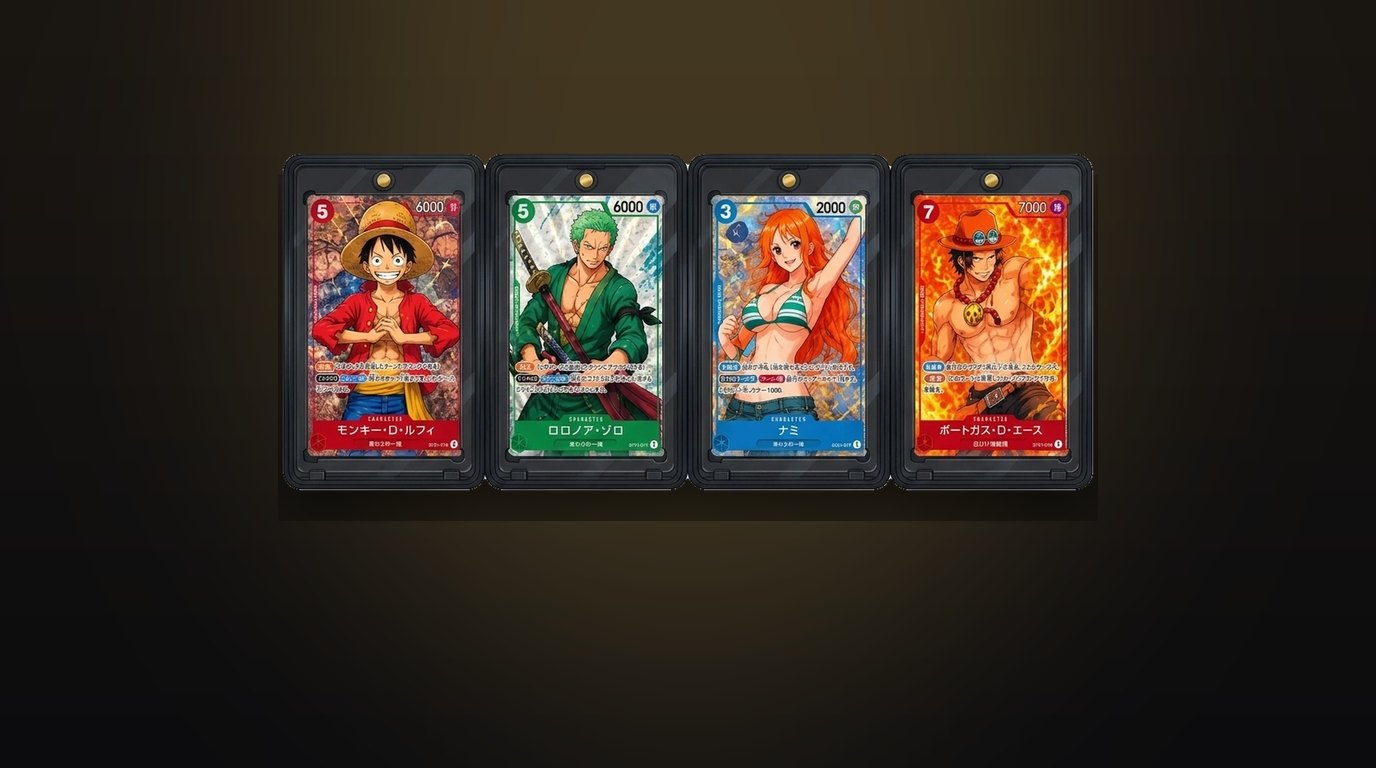
As across the whole game, EB01's collecting value is concentrated at the top of the rarity pyramid. Commons (C) and uncommons (UC) mostly serve players. Rares (R) are useful for building a deck. Super rares (SR), secret rares (SEC), leaders (L) and their parallel versions are what draw collectors' attention.
The parallel version, also called alternate art, keeps the same code as the regular card but features different, often more elaborate artwork. It is generally what creates the sharpest price gap within a single card. If you remember only one thing about EB01, make it this: with the same code, the version changes everything.
The character matters too. A card featuring a hugely popular character from the saga draws more demand than a card of the same rarity featuring a supporting role, and that demand often lasts longer. Rather than trusting a ready made list, cross three criteria: rarity, version, character. A card that ticks all three is a true showcase piece.
- Parallel SEC and leaders: the heart of an EB01 collection
- Parallel SR of major characters: great look, often a more accessible budget
- Regular SR and leaders: a good entry point for a character you love
- R, UC and C: mostly of interest for play, rarely for display
How do you recognise an EB01 card and the right version?
Identification comes down to four checks, in order. First, the code at the bottom of the card: it must start with EB01. Next, the rarity printed next to the code. Then the version, regular or parallel. Finally, the condition. Each step removes a source of error, and most failed purchases come from a step skipped in a hurry.
The version is the trickiest point, because a parallel card and its regular version share the same code. Compare the artwork with the official gallery: framing, background, finish. On a listing, insist on a sharp photo of the actual card, not a promotional image. A blurry photo on an expensive card is already an answer.
Also watch out for confusion between sets. The same character can appear in EB01 and in other sets, sometimes at a similar rarity. The name proves nothing, the code does. That holds when buying and when reselling: a precise listing, with code and version, inspires trust and sells more easily.
- Check the EB01 prefix and the number at the bottom of the card
- Read the printed rarity (C, UC, R, SR, SEC, L)
- Compare the artwork with the official gallery to spot a parallel
- Check the stated condition and photos of the actual card

Singles, boosters or a box: how should you buy EB01?
If you are after one specific card, buying the single is almost always the right answer. Opening boosters means paying for a random draw in which the card you want is only one outcome among many. With a single, you pay for the card you want, in the version and condition you chose, and nothing else. Our Japanese singles are designed precisely for that.
Boosters and boxes serve a different purpose: the joy of opening, or the wish to keep a sealed product. These are legitimate choices, as long as you own them as such rather than as a profitability calculation. If you simply want the thrill of a draw with real Japanese cards, our Mystery Box is an easy alternative.
On costs, singles ship for €4.20, free from €30, and shipping is paid only once per order. For sealed products (boxes, boosters), shipping is €6.90, free from €199. Grouping several EB01 cards into a single order is therefore the simplest way to lower the cost per card.
| Option | For whom | Advantage | Limit |
|---|---|---|---|
| Single card | Collector targeting a specific card | Chosen version and condition, controlled cost | No opening thrill |
| Booster | Curious buyer opening a few packs | The fun of the draw | Random result |
| Booster box | Fan of opening or of sealed product | Full experience, sealed product | High budget, no card guaranteed |
Which condition should you choose for an EB01 card?
Japanese shops grade condition on a simple scale: A (near mint), A- (very good), B (good, visible wear), C (fair). For a showcase card such as an EB01 SEC or parallel, aim for A or A-: it is what you will look at every day, and it is also what a future buyer will examine first.
Condition B has its place for a card you want to own without making it a centrepiece, or for a card meant for play. It often gives access to a favourite character for less, provided you accept visible wear. Condition C is best kept for play or for completing a list, not for display.
If you are considering grading, start from an A card: a card that already shows marks is unlikely to earn a grade that justifies the fees. Whatever condition you choose, protection starts on arrival: sleeve first, then a frame or a toploader, never a bare card in a drawer.
How should you display and store your EB01 cards?
A Memorial Collection deserves to be seen. Our aluminium one-touch magnetic frame, with double glazing, protects the sleeved card while showing it in full. It costs €24.80 each, in black or white, and when you buy two frames the third is free, enough to present a small, coherent EB01 set.
The frames snap together face to back to stack, stand upright like books on a shelf, or attach side by side on a wall with an adhesive magnetic strip (1 m for €15, 3 m for €29), with no drilling. If one of your cards is already graded, a PSA slab compatible version is available at €34.80, sold empty.
A few simple rules protect value over time: avoid direct sunlight, keep cards somewhere dry, handle them with clean hands and do not take them out of their sleeve without a reason. A well kept card holds its condition, and condition remains the first price criterion the day you decide to sell.
Verdict: EB01 Memorial Collection is a set apart, best approached as a collector who targets rather than an opener who hopes. Its appeal lies in its high rarity cards and above all in their parallels, identified by the EB01 code, the rarity and the artwork. Your next concrete step: pick the card or cards that speak to you, check code, version and condition, group them into one order to get free shipping from €30, then give them a frame worthy of them.
Frequently asked questions
What does EB stand for in EB01 Memorial Collection?
EB stands for Extra Booster, a line separate from the main OP sets. EB01 is the first release in that line, subtitled Memorial Collection. Its cards carry the EB01 code followed by a number.
How can I tell if my card comes from EB01?
Look at the code printed at the bottom of the card: it must start with EB01. The character's name is not enough, because it can appear in other sets. To identify a parallel, compare the artwork with the official gallery.
Is it better to buy an EB01 booster box or singles?
To get a specific card, singles are almost always safer and cheaper, because a box's contents are random. A box makes sense for the fun of opening or to keep a sealed product. Either way, decide what you are really looking for before you buy.
Is an EB01 card in B condition a good buy?
Yes, if it is for play or if you want a favourite character without aiming for a showcase piece. For a SEC or parallel meant for display or possible grading, go for A or A-. Condition remains the first price criterion when reselling.
Read next

Sets and releases
One Piece Card Game Japan release schedule: how to read it and plan ahead
One Piece Card Game Japan release schedule: how to read it, how far ahead of Europe Japan runs, when to preorder and what reprints change.
November 13, 2026

Sets and releases
EB02 One Piece: the most wanted cards and how to buy them right
EB02 One Piece: which Japanese cards to target (SEC, parallels, SP), how to identify them, and why buying singles is usually the safest route.
November 13, 2026

Sets and releases
EB03 One Piece: what the set contains and which Japanese cards to target
EB03 One Piece in Japanese: what this Extra Booster contains, which rarities matter, and why singles beat a display for a specific card.
November 13, 2026