
OP09 One Piece: the most sought-after cards and how to buy them well
Published on November 13, 2026 · 7 min read
Key points
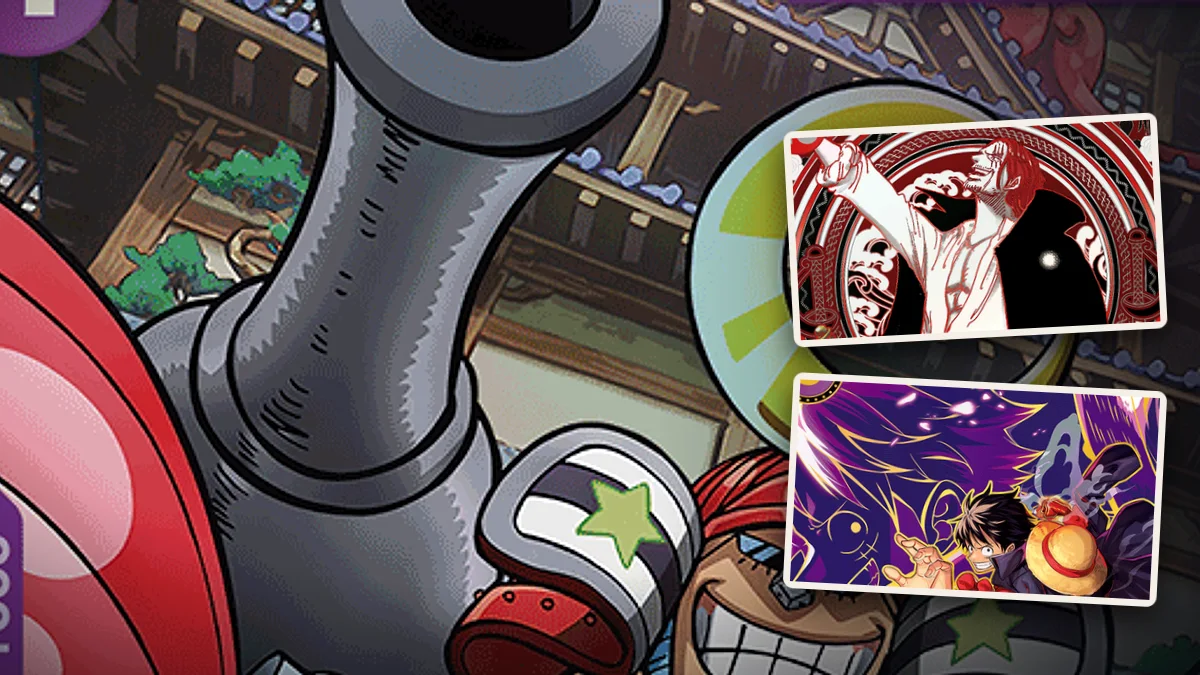
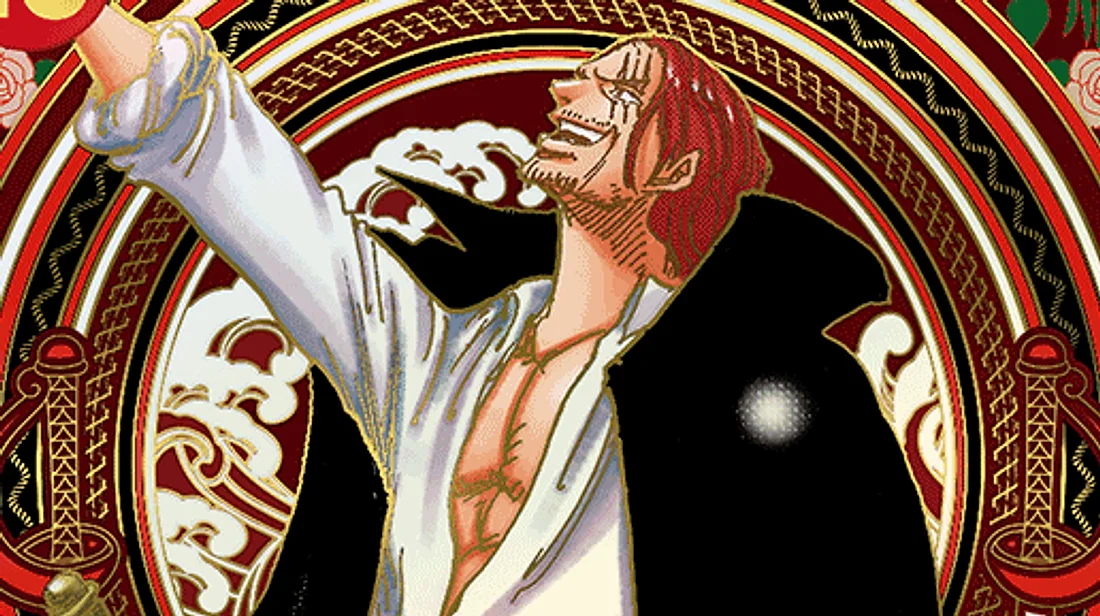
- OP09 is the ninth main set of the One Piece Card Game. It is built around the Emperors of the new era, with figures such as Shanks, Luffy, Blackbeard and Buggy.
- The OP09 cards collectors want most are the parallel versions, Secret Rares (SEC), SP cards and parallel leaders of the major characters.
- To get one specific OP09 card, buying the single is safer than a display: a Japanese display holds 24 boosters of 6 cards, with no guarantee of what you pull.
- Before buying an OP09 card to display, aim for A or A- condition and always compare the total delivered price of several equivalent offers.
You have probably seen OP09 cards on social media, a Shanks or a Luffy with a striking finish, and you are wondering what this set is really worth for a collection. Maybe you are torn between opening a few boosters, hunting for a display that has become hard to find, or going straight for one specific card. It is a fair question: OP09 is no longer new, and the market has already organised itself around its key cards.
Our answer is clear: for OP09, the Japanese single card is almost always the best choice for a collector. The most sought-after cards are the rare versions of the big figures of the Emperors theme: parallel leaders, Secret Rares, SP cards and alternate art versions. This guide gives you the criteria to spot them, compare rarities, check condition, pay a fair price, and then display your cards the way they deserve.
What is the OP09 set of the One Piece Card Game?
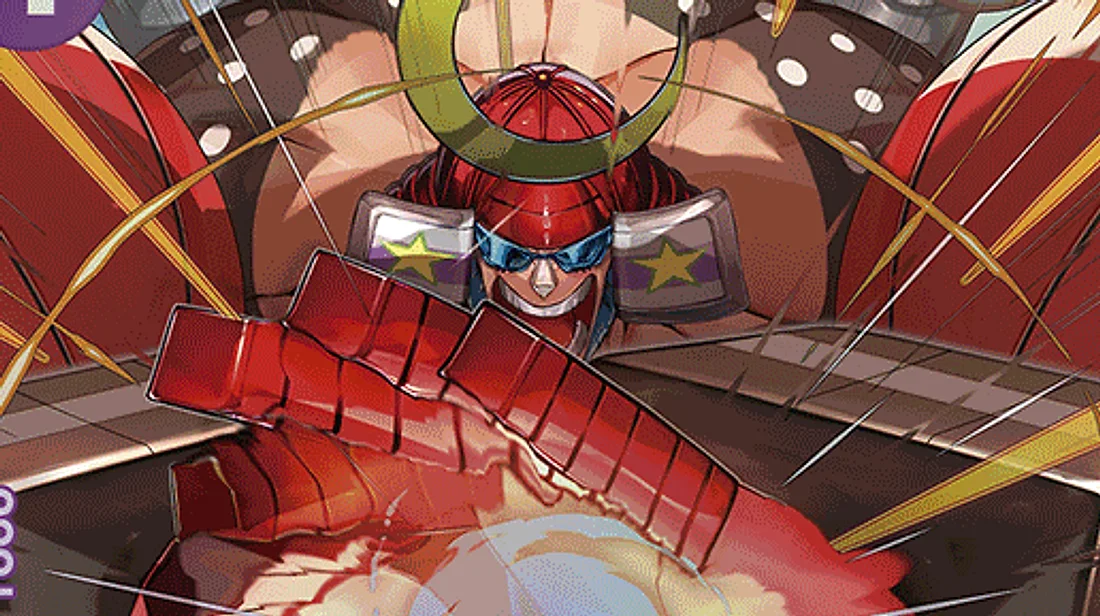
OP09 is the ninth main set, in the OP series, of the One Piece Card Game. Known in English as Emperors in the New World, it is built around the Emperors of the new era, the figures who rule the New World after the Wano arc. You will find characters such as Shanks, Luffy, Blackbeard and Buggy, all at the heart of the manga's recent story. That theme explains much of its appeal: collectors come for characters who matter, not only for cards that are strong in tournaments.
Like every set in the game, OP09 came out first in Japan, then in English a few months later. It sits between OP08 and OP10 in the release order and now belongs to the established sets: its launch period is behind it, and the market is mostly fed by cards already in circulation. That is exactly why you should know what to target before buying, rather than leaving it to the luck of a booster.
One rule of method before any purchase: check the card code and its rarity on the official card list. It is the only way to be sure that two listings refer to the same card, in the same version.
Which rarities are in OP09, and which ones matter?
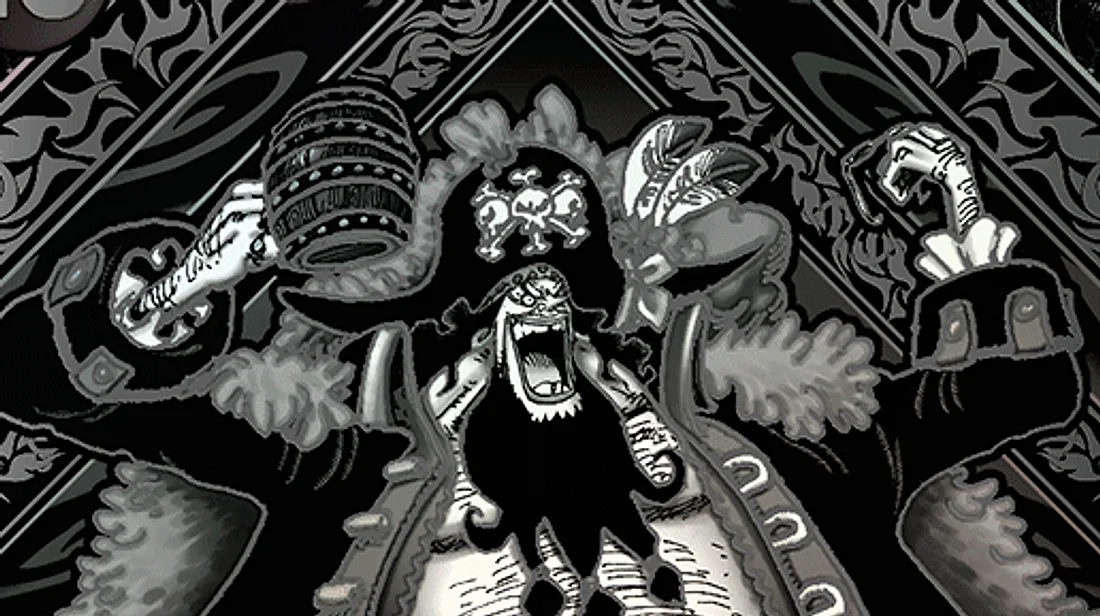
OP09 uses the game's classic rarity grid: C (common), UC (uncommon), R (rare), SR (super rare), SEC (secret rare) and L (leader), plus SP cards and parallel, or alternate, versions of some cards. For a collection, they are not equal: commons and uncommons are mainly for playing, while collector demand focuses on a handful of versions.
The hierarchy that matters is not just the printed rarity. A parallel SR of an Emperor can be more sought after than a SEC of a minor character. The right habit is to cross three criteria: rarity, finish (parallel or not) and character. The table below sums up what each rarity is worth for a display shelf.
| Rarity | What it is | Collection interest | Our advice |
|---|---|---|---|
| C / UC | Basic cards | Low | For play, not for display |
| R / SR | Stronger cards, shiny finish for SRs | Medium, depends on the character | Target the Emperors' SRs |
| L (leader) | The card that drives a deck | Medium as regular, high as parallel | Prefer the parallel version |
| SEC | Secret Rare, the rarest standard rarity | High | A centrepiece if you love the character |
| SP and parallels | Alternate artwork, special finish | High to very high | Core of the demand, check condition |
Which OP09 cards do collectors look for the most?
Rather than a fixed ranking that would change from month to month, here is what genuinely makes an OP09 card desirable. Demand focuses first on the Emperors themselves: Shanks, Luffy, Blackbeard and Buggy, in their most elaborate versions. Next come the very popular characters featured in the set, whose parallel versions attract collectors who follow a character rather than a set.
The second driver is the finish. Parallel leaders, Secret Rares and full-art alternate versions are the cards people display. A card that captures a key moment of the story, with artwork that breaks the usual frame, generally keeps lasting interest. By contrast, a card wanted only for its tournament power can lose demand as the game evolves and newer sets take over.
Our grid is simple: if a card ticks three or more of the criteria below, you probably hold a piece other collectors will look for too. If it ticks only one, buy it because you like it, not for its future value.
- An Emperor or a major character of the arc
- A parallel, SEC or SP version rather than the regular one
- A parallel leader, valued by players and collectors alike
- Striking artwork, recognisable even outside the game
- A or A- condition, with clean centring and corners
Japanese or English OP09: which version should you buy?
The Japanese version of OP09 came out first and remains the reference for many European collectors. Japanese cards are often praised for their print and finish quality, and their single price is generally gentler than the English equivalents for sought-after rarities, although the gap varies from card to card. Japanese text is no obstacle on a shelf: you display artwork, not a rules paragraph.
The English version still makes sense if you play in tournaments with cards everyone can read. For a collection, Japanese wins: more supply in Japanese shops and platforms, more choice of condition, and real consistency if you already collect other sets in Japanese. Mixing languages on one wall works, but a uniform set reads better.
Should you buy OP09 as singles or as a display?
A Japanese display holds 24 boosters of 6 cards. On a fresh set, opening a display can make sense, for the fun and to complete a set. On OP09, an established set, the logic changes: the sealed displays still around are sought by people who keep them closed, which pushes their price up, and nothing guarantees that a display contains the exact card you want.
For a collector who has spotted one or two cards, buying singles is almost always more rational: you pay for the card you want, in the condition you choose, with no luck involved. That is how our Japanese cards work: every card shown is genuinely for sale in Japan and bought to order for you, with shipping at €4.20, free from €30, and postage paid only once per order.
A display still has its place for a different project: the opening experience, or keeping a sealed product. In that case, think long term, accept the risk and expect no guaranteed return.
How do you check the condition and fair price of an OP09 card?
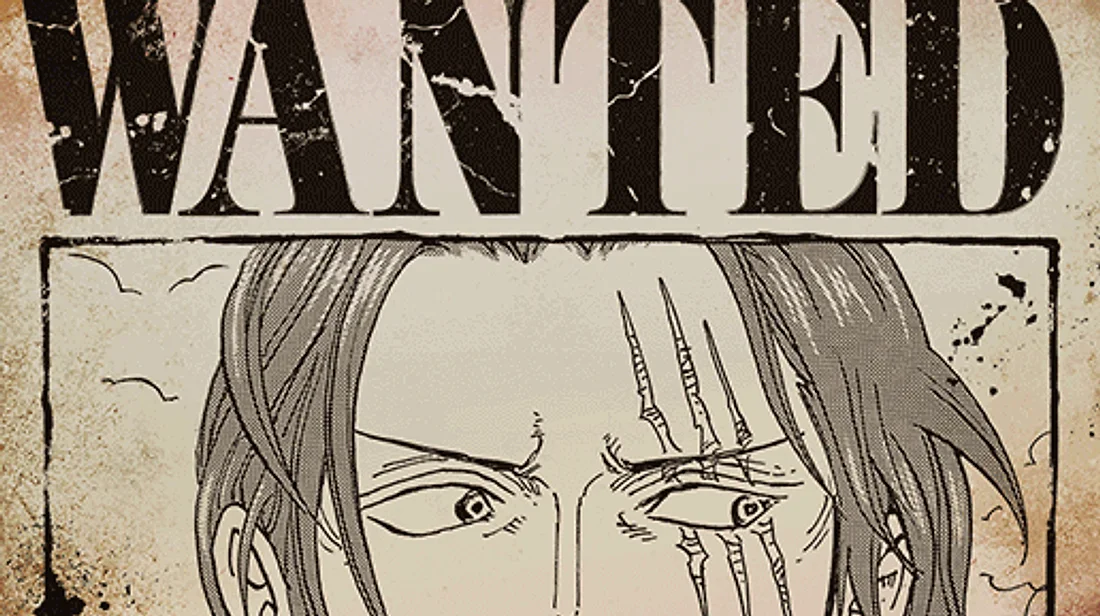
Japanese shops state a condition for every card, and we pass it on unchanged: A (near mint), A- (very good), B (good, visible wear) and C (fair). For a card meant for display, aim for A or A-: parallels and Secret Rares, with their shiny surfaces, quickly show scratches and edge whitening.
On price, never trust a single listing. Note several offers for the same card, in the same version and condition, and look at actual sales rather than asking prices. Then add shipping and, where relevant, import fees: the total delivered price is what counts, not the sticker price. Here is the method in five steps.
- Check the OP09 code and rarity on the official list
- Confirm the version: regular, parallel, SEC or SP
- Choose the condition: A or A- for display
- Compare at least three equivalent offers
- Work out the total delivered price, all fees included
How should you display and store your OP09 cards?
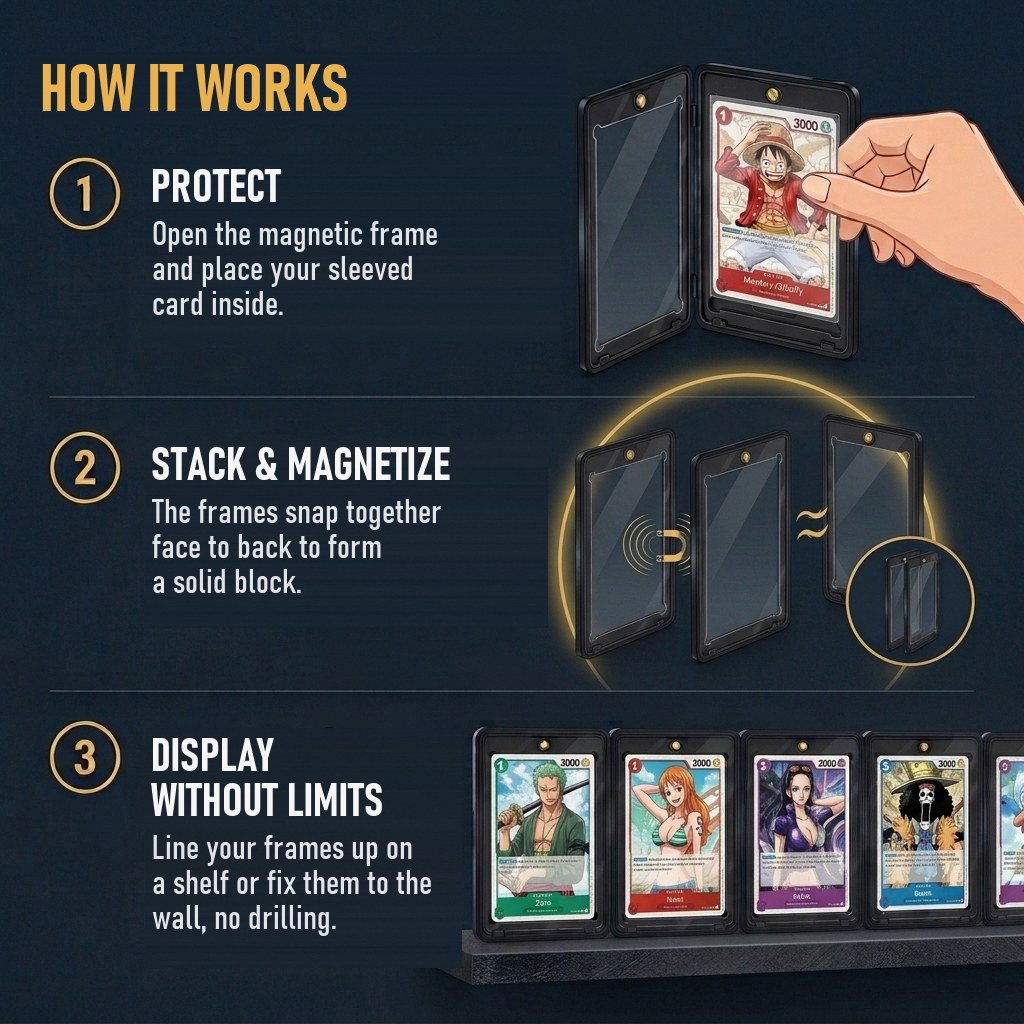
An OP09 parallel or Secret Rare deserves better than a binder. First slide the card into a sleeve, then into a rigid frame that shields it from dust, knocks and direct light. Our aluminium magnetic one-touch frame, with double glazing, comes in black or white at €24.80 each, and when you buy 2 frames the 3rd is free.
The frames snap together face to back to stack, stand upright like books, and fix side by side on the wall with an adhesive magnetic strip (1 m for €15, 3 m for €29), no drilling needed. For a theme like the Emperors, lining up the great figures in one row makes a very readable wall. If one of your cards is graded, the PSA slab compatible version is available at €34.80, sold empty.
Verdict: OP09 is first and foremost a collector's set, carried by the Emperors theme and by its parallel, Secret Rare and SP versions. For most collectors the best strategy is simple: choose one or two cards of a character you love, in a rare version, in Japanese, in A or A- condition, as singles rather than a display. Your next concrete step: browse our available Japanese OP09 cards, compare conditions, then plan a frame for the card you will display.
Frequently asked questions
What is the theme of the OP09 set?
OP09 revolves around the Emperors of the new era in the New World, with figures such as Shanks, Luffy, Blackbeard and Buggy. That theme explains collectors' interest in its rare versions.
What is the rarest card in OP09?
The rarest versions are the Secret Rares, SP cards and some parallels. Their exact ranking depends on current demand. Check the rarity on the official list and compare actual sales before buying.
Is it better to buy an OP09 display or single cards?
To get a specific card, singles are safer: you pay for the card you want, in the condition you choose. A display, with 24 boosters of 6 cards, makes sense for the fun of opening or for long-term sealed keeping, with its risks.
Are Japanese OP09 cards different from English ones?
Artwork and rarities are generally the same; the language and sometimes the look of the finish differ. The Japanese version comes out first and is often preferred by collectors for display.
Read next
Sets and releases
One Piece Card Game Japan release schedule: how to read it and plan ahead
One Piece Card Game Japan release schedule: how to read it, how far ahead of Europe Japan runs, when to preorder and what reprints change.
November 13, 2026

Sets and releases
EB01 Memorial Collection: the cards that matter and how to buy them
EB01 Memorial Collection: what makes this set different, which rarities to target and why buying singles is usually the smartest move.
November 13, 2026
Sets and releases
EB02 One Piece: the most wanted cards and how to buy them right
EB02 One Piece: which Japanese cards to target (SEC, parallels, SP), how to identify them, and why buying singles is usually the safest route.
November 13, 2026