
EB05 One Piece: what to know before buying in this extra booster
Published on November 13, 2026 · 8 min read

Key points
- EB05 is an Extra Booster of the One Piece Card Game. It is a tighter format than the main OP sets, and every card carries an EB05 code followed by a number.
- To get one specific EB05 card, buying it as a single is safer than opening boosters, because it removes the luck of the pull.
- The value of an EB05 card depends on four combined criteria: rarity, character, artwork and condition (A, A-, B or C).
- EB05 cards are released in Japan first. The Japanese version is perfect for a collection, but official European tournaments generally require the English version.
You have spotted EB05 in the list of One Piece Card Game sets and you are wondering where to start: open boosters, go for a full display, or simply buy the card you like? Most collectors ask the same question when facing an Extra Booster. The format is shorter than the big OP sets, so every rare card weighs more heavily on your budget.
The short answer: for one specific card, buying a Japanese single is almost always the safest and cheapest route. A display mainly makes sense if you love opening packs, or if you want to keep a sealed product for the long run. In this guide we cover what gives an EB05 card its value, when to buy, what to check before paying and how to protect your best pieces.
What exactly is EB05 in the One Piece Card Game?
EB05 is the code of an Extra Booster, a line that runs alongside the main numbered OP sets. An OP set shapes the game for several months with a broad card list. An Extra Booster is usually tighter and built around a theme, an arc or a selection of characters. Codes EB01 to EB05 are all in our Japanese catalogue, next to the OP sets, the ST starter decks and the P promos.
In practice, every card carries a code such as EB05 followed by a number, printed at the bottom. That code is your best reference: it separates an EB05 card from a reprint of the same character released elsewhere, and it lets you compare listings without confusion. Rarities follow the usual grid of the game: C, UC, R, SR, SEC and L, plus parallel or alternate art versions and, depending on the set, SP cards.
Like every set, EB05 comes out in Japan first. That matters for a European collector: the Japanese version is available earlier, and it is the one we buy to order for our singles. To know the exact card list, always rely on the official list published by the publisher, never on rumours circulating before a release.
What gives an EB05 card its value?
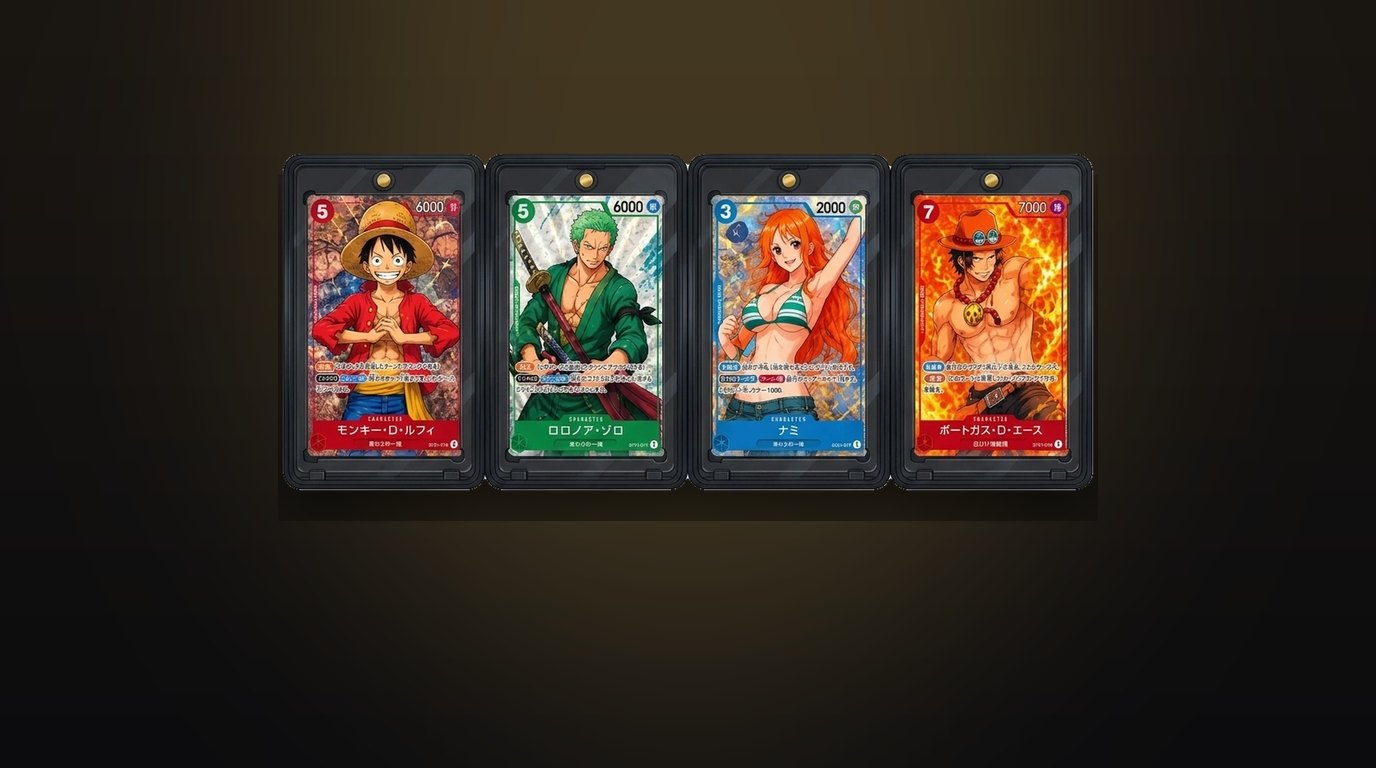
In an Extra Booster as in an OP set, a card's value rests on four pillars that work together. Rarity first: a SEC, a parallel or an alternate leader turn up far less often than a C or a UC. Then the character: Luffy, Shanks, Ace, Zoro or Nami almost always draw more demand than a side character at the same rarity.
The third pillar is the artwork. An alternate version with full art, a strong mood or an iconic manga scene often sells better than the standard version of the same character, because it is made to be displayed. The fourth is condition: a card listed as A trades above a B, and the gap widens on expensive cards, where every flaw shows.
What does not create value is the noise of the first weeks. At release, some cards spike and then come back down once supply settles. If you buy for the love of the card, that is fine. If you want a collection that holds its value, aim for cards that combine several pillars at once.
- Rarity: SEC, parallel, alternate leader or SP at the top
- Character: the core crew members and the great pirates
- Artwork: alternate version, full art, memorable scene
- Condition: A or A- for a display piece, B is fine for a binder
Display, boosters or singles: what should you choose for EB05?
This is the real decision. Opening boosters means paying for the experience and the surprise, with no guarantee of getting the card you want. The higher the rarity you chase, the more uncertain the number of packs you will need. For one specific card, buying the single removes that luck: you see the card, its condition and its price before paying.
A display still makes sense in two cases. If you love opening and like the set as a whole, it gives the best price per booster and a proper opening session. And if you want to keep a sealed product for several years, it is the clearest format. Just check the exact contents of the EB05 display, as they may differ from those of an OP set.
Our view is simple: buy the cards you really want as singles, and keep opening for fun. Many collectors combine both: a few boosters for the thrill, then a direct purchase of the missing card. It is often the most economical way to reach a goal without piling up duplicates.
| Criterion | Singles | Boosters | Display |
|---|---|---|---|
| Get one specific card | Yes, guaranteed | No, random | No, random |
| Opening fun | No | Yes | Yes, the fullest |
| Controlled budget | Yes, price known upfront | Depends on how many you open | Fixed but high budget |
| Long-term keeping | Depends on card condition | Not really suited | Yes, if the seal stays intact |
| Main risk | Buying too early, at the peak | Spending without finding | Poor storage of the sealed box |
Why buy your EB05 cards in Japanese?
First reason: timing. Sets come out in Japan first, so Japanese cards circulate before other versions and the choice is wider sooner. Second reason: print and cut quality, valued by collectors, and a very deep Japanese market where many copies circulate, which makes it easier to find a clean card.
Language is no obstacle for a collection. A displayed card is enjoyed for its artwork, and the EB05 code stays readable in Latin characters. For official tournament play in Europe it is a different story: the English version is generally required, so always check the event rules. For a showcase or a binder, Japanese is an excellent choice.
Then there is access. Buying directly from Japanese shops and platforms means dealing with the language, a proxy, shipping and sometimes import fees. At OPCG Gallery, every card shown is genuinely for sale in Japan and bought to order for you: you see the price in euros including VAT and the stated condition, and shipping costs 4.20 €, free from 30 €.

When to buy EB05: at release or a few months later?
The first weeks of a set are the most hectic. Supply of singles is still limited, demand is strong and chase cards can be expensive. Over time, as displays get opened, supply widens and many card prices settle. It is not an absolute rule, but it is a common pattern.
For a single, patience often pays, unless you are after a highly sought piece whose supply stays scarce. For a display it is rather the opposite: it is easy to find around release, then harder once stock runs out. If a set tempts you sealed, pre-ordering remains the simplest way to secure it without chasing stock.
That is how pre-orders work on OPCG.Shop: the product is paid in full and refunded in full if it does not reach us. If you enjoy opening Japanese displays, the OP18 display is currently on pre-order at 129 €, with sealed shipping at 6.90 €, free from 199 €. For EB05, keep the same logic: decide before release what you really want.
Pre-order
OP18 booster display (Japanese)
129,00 €
View the productHow do you check an EB05 card before buying it?
A proper check takes two minutes and avoids most mistakes. The most common trap is mixing up versions: same character, same pose, but a different rarity or set. The second is condition, misread or ignored. The third is the final price, when shipping and fees are added afterwards.
On our site, the condition shown is the one stated by the Japanese shop, and prices are in euros including VAT. Shipping is paid only once per order: grouping several cards, or a card and a frame, often gets you past the 30 € threshold for free delivery.
Finally, be wary of prices that look too good. An EB05 parallel listed far below other listings often hides a different version, worse condition or an incomplete description. The fair price is the one from comparable sales, same card and same condition, neither the highest asking price nor the lowest.
- Check the card's full code (EB05 followed by the number) against the official list
- Confirm the stated rarity: standard, parallel, SEC, leader or SP
- Read the stated condition (A, A-, B, C) and look at photos of edges and corners
- Compare several listings of the same version, never a neighbouring one
- Work out the total delivered price, shipping included, before deciding

How do you protect and display your EB05 cards?
A valuable card should be protected the moment it arrives. The minimum is a fitted sleeve, then a toploader or rigid case for storage. For your best pieces, the ones you picked for their artwork, the logical step is to display them, safe from dust, fingers and knocks.
Our aluminium one-touch magnetic frame, with double glazing, comes in black or white at 24.80 € each, buy 2 and get the 3rd free. The frames snap together face to back to stack, stand upright like books, and fix side by side on the wall with the adhesive magnetic strip, no drilling needed. For a graded card, a PSA slab compatible version is available at 34.80 €, sold empty.
For an EB05 selection, a row of three or four aligned frames is enough to create a real themed wall. White frames brighten a light interior, black ones bring out the vivid colours of alternate arts. Simply keep your cards away from direct sunlight: it is the best way to preserve the print's brilliance over time.
The verdict on EB05 is clear: buy the cards you really want as Japanese singles, checking code, rarity and condition, and keep boosters and displays for the joy of opening or for sealed keeping. Your next concrete step: list the two or three EB05 cards that speak to you, compare their versions, then group your order with a frame to get free delivery. And if you miss opening packs, take a look at the Japanese pre-orders on OPCG.Shop.
Frequently asked questions
How many boosters are in a Japanese EB05 display?
The exact contents depend on the product, so always check the product page before buying. A Japanese display of a main set contains 24 boosters of 6 cards, but an Extra Booster may follow a different format.
How do I recognise an EB05 card?
Look at the code printed at the bottom of the card: it starts with EB05, followed by the card number. The rarity is shown next to it, and a parallel version also stands out through its artwork or finish.
Can I play Japanese EB05 cards in tournaments in Europe?
Official tournaments in Europe generally require the English version of the cards. Japanese cards remain ideal for collecting, displaying and casual games with friends. Always check the event rules.
Should I get an EB05 card graded?
Only for a valuable card in excellent condition that you plan to keep or resell graded. For a common card, the cost of grading often outweighs the benefit. To display without grading, a one-touch frame already protects the card very well.
Read next

Sets and releases
One Piece Card Game Japan release schedule: how to read it and plan ahead
One Piece Card Game Japan release schedule: how to read it, how far ahead of Europe Japan runs, when to preorder and what reprints change.
November 13, 2026

Sets and releases
EB01 Memorial Collection: the cards that matter and how to buy them
EB01 Memorial Collection: what makes this set different, which rarities to target and why buying singles is usually the smartest move.
November 13, 2026

Sets and releases
EB02 One Piece: the most wanted cards and how to buy them right
EB02 One Piece: which Japanese cards to target (SEC, parallels, SP), how to identify them, and why buying singles is usually the safest route.
November 13, 2026