
Profitable One Piece collection: the method to make it hold its value
Published on November 13, 2026 · 7 min read
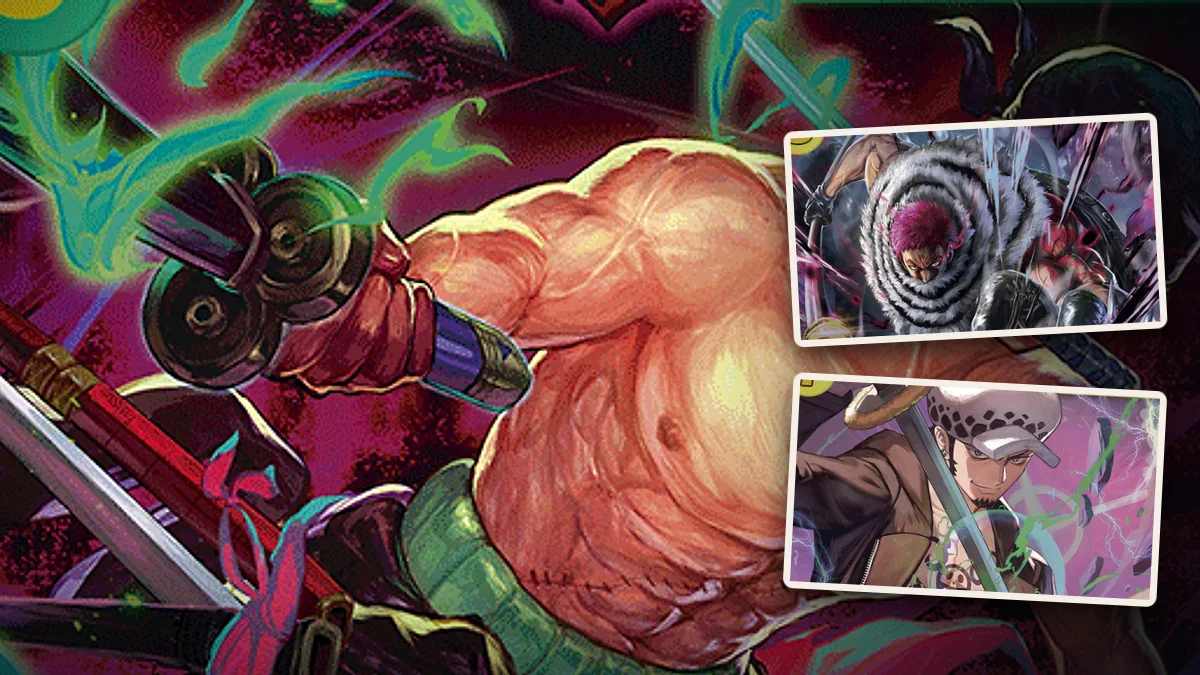
Key points
- A profitable One Piece collection is first a collection that does not lose value: profitability is decided mostly when you buy, not when you sell.
- The Japanese cards that hold their value best usually combine high rarity or alternate art, a major character and demand driven by collectors.
- A coherent theme (one character, one crew, one set) makes a collection easier to read, easier to resell and protects you from impulse buys.
- Condition A or A-, immediate protection in a sleeve then a closed frame, and a log of prices paid including shipping are the three habits that preserve a collection's value.
You have been buying Japanese One Piece cards for a few months, the stack keeps growing, and one question keeps coming back: is all of this still worth something, or are you simply spending money you will never see again? It is the right question to ask early. A collection that grows at random often loses value the moment you buy, while a collection built with a method holds up far better over time.
The answer fits in one sentence: a profitable One Piece collection is first a collection that does not lose money, because every card is bought at the right price, in good condition, stored without damage and tied to a coherent theme. Any gain comes afterwards and is never guaranteed. Here is the method, step by step, to get there without speculating.
Can a One Piece collection really be profitable?
Yes, but not in the sense of videos promising to double your money. With collectible cards, realistic profitability is measured at the exit: what you get back if you sell, compared with what you paid, fees included. For most collectors, the serious goal is to preserve the value of what they buy and let time work on a handful of strong pieces.
The One Piece Card Game has real strengths: a global franchise, an actively played game, sets that release in Japan first and a Japanese edition that European collectors actively seek out. But these strengths mainly benefit desirable cards. A common or a playable rare pulled at random from a booster will generally never gain value, however popular the franchise is.
So the profitability of a collection is decided when you buy, far more than when you sell. A card that was overpaid, damaged or isolated in a set with no logic starts with a handicap that no market rise truly makes up for. The whole method below works on three levers: price, condition and coherence.
Which Japanese cards hold their value best?
Not all rarities behave the same way. Cards that hold up over time usually combine three qualities: high rarity or alternate art, a major character from the saga, and demand coming from collectors as much as from players. Parallel versions of Luffy, Zoro, Shanks, Ace or Nami are a good illustration of this profile.
On the other hand, cards whose value rests only on their tournament strength are fragile: a new set or a meta shift can push them out of decks, and their price follows. Secret Rares (SEC), Manga Rares and some promos (P) stand apart, but their high entry price means you must be even stricter about condition and the price you pay.
The table below sums up the trend by card type. These are qualitative criteria, not promises: they help steer your purchases towards the cards most likely to get through the years without collapsing.
| Card type | Main demand | Sensitivity to reprints | Long-term retention |
|---|---|---|---|
| Playable C, UC, R | Players | High | Low |
| Playable SR | Players | High | Variable, tied to the meta |
| Parallel Leader (L) | Collectors and players | Medium | Good for a major character |
| Parallel of a popular character | Collectors | Low to medium | Good |
| SEC and Manga Rare | Collectors | Low | Good, if condition is flawless |
| Promo (P) | Collectors | Depends on the promo | Depends on its real scarcity |

Why is a coherent theme worth more than a pile of nice cards?
A collection is more than a sum of cards. A set built around a common thread, a character, a crew, an expansion or an art style, is easier to read, to show and to resell than a random assortment. A buyer looking for every Japanese version of Law pays for coherence, not just for each card on its own.
A theme also protects you from yourself. It gives you a simple reason to say no: if the card does not fit the thread, you do not buy it, however tempting it looks that day. This filter is often what separates a collection that keeps its value from a drawer full of impulse purchases, each sensible on its own but with no overall logic.
Pick a theme you genuinely enjoy and that stays realistic for your budget. Chasing every SEC of an entire saga is out of reach for most collectors; gathering the Japanese versions of one character, from the Leader to the parallel, is achievable, motivating and very clear the day you want to show it or pass it on.

How do you buy without losing value from day one?
A collection's first loss happens on the day you buy. Paying more than the market price for a card means accepting a negative start. Before any significant purchase, compare several completed sales for the same version, in the same language and the same condition, rather than listings that say nothing about the price cards actually sell for.
Condition matters as much as the card itself. For our Japanese cards, the Japanese shop states condition A (near mint), A- (very good), B (good, visible wear) or C (fair). For a piece you want to keep and maybe resell, aim for A or A-; B and C suit a card you simply want to display at a lower price, accepting a weaker resale value.
Finally, group your purchases. Shipping weighs heavily on a cheap card: with us, delivery is 4.20 euros for cards and frames, free from 30 euros, and it is paid only once per order. Buying in planned batches rather than one card at a time directly improves the real cost of your collection.
- Check the exact version: set code, rarity, parallel or not.
- Compare completed sales, not asking prices.
- Require condition A or A- for key pieces.
- Group orders to spread shipping costs.
- Record the price paid, shipping included, on arrival.
How do you store your cards so you lose nothing?
A card that drops from A to B because it was handled without protection loses part of its value, sometimes a large part on a high-end piece. Storage is not a detail: it is the second pillar of a profitable collection. The basic rule is simple: every valuable card goes straight into a sleeve, then into rigid protection.
The enemies are well known: direct sunlight, which fades inks; humidity, which warps card stock; dust and repeated handling, which mark corners and surfaces. A closed frame with double glass keeps dust and fingers away, and you no longer need to take the card out every time you want to show it to someone.
Our aluminium one-touch magnetic frame meets both needs, protecting and displaying: 24.80 euros each, buy 2 and get the 3rd free, in black or white. The frames snap together face to back to stack, stand upright like books or attach side by side to the wall with an adhesive magnetic strip, without drilling. Just keep them out of direct sunlight.

Should you keep sealed product alongside your cards?
Sealed product, unopened Japanese displays and boosters, follows a different logic from single cards. Its value depends on the whole set and on how scarce the sealed product becomes once production stops. A Japanese display contains 24 boosters of 6 cards; as long as it stays sealed, it keeps the full potential of its pulls, which appeals to many collectors.
For a value-oriented collection, sealed product can be a complement, not the core. It takes space, careful storage and patience, and it does not display as nicely as a framed card. If you keep some, note the purchase date, leave the shrink wrap intact and store it flat, dry and away from light.
Japanese displays, boosters and pre-orders are available on OPCG.Shop, where pre-orders are paid in full and fully refunded if the product does not reach us. Shipping for sealed product is 6.90 euros, free from 199 euros. Keep a reasonable share: most of the value of a readable collection lies in cards chosen one by one.
How do you track and document your collection over time?
A profitable collection is one whose numbers you know. Keep a simple log, a spreadsheet is enough, with for each card the code, rarity, version, condition on arrival, price paid including shipping and the date. This log prevents duplicates, shows you where your budget goes and becomes invaluable the day you want to insure or sell.
Once or twice a year, update an estimate based on recent completed sales. The goal is not to follow prices daily, which pushes towards rushed decisions, but to spot trends: which cards hold, which ones slip, and what that says about your buying choices. Then adjust your theme if needed.
Also photograph your key pieces, front and back, when they arrive. These photos prove the original condition, reassure a future buyer and serve as a reference in case of damage. For a high-end card, grading may come up later, but it only makes sense for a card in flawless condition.
- Set code and card number
- Rarity and version (regular, parallel, promo)
- Condition on arrival (A, A-, B, C)
- Price paid, shipping included
- Purchase date and front and back photo
A profitable One Piece collection is not a matter of luck, it is built: a theme you love, desirable Japanese cards bought at a fair price, condition A or A- for key pieces, immediate protection and an up-to-date log. With this method you sharply reduce the risk of loss and give time a chance to lift your best pieces. The next step is concrete: choose your theme, list the five cards that define it, then look for them among our Japanese single cards, comparing conditions before you order.
Frequently asked questions
Can a One Piece collection make money?
It can, but nothing guarantees it. Most well-built collections mainly preserve their value, and only a few strong pieces rise clearly. Buy at a fair price, in good condition, and treat any gain as a bonus.
Should I collect in Japanese or English to keep value?
Both markets exist, but the Japanese edition is highly sought after by European collectors, notably because sets release there first. What matters most is staying consistent: mixing languages within one theme makes the collection harder to read when you resell.
What condition should I aim for on a collection card?
For a piece you want to keep and maybe resell, aim for A (near mint) or A- (very good). B and C are fine for displaying a card at a lower price, knowing their resale value will be weaker.
Do frames damage cards in the long run?
No, as long as the card is in a sleeve and the frame is kept away from direct sunlight and humidity. A closed double-glass frame even protects better than an open binder against dust and handling.
Read next
Value and investing
Insuring a card collection: protect and cover your valuable One Piece cards
Home insurance, scheduled valuables, inventory and protection: the method to insure a trading card collection without nasty surprises.
November 13, 2026

Value and investing
One Piece anniversary card value: lasting collectible or passing trend?
One Piece anniversary cards: what keeps their value, what is just hype, and how to buy the Japanese version at the right moment.
November 13, 2026
Value and investing
One Piece card ex leader value: rarity and worth of parallel leaders
Parallel One Piece leaders: what really drives their value, how to check the version and which condition to target before buying Japanese.
November 13, 2026