
One Piece Secret Rare card value: why SECs cost more and which to watch
One Piece Secret Rare value explained: why a SEC beats an SR, which Japanese versions to watch and how to estimate a fair price.
Published on November 13, 20268 min read

Key points
- A Secret Rare (SEC) is the highest rarity in the regular pull of a One Piece Card Game set. Each set only has a handful, and no booster box guarantees you will pull one.
- A SEC is worth more than an SR for three reasons: its scarcity in packs, the popularity of the characters it features and its status as the trophy card of the set.
- Within the same set, the parallel SEC, SP cards and manga rares generally sell above the regular SEC, which remains the best balance between prestige and budget.
- To estimate a Japanese SEC, compare completed sales with the same code, version, language and condition, then add shipping and protection to the card price.
You have spotted a card marked SEC in a listing, or you just pulled one from a Japanese booster, and you want to know what it is really worth. Fair question: the Secret Rare is the highest rarity in the regular pull of the One Piece Card Game, and its price varies enormously depending on the card, the version and the condition. Two cards with the same rarity code can sit in completely different price brackets.
The short answer: a SEC is worth more because it is scarce in every set, it features a major character and it gets a premium visual treatment. Not all SECs are equal, though. This guide explains where that value comes from, how a SEC compares with parallels, SPs and manga rares, which Japanese SECs to watch and how to estimate a fair price before you buy.
In this article
- 1. What is a Secret Rare (SEC) card in the One Piece Card Game?
- 2. Why is a Secret Rare worth more than a Super Rare?
- 3. Regular SEC, parallel SEC, SP or manga: which is worth the most?
- 4. Which Japanese Secret Rare cards should you watch?
- 5. How do you estimate the value of a Japanese Secret Rare before buying?
- 6. Booster, booster box or single card: how should you get a SEC?
- 7. How should you store and display a SEC to protect its value?
What is a Secret Rare (SEC) card in the One Piece Card Game?
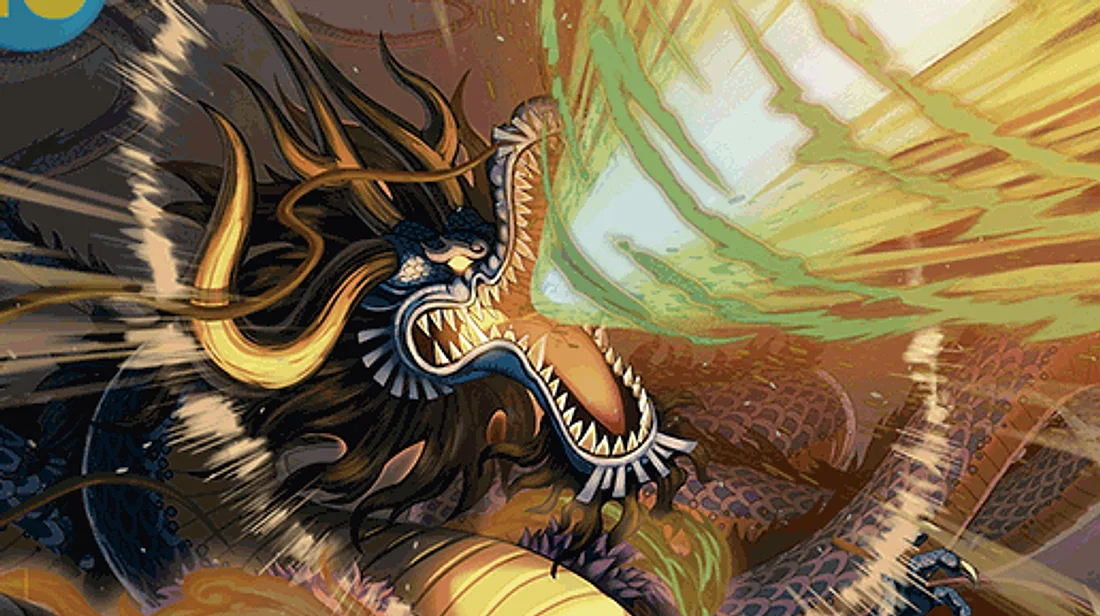
Every One Piece Card Game card carries a rarity code printed in the bottom right corner: C for common, UC for uncommon, R for rare, SR for super rare, L for leaders and SEC for Secret Rare. The SEC sits at the top of the regular rarity ladder of a main set. There are only a handful per set, they come from boosters, and nothing guarantees you will pull one.
In practice, you recognise a SEC by its rarity code, by its number at the end of the set list and by a richer holographic finish than an SR. The publisher generally reserves this slot for central characters of the current arc or iconic figures of the saga: captains, Emperors, members of the Straw Hat crew. It is the card everyone hopes to see when opening a pack.
Do not confuse a SEC with the other special cards. Parallel, or alternate art, cards reuse an existing card with a new illustration. SPs are special reprints of cards from earlier sets with a distinct treatment. Manga rares use panels from the manga itself. A SEC can also exist as a parallel, which adds one more step to the hierarchy.
- The SEC code printed in the bottom right corner
- A number at the end of the set list, after commons and super rares
- A richer, more detailed holo than an SR
- A central character of the set or of the saga
- For the parallel: an alternate illustration and a different surface finish
Why is a Secret Rare worth more than a Super Rare?
The first reason is mechanical: scarcity. An SR turns up regularly when you open a booster box, while a given SEC rarely appears. Since each set has few SECs and boosters do not guarantee them, the supply of a specific SEC stays limited, especially in near mint condition. With equal demand, thinner supply naturally pushes the price up.
The second reason is the subject. SECs showcase the characters fans want to own: Luffy, Shanks, Zoro, Whitebeard, Ace or the Emperors. Demand therefore comes not only from players but above all from collectors, who buy to keep and display. Collector demand is more stable than player demand, which follows deck trends and tournament results.
The third reason is symbolic. A SEC is the centrepiece of a set: it is often the card shown in opening videos and placed in a display case. That trophy status supports its value over time, on two conditions: the character must stay popular, and the card must not be reprinted in a more accessible format that would dilute its scarcity.
| Rarity | How often it is pulled | Main demand | Value potential |
|---|---|---|---|
| SR | Common when opening a box | Players and collectors | Variable, often tied to the meta |
| Regular SEC | Rare, not guaranteed per box | Mostly collectors | High for a major character |
| Parallel SEC | Even rarer | Demanding collectors | Often above the regular SEC |
| SP | Very rare, depends on the set | Collectors | Often high |
| Manga rare | Among the rarest | Advanced collectors | Often the top of the set |
Regular SEC, parallel SEC, SP or manga: which is worth the most?
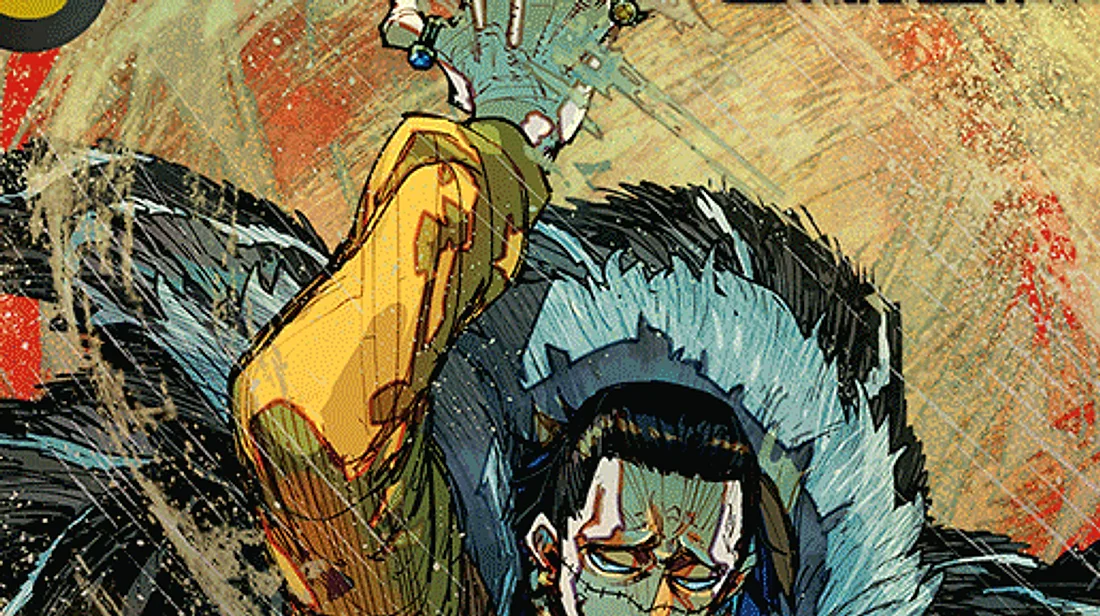
The clear answer: within one set, the regular SEC is rarely the most expensive card. Parallel SECs, SPs and above all manga rares are pulled even less often and generally trade higher. The regular SEC therefore holds an interesting middle position: rare and prestigious, yet more accessible than the very top of the pyramid.
That position often makes it the best balance between prestige and budget for a collection. A regular SEC of a major character delivers most of the display impact, with less price risk than the ultra rare versions. Their prices react more strongly to the hype of the moment, and they can fall as fast as they rose once attention moves on to a new set.
The parallel SEC is for collectors who want the ultimate version of a card. It earns its price when the alternate illustration is genuinely different and well executed, not just because it is rarer. Always compare both versions side by side: if you do not prefer the parallel, the regular SEC is the sensible choice, and it leaves budget for another card.
Which Japanese Secret Rare cards should you watch?

Rather than a list of cards that would quickly date, keep in mind the criteria that separate a SEC that holds its value from one that fades. The first is the character. Major figures of the saga, Luffy first, but also Shanks, Zoro, Ace, Whitebeard, Blackbeard, Kaido or Law, attract lasting collector demand that is largely independent of tournament results.
The second criterion is the set. SECs from the first sets, OP01 to OP05, were printed when the game was just starting, and some copies were played without sleeves. Copies in very good condition are therefore harder to find. SECs tied to landmark arcs of the saga, such as Wano or Egghead, also get special attention from fans.
The third criterion is the artwork. A SEC with a strong composition, a character in action and a holo that pops resells more easily than one with a quieter illustration. Finally, watch for reprints: a SEC reissued in a more accessible format, such as a Premium Booster (PRB) or a box set, can see its demand split across several versions.
- A major character, popular beyond tournaments
- An early set or a landmark arc of the saga
- Strong artwork and a clearly visible holo
- A copy available in A or A- condition, well centred
- No recent reprint diluting demand
How do you estimate the value of a Japanese Secret Rare before buying?
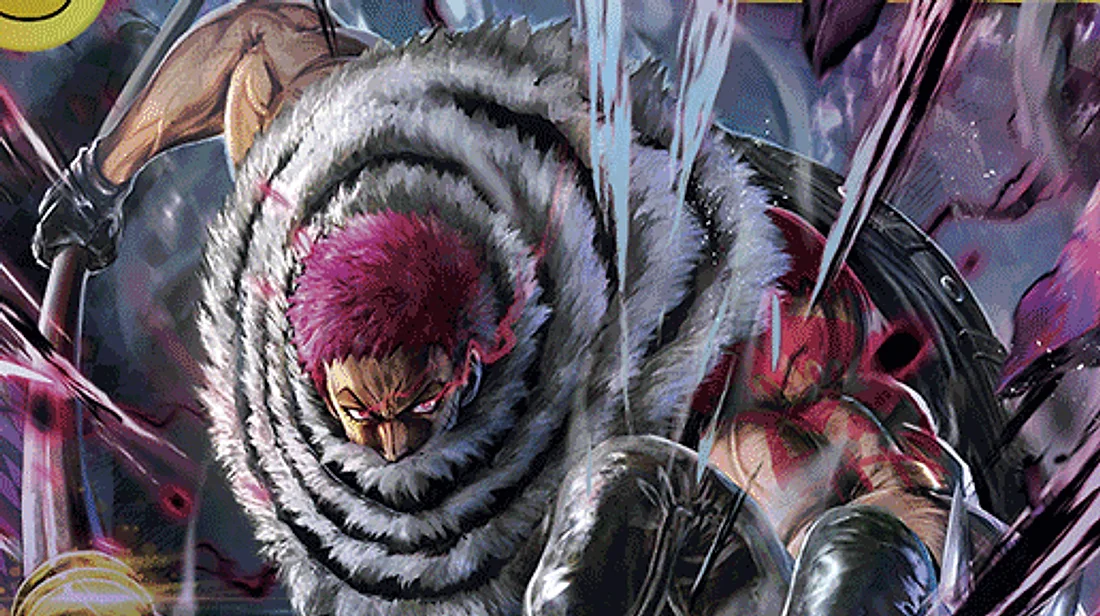
The value of a SEC cannot be read from a single listing. First identify the exact card: its full code with set and number, its version, regular or parallel, and its language. A Japanese SEC and an English SEC have different prices, and a parallel should never be compared with the regular version. Without that precise identification, every price comparison is skewed.
Then compare completed sales rather than asking prices, over several weeks and at the same condition. Condition weighs heavily on a SEC: the holo easily shows scratches, and a whitened corner or scuffed surface is obvious on a shiny card. A SEC in A condition and the same card in B condition do not belong to the same price bracket.
Finally, add the real cost: shipping, possible customs, protection. On our site, Japanese cards are shown in euros including VAT, with delivery at 4.20 €, free from 100 €, and the condition stated by the Japanese shop, from A to C. You compare a complete price with no surprise on arrival, which is the only honest basis for judging an offer.
- Note the exact code, version and language of the card
- Look at recent completed sales, not listed prices
- Compare at equivalent condition: A, A-, B or C
- Check the holo, corners and centring in the photos
- Add shipping, possible customs and protection to the price
Booster, booster box or single card: how should you get a SEC?
Opening boosters to chase a specific SEC is the most expensive and most random method. A Japanese booster box contains 24 packs of 6 cards, and nothing guarantees a SEC inside, let alone the one you want. If your goal is one precise card, the maths almost always favours buying the single.
A booster box still makes sense if you enjoy opening packs, if you are completing a whole set or if you keep sealed products for the long term. In that case, buy it for the experience and the overall contents, not for a hypothetical SEC. OPCG.Shop offers Japanese booster boxes, boosters and pre-orders for this kind of project, with pre-orders fully refunded if the product does not reach us.
For a targeted SEC, buying the single gives you the exact card, the version you want and the condition you choose. That is the idea behind our Japanese cards: every card listed is genuinely for sale in Japan and bought to order for you. And if you like surprises without chasing a specific rarity, the Mystery Box offers a draw of real Japanese cards, bought in Japan and then shipped.
How should you store and display a SEC to protect its value?
A SEC loses value quickly if it is poorly protected. The basic habit is simple: a sleeve straight out of the pack or on arrival, then a rigid holder. The holo is sensitive to friction, and the smallest speck of dust trapped in a loose sleeve can leave micro scratches that show as soon as you tilt the card under light.
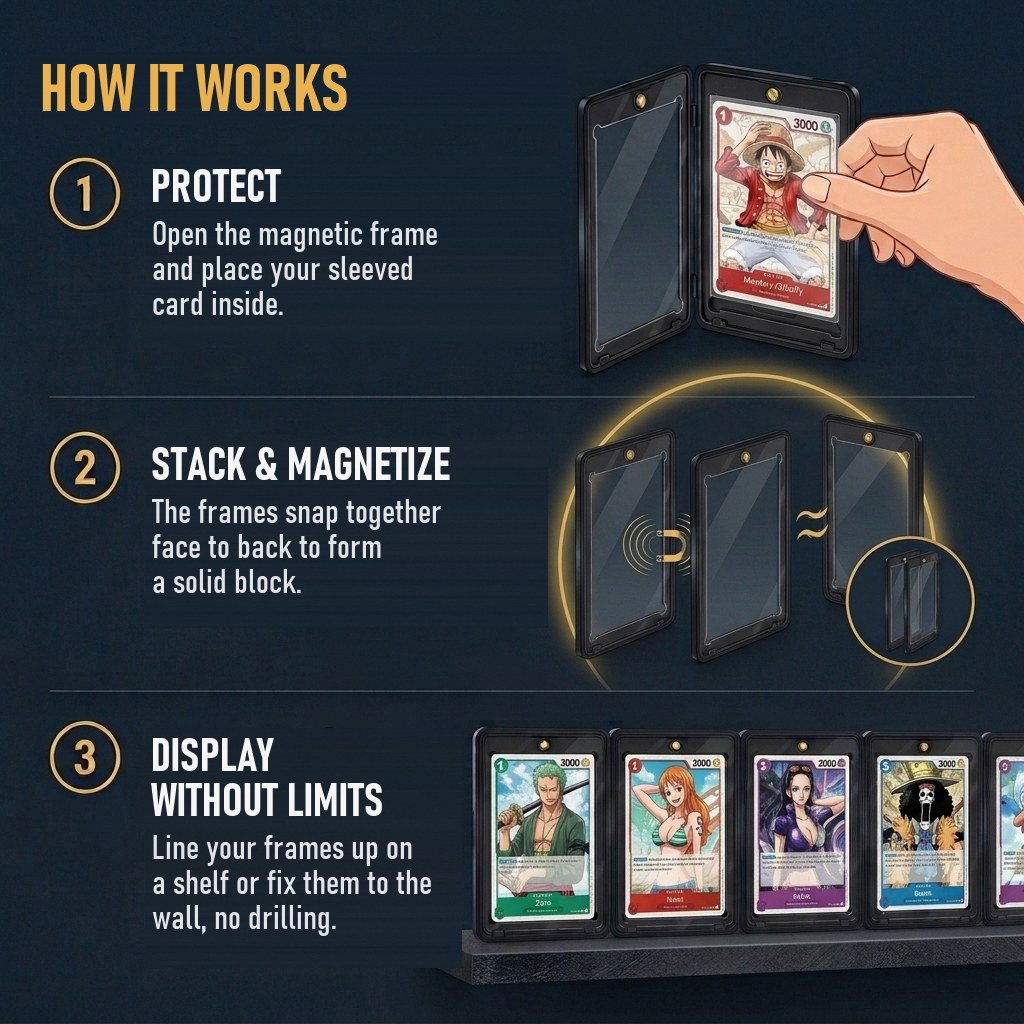
To display it, choose a closed holder that keeps it in place without pressure. Our one-touch magnetic frame in aluminium, with double glazing, in black or white, takes the sleeved card and keeps dust out. It costs 24.80 € each, buy 2 and get the 3rd free, and there is a PSA slab compatible version at 34.80 €, sold empty, if your SEC is graded.
The frames snap together face to back to stack, stand upright like books or mount side by side on the wall with an adhesive magnetic strip, no drilling needed. Just avoid direct sunlight, which can fade colours over time, and keep your SECs away from humidity. A well stored card keeps every chance of staying in A condition.
A One Piece Secret Rare card is worth more because it is scarce, features a major character and holds the rank of trophy card in its set. Its real value still depends on the exact version, the condition and collector demand for the character. The right move: aim for a SEC of a character you love, in A or A- condition, bought as a single at the fairest all-in price, then protect it as soon as it arrives. Browse our Japanese cards to compare the SECs available and their stated condition.
Frequently asked questions
How many Secret Rares are there per One Piece set?
Very few: each main set only has a handful, placed at the end of the card list. The exact number varies from set to set, so check the official list for the set in question. Parallel versions of those SECs come on top.
Is a SEC guaranteed in a Japanese booster box?
No. A Japanese booster box contains 24 packs of 6 cards, but a SEC is not guaranteed. To get a specific SEC, buying the single is the safest route.
Is a Japanese SEC worth more than an English SEC?
It depends on the card: the two languages have separate prices that must be compared separately. Japanese cards are sought after by collectors, partly because sets release in Japan first. Always compare at the same language, version and condition.
Should you get a Secret Rare card graded?
Grading makes sense for a SEC in very good condition of a sought after character, when the cost stays reasonable compared with the card's value. For a SEC in B or C condition, it rarely pays off. Meanwhile, keep it sleeved and in a closed frame.
Read next
 Value and investing
Insuring a card collection: protect and cover your valuable One Piece cards
November 13, 20267 min read
Home insurance, scheduled valuables, inventory and protection: the method to insure a trading card collection without nasty surprises.
 Value and investing
One Piece anniversary card value: lasting collectible or passing trend?
November 13, 20267 min read
One Piece anniversary cards: what keeps their value, what is just hype, and how to buy the Japanese version at the right moment.
 Value and investing
One Piece card ex leader value: rarity and worth of parallel leaders
November 13, 20267 min read
Parallel One Piece leaders: what really drives their value, how to check the version and which condition to target before buying Japanese.