
One Piece card that gains value: the real signals and the traps
Which signals point to a One Piece card that will gain value? Version, character, supply and condition: what really matters, and what misleads.
Published on November 13, 20266 min read
Key points
- A One Piece card mainly gains value when a rare, hard to reprint version (parallel, SP, manga rare) is combined with a character that collectors strongly want.
- Tournament demand pushes a card up fast, but the signal is fragile: a reprint, a restriction or a better card can wipe out the rise.
- For a Japanese card, condition matters as much as version: a copy in A condition holds its value better than a B or C copy of the same card.
- The right habit is to compare actual sold prices over several months, not asking prices, and to buy first a card you genuinely want to display.
You have spotted a Japanese One Piece card you like and you wonder whether it will be worth more in a year, or whether today's price is already a peak. It is the right question to ask before buying: some cards gain value steadily, others spike for a few weeks and then fall back, and the difference rarely shows in the listed price alone.
The short answer: a card gains value when several signals add up. A rare version that is hard to reprint, a character loved well beyond the player base, a supply that dries up and flawless condition. On the other hand, a rise driven only by competitive play or by release hype is the signal that misleads the most. Here is how to tell them apart, criterion by criterion, with a simple method to check before you buy.
In this article
- 1. What really drives up the price of a One Piece card?
- 2. Which signals are reliable, and which ones mislead?
- 3. Version and rarity: which signal should you check first?
- 4. Does the character matter more than in-game power?
- 5. Why do supply and reprints change everything?
- 6. What role does condition play in a Japanese card's value?
- 7. How do you check a card's potential before buying it?
What really drives up the price of a One Piece card?
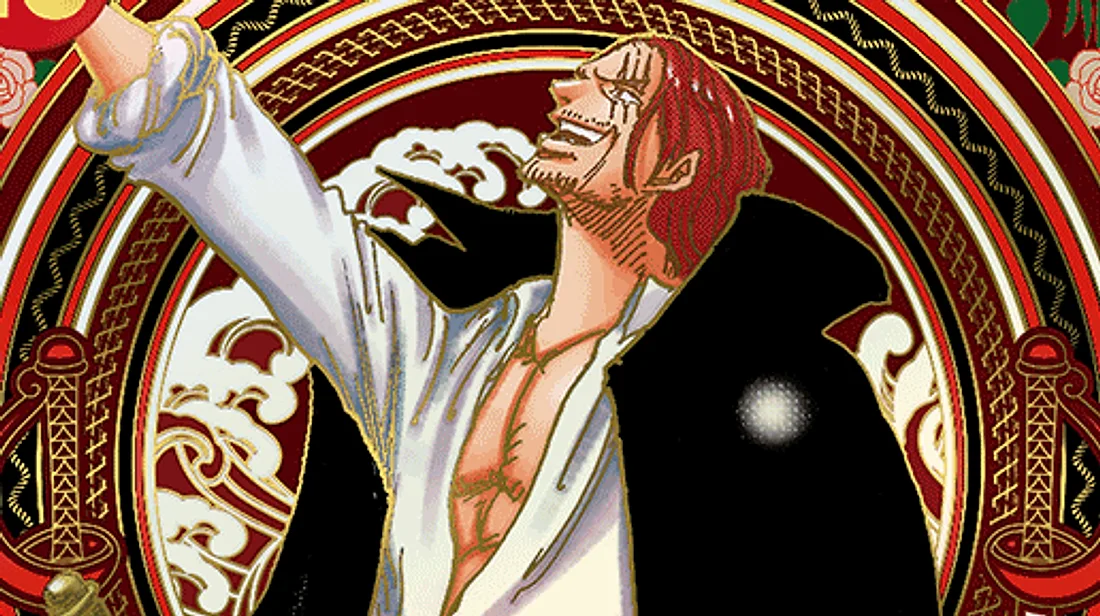
The price of a Japanese card follows a simple rule: lasting demand meeting a supply that cannot easily grow. A heavily played common card stays abundant, so its price hits a ceiling. A parallel card of an iconic character, printed in a single set and never reissued in that form, sees its available stock shrink as collectors keep it in their binders and frames.
So you need to separate two engines. The first is collector demand, slow but steady, rooted in attachment to a character or an illustration. The second is player demand, fast but volatile, which depends on how strong the card is in the current format. Cards that gain value over time almost always rely on the first engine, sometimes boosted by the second.
Finally, the Japanese market moves first, because sets are released in Japan before anywhere else. Trends take shape there before reaching Europe, which gives an attentive collector time to observe before buying.
Which signals are reliable, and which ones mislead?
Not all signals are equal. Some rest on lasting elements, such as the rarity printed on the card or the long-standing popularity of a character. Others are fashion effects that can push a price up without guaranteeing anything for the future. The table below sums up what we look at before considering that a card has real potential.
Keep one idea in mind: a single signal is never enough. A card that ticks rare version, strong character and excellent condition has a solid profile. A card that only ticks the box “played in tournaments right now” has a speculative profile, even if its price is climbing fast and everyone is talking about it.
| Signal | Reliability | Why |
|---|---|---|
| Parallel, SP or manga rare version | High | Limited print, hard to reprint identically |
| Iconic character (Luffy, Zoro, Shanks, Ace, etc.) | High | Collector demand, beyond players |
| A condition, well-centred card | High | Flawless copies become scarcer over time |
| Card heavily played in tournaments | Medium to low | Depends on the format, can drop quickly |
| Rise right after release | Low | Novelty effect, supply increases afterwards |
| High asking price on a listing | Very low | Only sold prices reflect the market |
Version and rarity: which signal should you check first?
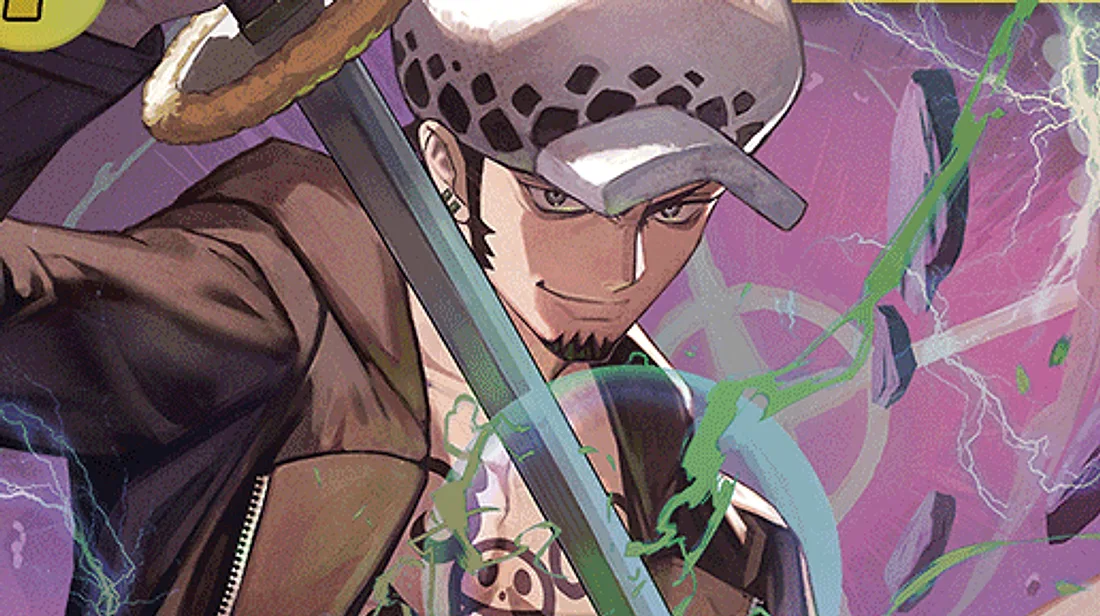
Version comes first. For the same card, the base version (C, UC, R or SR) and its parallel version are worlds apart: the parallel, with its alternative artwork or shiny finish, is printed in far smaller numbers. At the top, SP and manga rare cards concentrate collector demand. SEC cards, the highest rarity of the regular print, often follow the same logic, especially in parallel form.
Leaders (L) play a special role: each set offers several, and their parallel versions are sought after because a leader embodies both a character and a deck. Promos (P) vary a lot: some, widely distributed, stay affordable; others, tied to an event or a tournament, become rare very quickly.
To check the version, look at the code printed on the card (for example OP05 or EB01), the rarity shown next to it and the marks of a parallel. Our article on alternate art cards explains how to recognise them without mistakes.
Does the character matter more than in-game power?
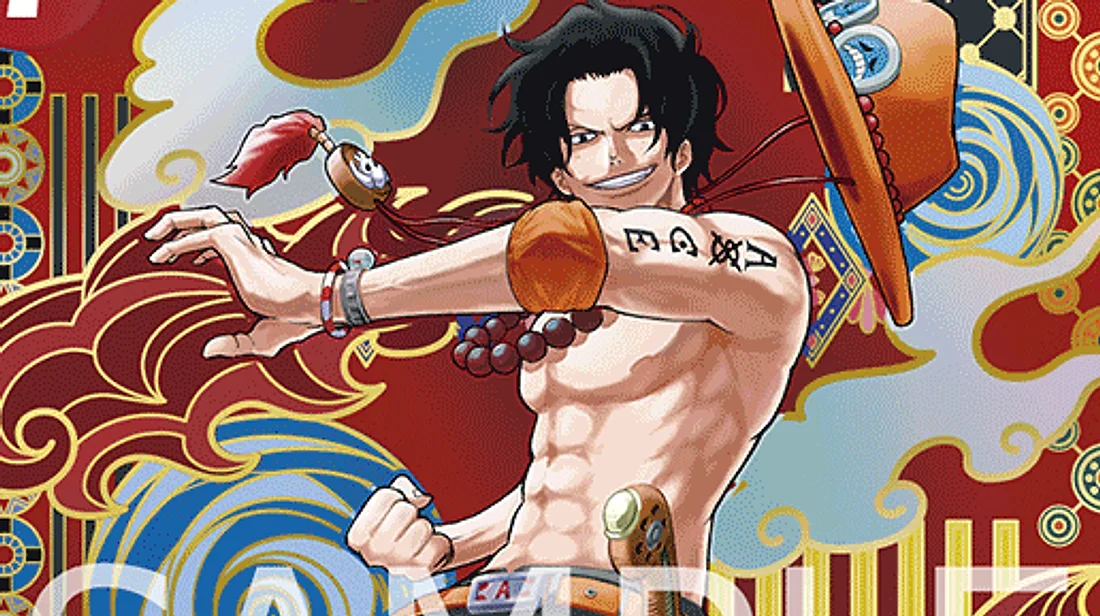
Over time, yes. Cards that keep their value for years are very often those of characters people love regardless of the game: Luffy in his various forms, Zoro, Shanks, Ace, Nami, Boa Hancock, Law or Yamato. These characters attract collectors who do not play, and that demand does not vanish when the format changes or a deck falls out of favour.
News from the anime and manga adds a boost. A major arc, a revelation or a film can revive interest in a character, and therefore in their best versions. This signal is real but temporary: watch whether interest lasts several months or fades as soon as the episode has aired.
Conversely, a secondary character who is very strong in the game can see their price climb, then fall as soon as a new card replaces them in decks. In-game power is an accelerator, rarely a foundation.
Why do supply and reprints change everything?

A card can only gain value if supply does not keep up with demand. Right after a set's release, a huge number of boosters are opened and cards flood the market: this is often when prices are most erratic, before they settle. Later, once the set is no longer produced and its booster boxes become scarce, supply dries up and the most sought-after cards can climb again.
Reprints are the main risk. A popular card can come back in a starter deck, a promo or a premium booster (PRB), sometimes with new artwork. The original version often keeps its status, but a card whose only appeal was its in-game function can lose value once it becomes easy to obtain again.
- Check whether the card has already been reissued in another product (starter deck, promo, PRB).
- See whether the original set is still easy to find as a booster box or is becoming scarce.
- Tell the original version apart from a reissue: code, rarity and finish often differ.
- Be wary of sudden spikes on a card that is still plentiful.
What role does condition play in a Japanese card's value?

A decisive one. Two copies of the same card are not worth the same depending on their condition. Japanese shops usually use a simple scale: A (near mint), A- (very good), B (good, visible marks) and C (fair). For a card you hope will gain value, aiming for A or A- is almost essential: these are the copies demanding collectors look for, and the ones whose supply shrinks over time.
Condition is never gained, only lost. A card bought in A condition must stay that way: sleeve it on arrival, then use rigid protection, away from direct light, humidity and repeated handling. A card displayed without protection, even for a few months, can lose its A status, and part of its value with it.
That is why we designed our magnetic one-touch frame: aluminium and double glass, the sleeved card stays protected while remaining visible, on the wall or on a shelf.
How do you check a card's potential before buying it?
A simple method avoids most mistakes. It guarantees no profit, since no collectibles market is predictable, but it helps you separate a card with a solid profile from one carried by the hype of the moment. Follow these steps in order, without skipping any.
The last step matters most. A card that gains value is a bonus; a card you love displaying is a certainty. By buying first for enjoyment, with the right criteria, you greatly reduce the risk of regretting your purchase, whatever the market does next.
- Identify the card: set code, number, rarity and version (base, parallel, SP, manga rare).
- Assess the character: is it loved beyond players, and for a long time?
- Look at the history of sold prices over several months, not asking prices.
- Check past or announced reprints.
- Insist on A or A- condition, and plan protection from the moment it arrives.
- Set a budget you would happily spend on this card even if its price stays flat.
A One Piece card that gains value almost always combines the same ingredients: a rare version that is hard to reprint, a character collectors love, a shrinking supply and flawless condition. Rises driven only by competitive play or by a set's release are the most misleading signals. Your next step: pick a character you love, find their rarest version among our Japanese cards in A or A- condition, compare sold prices, then protect it as soon as it arrives.
Frequently asked questions
Which One Piece card will gain value?
Nobody can guarantee it. The strongest profiles combine a rare version (parallel, SP, manga rare), an iconic character and excellent condition. Cards whose rise depends only on competitive play are clearly riskier.
Do Japanese One Piece cards gain value like English ones?
Each market has its own dynamics, but value rests on the same criteria: version, character, supply and condition. Japanese cards come out first and are often appreciated by collectors for their versions and finish.
Should a card stay sealed to gain value?
A single card does not need to stay sealed: what matters is that it remains in A condition. A sleeve followed by a frame or a toploader is enough, away from direct light and humidity.
Is a newly released card a good buy for value?
Rarely in the first days, because supply is rising and prices are erratic. Waiting a few weeks often shows where the price settles, unless it is a card you absolutely want.
Read next
 Value and investing
Insuring a card collection: protect and cover your valuable One Piece cards
November 13, 20267 min read
Home insurance, scheduled valuables, inventory and protection: the method to insure a trading card collection without nasty surprises.
 Value and investing
One Piece anniversary card value: lasting collectible or passing trend?
November 13, 20267 min read
One Piece anniversary cards: what keeps their value, what is just hype, and how to buy the Japanese version at the right moment.
 Value and investing
One Piece card ex leader value: rarity and worth of parallel leaders
November 13, 20267 min read
Parallel One Piece leaders: what really drives their value, how to check the version and which condition to target before buying Japanese.