
Numbered One Piece card: how to recognise it and value it correctly
Published on November 13, 2026 · 7 min read

Key points
- On a One Piece card, the number printed at the bottom (for example OP05-119) is a collector code identifying the set and the card. It is not a limited print run.
- Individually numbered cards such as 012/100 are the exception in the One Piece Card Game: rarity mostly comes from pull rates (SEC, SP, parallels) and from distribution (P promos, tournament prizes).
- The number on a PSA slab label is a certification number that can be checked on the grader's website. It says nothing about the rarity of the card itself.
- To value a special card, combine four criteria: real rarity, character, condition and completed sales, never just the asking price in a listing.
You have spotted a listing for a “numbered One Piece card”, or you are holding a Japanese card with a code at the bottom and wondering whether that number makes it rare. It is one of the most common points of confusion for new collectors: the word “numbered” actually covers three very different things, and only one of them is a limited print run in the strict sense.
The short answer: every One Piece card carries a collector number, which does not make it rare. Genuine limited editions are recognised by their rarity, finish and distribution, and are valued on completed sales. This guide shows you how to read the number, spot an authentic special card, avoid misleading listings and estimate a fair price before you buy.
What does “numbered One Piece card” actually mean?
In listings and on forums, “numbered” is used in three ways. The most common simply refers to the code printed on every card, used to place it within its set. The second refers to individual numbering, such as 012/100, which would indicate a known, limited print run. The third, increasingly frequent, refers to the certification number of a graded card, printed on the slab label.
These three numbers do not mean the same thing and do not affect value in the same way. The collector code appears on every card, commons included. Individual numbering is extremely rare in this game. A certification number proves that a card has been graded, but what matters is the grade and the card itself, not the number.
So before paying a premium for a “numbered” card, find out which number the seller is talking about. That single question filters out many listings that play on the ambiguity of the word and keeps you from overpaying for an ordinary card.
| Number | Where it appears | What it tells you | Effect on value |
|---|---|---|---|
| Collector code (e.g. OP05-119) | Printed at the bottom of every card | Set and position in the card list | None on its own |
| Individual numbering (e.g. 012/100) | Printed at the factory, very rare | A limited, announced print run | Strong if genuine |
| Certification number | Label of a graded slab | The slab's identity with the grader | Indirect: the grade is what counts |
How do you read the number printed on a Japanese card?
On a Japanese One Piece card, the code has two parts. The letters and digits before the hyphen identify the product: OP for main boosters, EB for extra boosters, ST for starter decks, PRB for premium boosters, P for promos. The digits after the hyphen give the card's position in that product's list.
The rarity appears next to it: C, UC, R, SR, SEC, L for leaders, SP for special cards, P for promos. A key point: a parallel card, also called an alternate art, keeps exactly the same code as its base version. Two cards with the same code can therefore be worth very different amounts, depending on whether you are looking at the standard version or the alternate artwork.
The code is your best verification tool, as long as you combine it with a close look at the artwork and finish. It lets you find the exact card entry, compare listings for the right version and spot any mismatch between the stated code and the pictures.
- Prefix: the product (OP, EB, ST, PRB, P)
- Number: the card's position in the list
- Rarity letter: C, UC, R, SR, SEC, L, SP or P
- Artwork and finish: what separates a parallel from the base version

Are there One Piece cards with a numbered limited print run?
In the One Piece Card Game, cards with individual numbering such as 012/100 are the exception, unlike what you see in some other card games or in sports cards. Rarity mostly comes from two levers: pull rates in boosters, which make SEC, SP and parallels hard to get, and the way a card is distributed.
The second lever matters most for limited editions. Promos, coded P, are handed out at events and tournaments, bundled with certain products or given as prizes. Their quantity is not printed on the card, but it is limited by the channel: a card reserved for top finishers at a tournament inevitably circulates in small numbers.
If a listing presents a One Piece card as numbered to a handful of copies, ask for a sharp photo of the number, look for an official reference to that edition and check that it is an original print. Without a clear source, treat the claim as unverified and do not pay extra for it.
How do you recognise a special card or limited edition?
A special card is recognised by a set of clues, never a single one. Start with the code and rarity letter, then look at the finish: texture, holographic effect, borders, signature or special marking. SP cards and alternate arts usually look clearly different from the base version.
For promos, provenance matters as much as the card. A tournament or event card often carries its own marking, and its distribution history is documented by the community. A supposedly ultra-rare card that nobody can find any trace of calls for maximum caution.
Finally, check overall consistency: language, font, artwork framing and the back of the card should match authentic Japanese cards from the same set. A difference in colour or sharpness is often the first sign of a reproduction.
- Code and rarity consistent with the official card entry
- Finish specific to the version (texture, holo, border)
- Specific marking for promos and tournament prizes
- Documented provenance for limited-distribution editions
- Back, font and colours identical to authentic cards

How do you value a special or limited One Piece card?
The value of a special card rests on four combined criteria. Real rarity first: a parallel SEC or a tournament promo is not as available as an SR. Character next: Luffy, Shanks, Ace, Nami or Yamato draw more collectors, which supports demand over time.
Then condition, decisive for expensive cards: a centring flaw or edge whitening weighs heavily. Finally, the market: only completed sales tell you what a card is worth. An asking price is just an intention, especially when the seller leans on the word “numbered” to justify a high figure.
For a Japanese card, compare prices in Japan first, then add the cost of getting it to you: that is often where the most interesting gap lies for a European buyer. On our Japanese single cards, the price shown in euros including VAT covers the purchase in Japan, the stated condition (A, A-, B or C) is displayed, and shipping is free from €30.
| Criterion | Pushes value up | Pulls value down |
|---|---|---|
| Real rarity | SEC, SP, parallel, restricted-distribution promo | Standard rarity, widely available |
| Character | Major character sought by collectors | Secondary character |
| Condition | A (near mint), good centring | B or C, visible wear |
| Market proof | Regular, consistent completed sales | Only asking prices |
| “Numbered” claim | Documented original numbering | Collector code sold as a limited run |

Which traps should you avoid with so-called numbered cards?
The first trap is wording: presenting the collector code as proof of rarity. A listing that stresses “numbered card” without stating the rarity or version is counting on an inexperienced buyer. The second is confusing a slab's certification number with a limited run, when every graded card has one.
The third, more serious trap involves numbers added afterwards: a stamp, sticker or handwritten mark has no official value and can even damage the card. Be wary as well of “custom” cards or reproductions sold as special editions, often given away by a different finish or print quality.
Do not rely on a price taken from the wrong version either. Since the parallel and base share the same code, a quick search can mix the two and skew your estimate in either direction.

How should you store and display a limited card?
A special card loses value quickly with the slightest flaw. Sleeve it as soon as it arrives, avoid handling it with bare hands, then place it in a rigid holder. Keep it away from direct sunlight, humidity and large temperature swings, which can make the card curl.
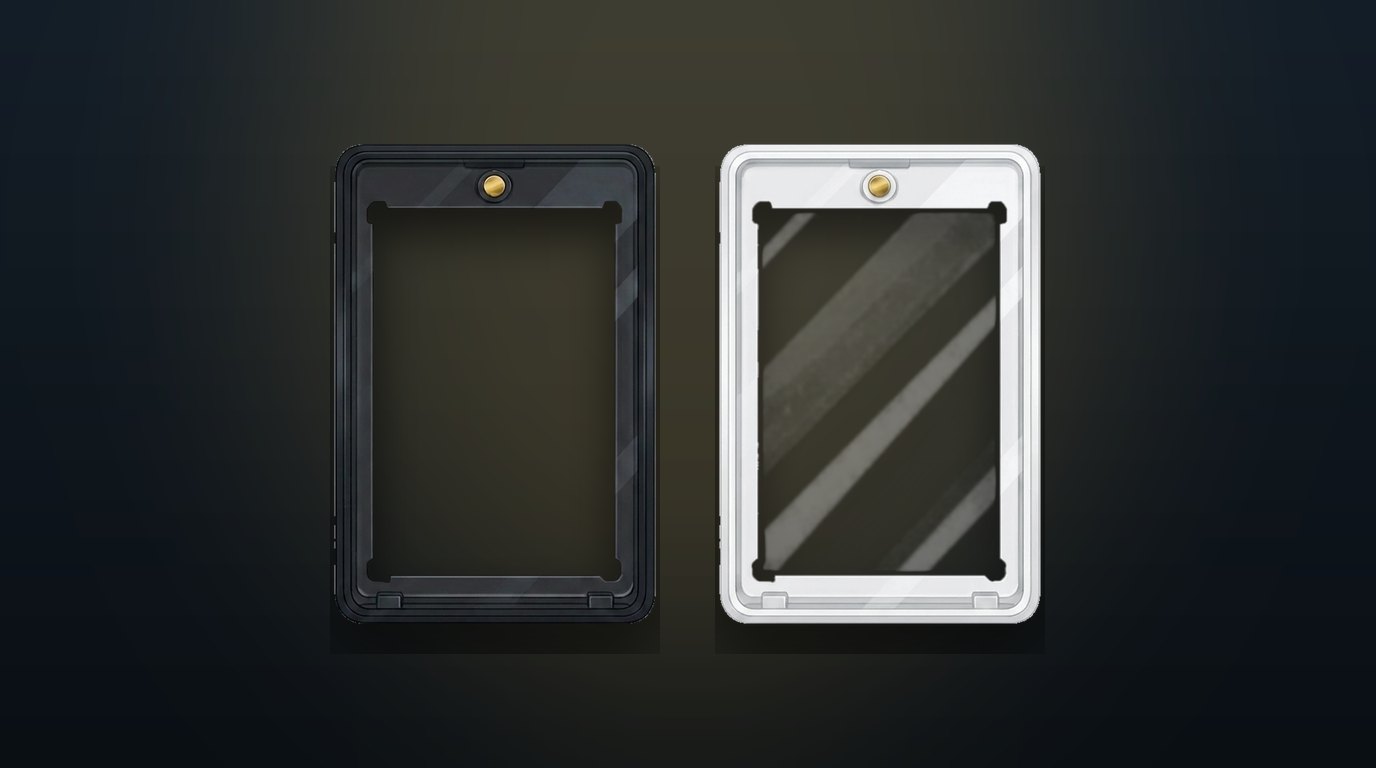
For display, a closed frame protects better than an open stand. Our magnetic one-touch frame in aluminium, with double glazing, in black or white, costs €24.80 each, with the third free when you buy two; a PSA slab-compatible version is €34.80, sold empty. The frames stack face to back, stand upright like books or attach side by side to the wall with adhesive magnetic tape, no drilling needed.
Finally, keep a record of each card: code, version, condition at purchase, provenance and photos. This small file makes a future sale easier and documents a limited edition, which reassures a buyer far more than the word “numbered”.
Verdict: a “numbered” One Piece card is only rare if that number reflects an original, documented limited print run, which remains the exception in this game. The printed code identifies the card and the slab number verifies a grading; value comes from real rarity, character, condition and completed sales. Your next concrete step: note the code of the card you want, identify its exact version, then compare it with our Japanese single cards before you decide.
Frequently asked questions
Does the number at the bottom of a One Piece card show its rarity?
No. The code, for example OP05-119, shows the set and the card's position in the list. Rarity is shown by the letter beside it (C, UC, R, SR, SEC, L, SP, P) and by the version, base or parallel.
Are there One Piece cards numbered to just a few copies?
They are the exception in the One Piece Card Game. Limited editions are mostly limited by distribution, such as tournament or event promos. If a card is sold as numbered, ask for an official source and a clear photo of the number.
Is a PSA graded card a numbered card?
The number on a PSA label is a certification number that identifies the slab, not a limited print run. It can be checked on the grader's website. Value depends on the card itself and its grade.
How can I tell if a special card is fairly priced?
Compare completed sales of the exact same version in the same condition. For a Japanese card, start from the price in Japan and add the cost of shipping it to you. Ignore asking prices that rely only on the word “numbered”.
Read next
Value and investing
Insuring a card collection: protect and cover your valuable One Piece cards
Home insurance, scheduled valuables, inventory and protection: the method to insure a trading card collection without nasty surprises.
November 13, 2026

Value and investing
One Piece anniversary card value: lasting collectible or passing trend?
One Piece anniversary cards: what keeps their value, what is just hype, and how to buy the Japanese version at the right moment.
November 13, 2026
Value and investing
One Piece card ex leader value: rarity and worth of parallel leaders
Parallel One Piece leaders: what really drives their value, how to check the version and which condition to target before buying Japanese.
November 13, 2026