Cleaning a One Piece card: what to do and what never to do
Cleaning a One Piece card: dust and fingerprints come off dry, everything else is permanent. Method, safe tools and the mistakes to avoid.
Published on November 18, 20267 min read

Key points
- A One Piece card should only ever be cleaned dry: dust and fingerprints come off with an air blower, a soft brush or a clean microfibre cloth, with no pressure.
- Water, alcohol, glass cleaner, erasers and wipes should never touch a card: they can warp the card stock, dull the varnish, scratch the foil and whiten the edges.
- Scratches, whitened edges, stains and creases cannot be cleaned away: they are permanent flaws, and they are what sets a Japanese card's condition at A, A-, B or C.
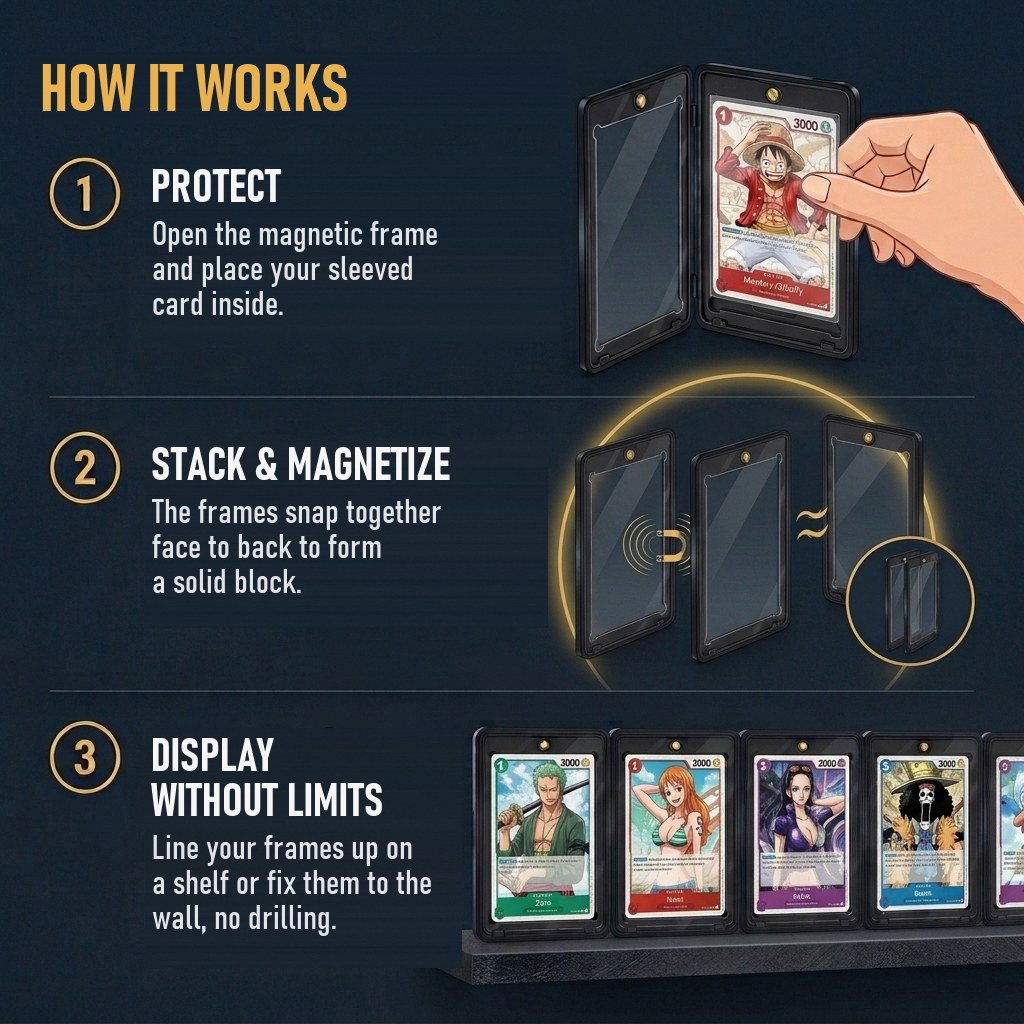
- The best cleaning is the one you never have to do: sleeving a card as soon as the booster is opened, then storing it in a rigid holder or a closed frame, keeps dust and fingers off it.
You have just received a Japanese card, or you are taking out one that has been stored for months, and you notice dust on the foil, a fingerprint on the artwork or a dull haze. The reflex is to rub it, blow on it, maybe even reach for a cleaning product. That is exactly the move that turns an A condition card into a B condition card, in a few seconds and with no way back.
The short answer: yes, you can clean a One Piece card, but only dry, with soft tools, and only what is sitting on the surface. Anything that is part of the card itself (a scratch, a whitened edge, a stain, a crease, warping) cannot be cleaned, and trying to clean it makes the flaw worse. Here is the step by step method, the tools to use, the ones to ban, and how to stop needing to clean your cards at all.
Frequently asked questions
Can you clean a One Piece card with water?
No. Even a little moisture can make the card stock swell and warp the card, especially if it is a foil card. Stay dry: an air blower, a soft brush and a clean microfibre cloth.
How do you remove a fingerprint from a holographic card?
Lay a clean folded microfibre on the card and make small straight movements along its length, without pressing. If the mark is still there after two or three passes, stop: if you keep going, you risk scratching the foil.
Can an eraser fix a whitened edge?
No. An eraser tears away material and makes the whitening worse instead of hiding it. A whitened edge is a permanent flaw, already reflected in the card's A, A-, B or C condition.
How do you clean a frame or toploader without damaging the card?
Clean the protection, not the card: a dry microfibre on the glass, or a cloth with a little glass cleaner sprayed onto it, never directly onto the protection. Do it with the frame closed or the card taken out, and let everything dry fully before putting the card back.