
Japanese card condition A, B, C: what each grade really means
Conditions A, A-, B and C on Japanese One Piece cards: what each letter describes, what you actually receive and which one to pick for your use.
Published on November 14, 20268 min read

Key points
- On Japanese One Piece singles, condition A means near new, A- very good, B good with visible wear and C fair with clear signs of use.
- The condition is assigned by the Japanese shop selling the card: it is a seller's visual assessment, not an official grade like the ones PSA issues.
- For a card going into a frame, A- usually offers the best balance between looks and price; A is mainly worth it for grading or a centrepiece.
- A card listed as A can still show a minor factory flaw, such as a print line or off-centre printing, because the condition describes wear rather than manufacturing perfection.
You are looking at a Japanese One Piece card and, next to the price, there is a single letter: A, A-, B or C. It moves the price, sometimes a lot, yet nobody explains what it actually covers. Does a B card arrive damaged? Is an A card flawless? And is it really worth paying more for an A when the card will end up in a frame or a deck?
The short answer: A means a near new card, A- a very good card with tiny marks, B a good card with wear you can see with the naked eye, and C a fair card with obvious use. These letters are assigned by the Japanese shop selling the card, by eye, not by a grading company. This guide breaks down each level, the typical flaws, what you really get when you open the parcel, and gives a clear verdict on which condition to choose for your purpose.
In this article
- 1. What exactly do conditions A, A-, B and C mean?
- 2. Who assigns a Japanese card's condition, and on what criteria?
- 3. A or A-: can you actually see the difference?
- 4. B and C: when a worn card is still a good buy
- 5. What you really receive: what to expect when you open it
- 6. Which condition should you choose for your use?
- 7. How do you preserve your card's condition once it arrives?
What exactly do conditions A, A-, B and C mean?

These four letters form the scale Japanese shops commonly use to describe a card sold as a single. They measure neither rarity nor value, only the physical state of the card: surface, edges, corners, front and back. A SEC in C condition is still a SEC, and a common in A condition is still a common. Mixing up condition and rarity is the most frequent mistake new buyers make.
Read the scale from top to bottom. A is the card that looks fresh out of the booster: no crease, no visible whitening, clean surface. A- adds one or two micro marks you have to hunt for under a light. B is a card that has been handled: fine scratches, slightly whitened edges, a small mark visible without a magnifier. C signals obvious wear, sometimes a light crease or a clear mark, but the card is complete and perfectly readable.
The key point: this is a seller's description, made by eye, card by card. It is useful and generally on the cautious side, but it is not a numerical grade like the one a grading company issues. The table below sums up what each level means for you in practice.
| Condition | Description | Typical flaws | Recommended use |
|---|---|---|---|
| A | Near new | None visible to the naked eye, possibly a minor factory flaw | Display, frame, grading project |
| A- | Very good | One or two micro marks under raking light | Display, demanding collection on a controlled budget |
| B | Good, visible wear | Fine scratches, slightly whitened edges or corners | Play, filler cards, frame if the front is clean |
| C | Fair | Clear wear, visible mark, sometimes a light crease | Play, stopgap card, minimal budget |
Who assigns a Japanese card's condition, and on what criteria?
The condition is set by the Japanese shop holding the card when it lists it for sale. When you buy from us, we show that condition exactly as announced: every card displayed is genuinely for sale in Japan and bought when you order. The letter you see is therefore the one a buyer in Japan would see, for that specific copy.
The criteria are always the same, in a logical order: the front surface (scratches, fingerprints, odd reflections on shiny cards), the four corners, the four edges, then the back, which is often the first to betray handling. On a foil or parallel card, the surface matters enormously, because the slightest scratch catches the light as soon as you tilt the card.
Japanese shops generally have a reputation for being strict: a card sold as A there is often cleaner than many cards labelled 'near mint' elsewhere. That is a tendency, not an absolute guarantee. Two sellers may place the same borderline card differently, one at A and the other at A-, because grading by eye always involves some judgement.
A or A-: can you actually see the difference?
In the vast majority of cases, no, not at normal viewing distance. The gap between A and A- comes down to a detail you spot by tilting the card under a lamp: a micro scratch on the shiny surface, a tiny white dot on a corner, a faint mark on the back. Once the card is in a sleeve and then a frame, that detail almost always disappears.
That is why A- is often the smartest condition for display. You get a card that, on a shelf or on the wall, looks exactly like a new one, usually for a little less than the A copy. The gap varies with the card and demand: when both conditions are listed, simply compare the two lines before deciding.
A is still genuinely worth it in two cases. You are considering grading, where every micro flaw can cost a point. Or you collect with a demand for perfection and you know the detail will bother you every time you pick the card up. In both situations, pay the difference without hesitation: it is what makes the piece valuable.
B and C: when a worn card is still a good buy

A B card is not a damaged card. It has had a life: passed around, shuffled, maybe played. The wear shows if you look closely, but the artwork is intact and the card presents well. For a playing card, a filler card in a binder or a version you simply want to own, B often offers the best ratio between looks and price.
C is for uses where appearance matters little: completing a deck, trying a card before investing in a nicer copy, owning the card for its own sake. The wear is obvious, sometimes with a light crease or a clear mark. For an important collection piece, a SEC or a sought-after parallel, avoid C: it will weigh heavily if you ever sell.
One last point: on the same card, the price gap between A and B is sometimes large and sometimes tiny. When it is tiny, always take the better condition, you will not regret it. When it is wide, ask yourself honestly whether the card will be examined closely or simply displayed at a distance.
What you really receive: what to expect when you open it
A single bought in Japan is a real card, not a generic copy: the listed condition describes that exact card. When you open the parcel, you get what was described, within the margin of judgement inherent to any grading by eye. An A card should look new to you; a B card should show wear, but nothing that contradicts its description.
Japanese cards also have quirks that have nothing to do with wear. Shiny cards can curl slightly with humidity, something that often eases once the card is stored flat. Print lines or off-centre printing come from the factory, not from poor handling, and can appear even on a card listed as A.
To check your card calmly, always follow the same routine, as soon as it arrives and before any prolonged handling:
- Open the parcel on a clean, dry surface, with dry hands.
- Examine the front under a lamp, tilting the card to reveal scratches.
- Look at the four corners, then the four edges, checking for white spots.
- Turn the card over and inspect the back, often the most telling side.
- Slide it straight into a new sleeve before storing or displaying it.
Which condition should you choose for your use?
Start with where the card is going, not with the letter. A card destined for the wall, behind glass, is viewed from a metre away: A- is almost always enough, and B can work if the front is clean. A card meant for grading needs an A, and only if the centring visible in the photos suits you.
For play, the logic flips: the card will be sleeved, shuffled and handled every game. Paying for an A for a deck only makes sense if you also plan to keep it in your collection. A B, or even a C, does the job perfectly and frees up budget for other cards.
For possible resale, keep one simple rule in mind: condition is the first thing a buyer looks at, and it never improves over time. If the card is meant to be kept for a long time, buy the best condition your budget allows, then protect it from day one. Here is the summary to remember:
- Frame or shelf: A- first, B if the front is clean.
- Grading: A only, with centring checked on the photos.
- Playing deck: B or C, no regrets.
- Centrepiece to keep for years: A or A-, never C.
How do you preserve your card's condition once it arrives?
An A card only stays A if you protect it. The enemies of condition never change: dust that scratches, humidity that curls, fingers that mark the edges and direct light that can dull the ink over time. A sleeve is the first line of defence, to be fitted as soon as you open the parcel.
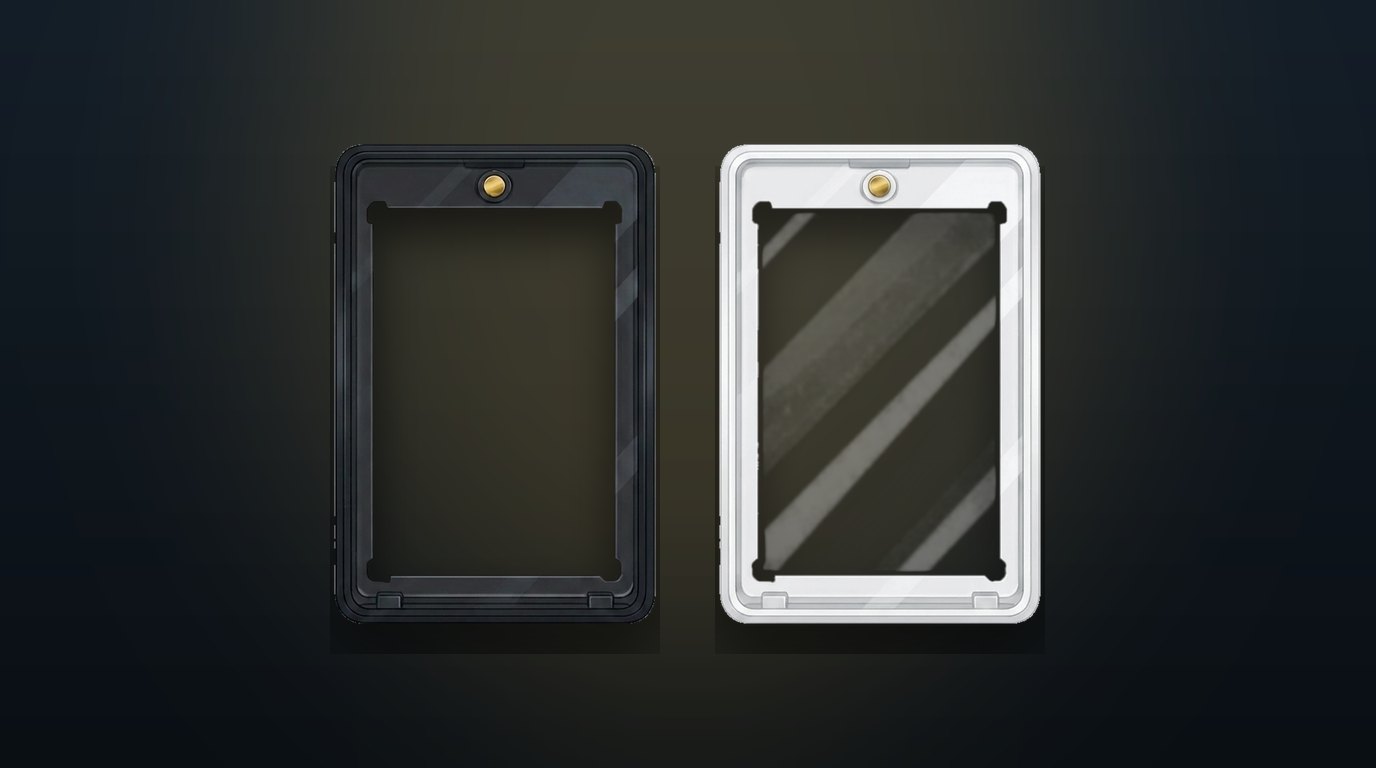
For display, a double glazed one-touch frame avoids any contact with the surface and keeps dust out. Our aluminium magnetic frame, at €24.80 each (buy 2, get the 3rd free), holds the card in its sleeve. The frames snap together front to back to stack, stand upright like books, or sit side by side on the wall thanks to an adhesive magnetic strip, with no drilling.
Finally, avoid pins, tape and loose storage in a box. Keep your cards upright or flat, never under weight, in a dry room away from direct sunlight. These simple habits make the difference between a card that keeps its A condition for years and one that slips to B without you noticing.
The verdict is simple: A for grading and centrepieces, A- for display at the best price, B for play and filler cards, C only when looks do not matter. The condition announced by the Japanese shop describes the exact card you will receive, with the usual caution of Japanese sellers, but it remains an assessment by eye. Your next concrete step: pick the card you want from our Japanese singles, compare the conditions on offer against what you plan to do with it, and add a sleeve and frame to the same order. Shipping for cards is €4.20, free from €100.
Frequently asked questions
Is a Japanese card in B condition damaged?
No. B means good condition with visible wear: fine scratches, slightly whitened edges or corners. The artwork is intact and the card presents well, especially in a sleeve or a frame.
Does A condition guarantee a good PSA grade?
No. A is the seller's visual assessment, not a grade. Off-centre printing or a factory flaw can lower the grade from a company like PSA, even on a near new card.
What is the difference between A and A- condition?
A- adds one or two micro marks that only show when you tilt the card under a light. At normal distance, and even more so behind glass, the difference is almost invisible. That makes A- an excellent choice for display.
Who decides the condition of a card bought in Japan?
The Japanese shop selling the card, when it lists it. The condition shown on our site repeats that listing, because each card is bought when you order and corresponds to one specific copy.
Read next
 Authenticity and condition
Online card selling scams: spot the traps and buy safely
November 21, 20268 min read
Online card selling scams: the 8 most common traps, the warning signs to watch for and a simple method to buy your cards safely.
 Authenticity and condition
One Piece card centering: how to measure it and what it does to value
November 21, 20267 min read
Centering affects a One Piece card's grade and price. How to measure it, how to read it on a listing photo, and when it barely matters at all.
 Authenticity and condition
One Piece card sleeve size: the right fit and how to sleeve properly
November 20, 20268 min read
One Piece cards measure about 63 × 88 mm: use standard or perfect fit sleeves, never small ones, and sleeve them without forcing. Here is how.