How to store cards away from humidity and light: the complete method
Light, humidity, heat: what really damages a One Piece card, which spots in your home to avoid, and the simple method to keep it in mint shape.
Published on November 17, 20267 min read

Key points
- Sunlight, and especially its ultraviolet part, slowly fades the inks and foil of a card: never display a card in direct sun, even behind a window.
- Humidity makes cards curl, foil cards above all, because the cardstock and the surface film react differently to moist air; moderate and stable humidity is the rule.
- Heat does most of its damage through sudden swings (radiators, attics, cars): a temperate, stable living room protects better than a quiet but poorly insulated corner.
- A well preserved card combines a sleeve, a closed rigid holder such as a one-touch or a frame, and a good location; no holder makes up for a bad location.
You finally have the card you were hunting for, a Luffy parallel or a gleaming SEC, and you wonder where to put it so it stays as beautiful as the day you took it out of its envelope. It is the right question: cards are not only damaged by knocks and fingers. Three silent enemies, light, humidity and heat, work slowly, and their damage often shows when it is too late to fix.
The answer fits in one rule: keep a card out of direct sunlight, in a room with stable humidity and temperature, sleeved and inside a closed rigid holder. In this guide we explain how each enemy affects a Japanese One Piece card, which places in your home to avoid, what each holder really protects against, and how to display your best cards without sacrificing them.
In this article
- 1. Why does light damage a card?
- 2. How does humidity make a card curl?
- 3. Heat and swings: which spots in your home should you avoid?
- 4. Sleeve, toploader, one-touch, frame: what does each holder really protect?
- 5. Where should you hang cards on a wall without damaging them?
- 6. How should you store the cards you do not display?
- 7. How do you monitor your collection's condition over time?
Why does light damage a card?

Light, and particularly the ultraviolet part of sunlight, breaks down ink pigments. On a card this means slow fading: reds drift towards orange, blacks lose depth, backgrounds turn pale. The process is gradual and invisible from one week to the next, which is exactly what makes it dangerous: you only notice it when you compare with a card that stayed in a box.
Holo and foil cards are the first to suffer, because their whole appeal rests on shine and contrast. An SR, an SEC or a parallel whose artwork has faded loses precisely what made it special. The cardstock itself can also yellow over time under the combined effect of light and air, which shows first on the back and along the edges.
Indoor lighting is far gentler than direct sun, but some very strong or very close light sources also heat the card. The practical rule: never direct sun, and accent lighting kept at a sensible distance rather than a spotlight aimed at the card from a few centimetres away.
How does humidity make a card curl?
A card is a stack of layers: cardstock, ink, sometimes a foil film and a varnish. These layers do not absorb moisture from the air in the same way. When the air turns humid, the cardstock swells slightly while the surface film barely moves, so the card bends. This is the curling that foil collectors know so well.
Light curling can settle once humidity returns to normal, but prolonged exposure leaves lasting warping, and in extreme cases stains or mould. On the other hand, air that is too dry makes the cardstock brittle and can curl the card the other way. What matters is moderate and, above all, stable humidity, without abrupt swings between dry and damp rooms.
For a Japanese single, the stakes are concrete: a card listed in A condition by the Japanese shop can, after a few months in a damp room, deserve no more than a B. Here are the warning signs:
- The card no longer lies flat on a table and forms a slight U
- The sleeve sticks to the card or shows mist inside
- A musty smell in the box or binder
- Spots or a dull haze on the foil surface
- Wavy edges or layers that seem to separate
Heat and swings: which spots in your home should you avoid?

Heat mainly works by speeding up the other two problems. Warmed cardstock loses moisture, then takes it back as it cools, and this repeated breathing is what eventually warps a card. Varnish or foil exposed to strong heat can also dull or pick up marks from contact with plastic.
So the real danger is not a slightly warm room but sudden changes: the top of a radiator, a shelf above a fireplace, an attic that bakes in summer and chills in winter, or a car left in the sun with a binder on the back seat. A temperate living space, heated steadily, is much better than any quiet but poorly insulated corner.
The table below rates the most common spots in a home on all three criteria. It does not replace your own observation: every home has its cold walls, its exposed rooms and its seasons.
| Spot | Light | Humidity | Heat | Verdict |
|---|---|---|---|---|
| Wall facing a sunny window | Direct sun | Depends on the room | Rises during the day | Avoid |
| Above a radiator or fireplace | Depends on the room | Dried out, then variable | Strong and irregular | Avoid |
| Bathroom, kitchen | Depends on the room | Steam peaks | Variable | Avoid |
| Basement, garage, attic | Low | Often high or unstable | Seasonal swings | Avoid |
| Inner wall of a living room or office, no direct sun | Indirect | Usually stable | Stable | Ideal for display |
| Bedroom cupboard or drawer | None | Usually stable | Stable | Ideal for storage |
Sleeve, toploader, one-touch, frame: what does each holder really protect?
The sleeve is the first layer: a soft cover that prevents scratches, fingerprints and rubbing. It protects against neither light nor humidity, and a card in a bare sleeve sitting on a shelf is exposed to everything. It is essential, but never a complete solution.
A toploader adds rigidity, which limits bends, but its open end lets air and dust in. A one-touch, a rigid case closed by a magnet, goes further: the card is held flat, shielded from dust and knocks, and much less air circulates around it. Keeping the card flat is a real advantage against curling, which develops more easily on a card that is free to move.
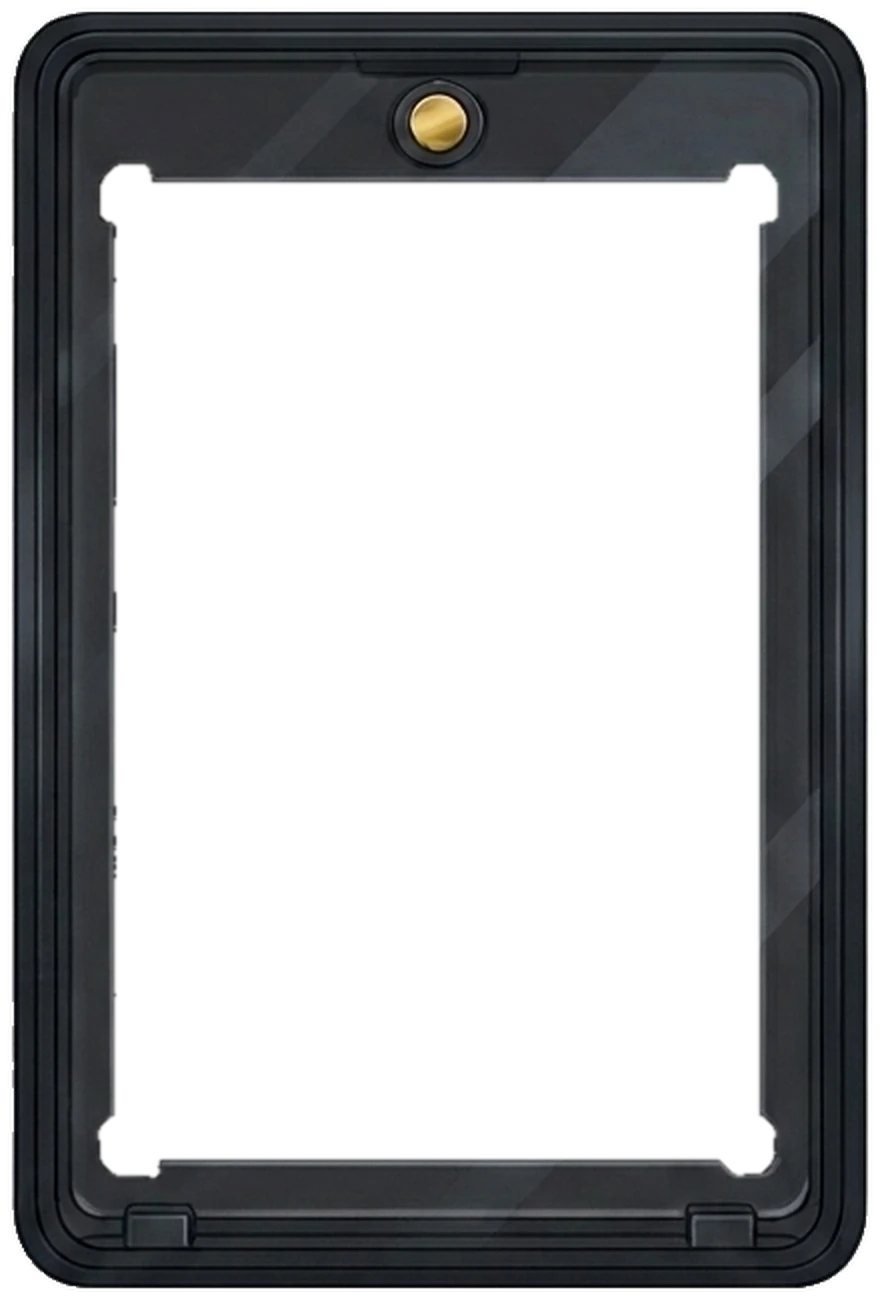
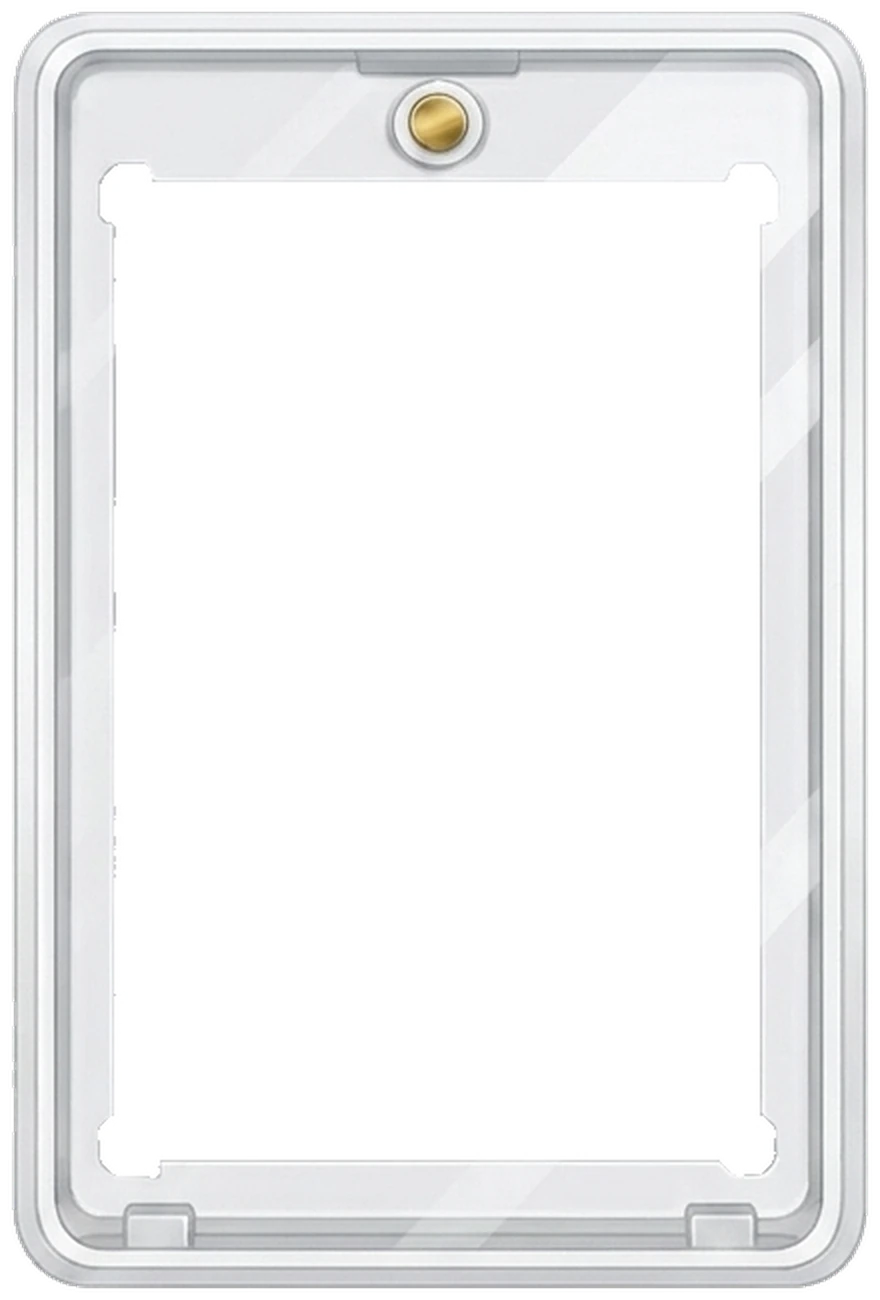
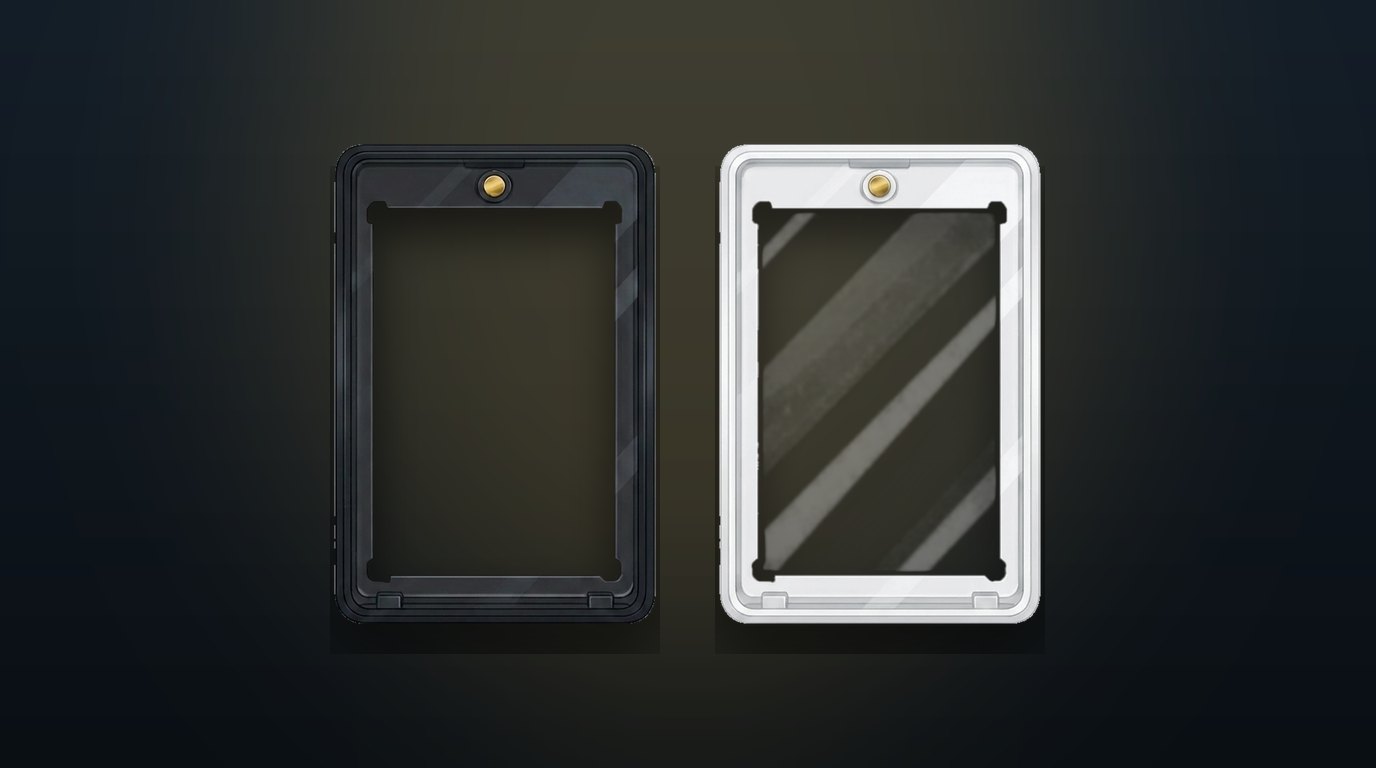
Our magnetic frame is an aluminium one-touch with double glazing, in black or white, at €24.80 each, with the third one free when you buy two. It protects the card from fingers, dust and knocks, and keeps it flat. Let us be clear about what it does not do: it does not turn a sunny wall into a good spot. Protection always comes from the pair: closed holder plus thoughtful location.
Where should you hang cards on a wall without damaging them?
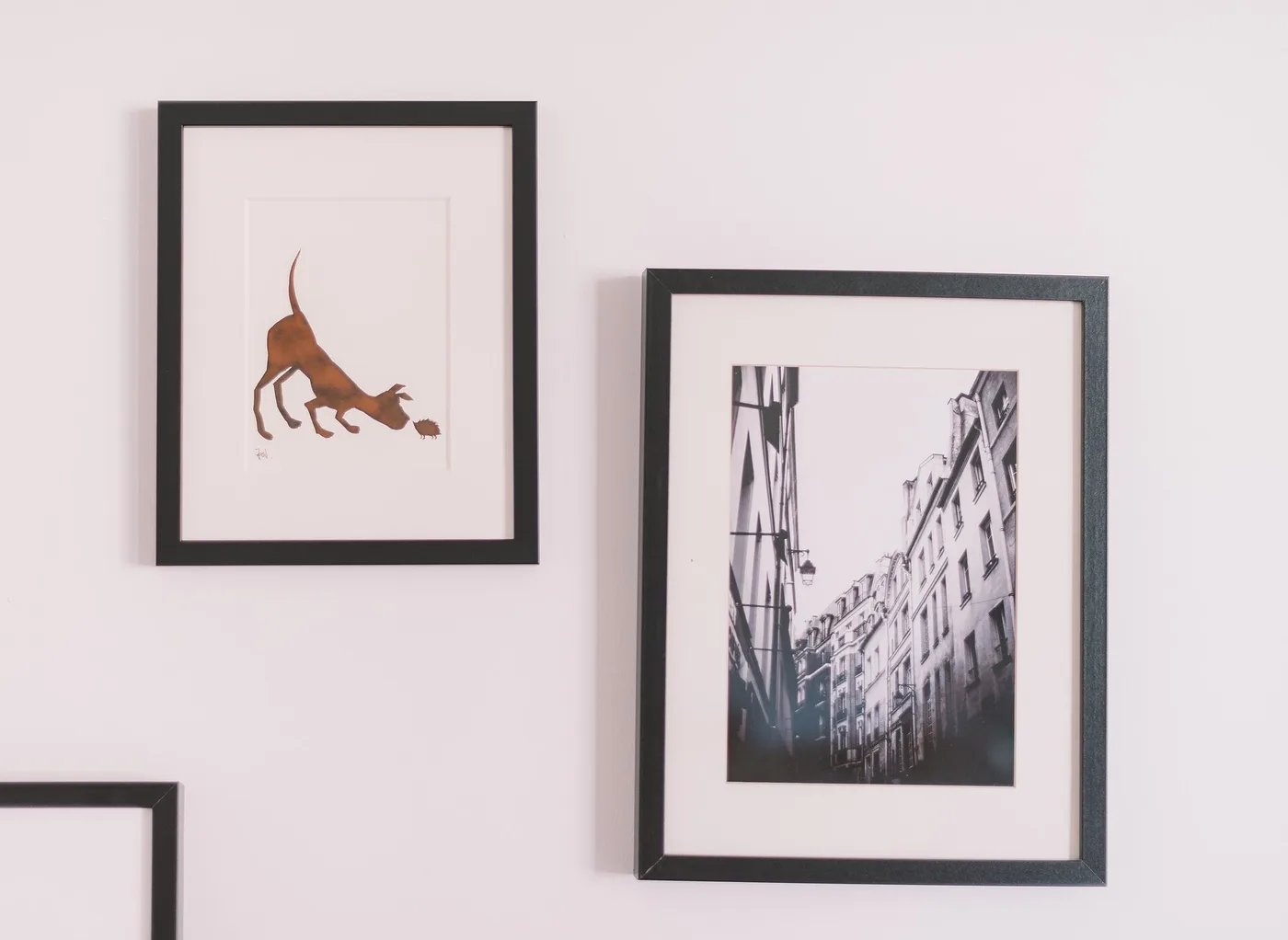
The right wall is an inner wall that never gets direct sun, away from heat sources and wet rooms. In most homes this means a wall in the living room, office or bedroom that runs perpendicular to the windows. Also avoid poorly insulated outer walls: they are colder and encourage condensation in winter, right behind your frames.
To hang the frames, the self-adhesive magnetic strip saves you from drilling: you stick it to the wall, then the frames attach side by side and can be moved freely (1 m for €5.99, 3 m for €9.99). This detail matters for preservation: if you notice that a wall catches the sun in a certain season, you move the whole row in seconds, with no holes to fill.
One collector habit helps a lot: rotating the cards on display. Your most precious pieces spend a few months on the wall, then go back to rest in a box while another card takes their place. The collection stays alive, and no card endures years of continuous exposure.
How should you store the cards you do not display?

Resting cards fear the same enemies, with one advantage: darkness solves the light issue. Humidity and heat remain. A rigid, closed box placed in a cupboard or drawer of a living space is a healthy base. Binders with pockets suit everyday cards, provided they stand upright and are not overloaded, because pressure leaves marks.
For valuable pieces, layer the protection: sleeve, then one-touch or toploader, then box. The magnetic frames snap together front to back to stack and stand upright like books, so you can move from display to storage without touching the card itself. The less a card leaves its holder, the less it risks an accident. The routine to follow:
- Slide each card into a clean sleeve without forcing it
- Put valuable cards in a closed rigid holder
- Store the holders upright in a closed box
- Add a small desiccant pack, not touching the cards
- Keep the box in a cupboard of a normally heated room
- Open the box now and then to check condition and smell
How do you monitor your collection's condition over time?
Preservation is not a one-off setting, it is a habit. At every change of season, take one displayed card as a reference and compare it with a card from the same set kept in a box. A difference in colour or flatness warns you long before the damage becomes visible to a buyer.
Use this check to look at the room too: a wall that now catches the sun, a new radiator, a move, an unusually damp season. Conditions change, and the collection has to follow. Think about new arrivals as well: in winter, a parcel coming out of a cold vehicle is better left closed for a while at room temperature before opening, to avoid condensation on the cards.
This care has a direct effect on value. Condition is the first price factor for a single: a card that keeps its shine, sharp edges and flatness holds its rank, while a faded or curled card is downgraded, whatever its rarity. Storing well means protecting both the pleasure of collecting and the value of the collection.
The verdict is simple: a card is protected less by a miracle accessory than by a good location. No direct sun, a room with stable humidity and temperature, a sleeved card in a closed rigid holder, and a check every season. Your next concrete step: find the wall in your home that never gets the sun today, put your finest Japanese cards there in closed frames, and keep the rest resting in a box. Shipping for cards and frames costs €4.20 and is free from €100.
Frequently asked questions
Does sunlight through a window still damage cards?
Yes. Ordinary glass filters part of the radiation but not all of it, and daily exposure eventually fades inks and foil. Choose a wall that never gets a direct ray at any time of day.
Can a curled card become flat again?
Light curling sometimes settles when the card returns to a stable environment, held flat in a rigid holder. Never heat it and never crush it under a heavy weight, as you could mark the surface. Results are not guaranteed, which is why prevention matters.
Should I put silica gel packs with my cards?
In a closed box, a small pack helps limit humidity as long as it does not touch the cards. Avoid overdoing it, because air that is too dry makes cardstock brittle. Replace or regenerate the pack once it is saturated.
Does a magnetic frame protect against UV?
A closed, double glazed frame protects against fingers, dust and knocks and keeps the card flat, which limits curling. It does not make a sunny spot acceptable, though. Always pair the frame with a wall that gets no direct sun.
Read next
 Authenticity and condition
Online card selling scams: spot the traps and buy safely
November 21, 20268 min read
Online card selling scams: the 8 most common traps, the warning signs to watch for and a simple method to buy your cards safely.
 Authenticity and condition
One Piece card centering: how to measure it and what it does to value
November 21, 20267 min read
Centering affects a One Piece card's grade and price. How to measure it, how to read it on a listing photo, and when it barely matters at all.
 Authenticity and condition
One Piece card sleeve size: the right fit and how to sleeve properly
November 20, 20268 min read
One Piece cards measure about 63 × 88 mm: use standard or perfect fit sleeves, never small ones, and sleeve them without forcing. Here is how.