
One Piece Ace card: which Japanese versions to buy for a coherent collection
Published on November 13, 2026 · 7 min read

Key points
- The best foundation for a coherent Ace collection is a Japanese SEC, such as OP07-119, OP13-119 or OP16-118, chosen as the anchor card.
- An alternate art shares the code and game effects of the base card: only the full product ID and the photo tell the versions apart.
- An Ace collection feels coherent when it follows a single thread: one card in several versions, one era of the game, or one illustration style.
- For an Ace card meant for display, condition A or A- is recommended; condition B is fine for supporting cards.
You love Portgas D. Ace and you search for a One Piece Ace card: you find dozens of versions, codes like OP07, OP13, OP16 or ST15, labels such as SEC, SP and AA, and artworks that all look somewhat alike. The classic trap is buying on impulse, one card at a time, and ending up with a scattered set that has no common thread and tells no story once it is on display.
Our answer is clear: start with a Japanese SEC as your anchor, add one or two alternate arts, then complete the set with a different piece (SP or AA) depending on your budget. Pick a single consistency rule, one card, one era or one art style, aim for condition A or A- on the main card, and display everything the same way. Here is the method, step by step.
Why are Ace cards so sought after?
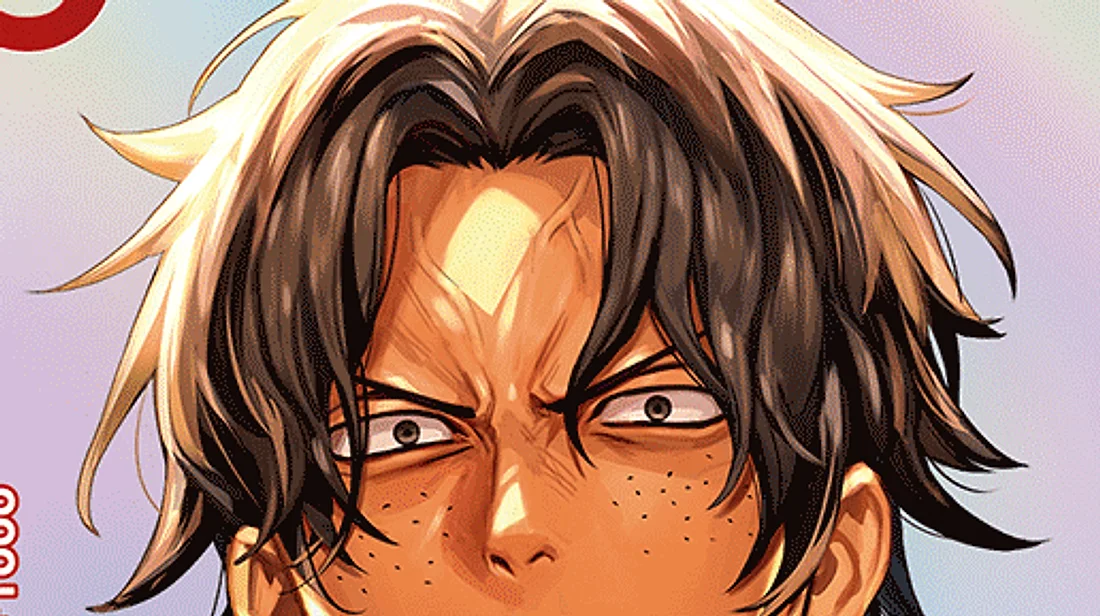
Ace holds a special place in One Piece: Luffy's sworn brother, commander of Whitebeard's second division, wielder of the fire fruit, and the character whose Marineford arc marked a whole generation of readers. That emotional weight carries over to the card game: Ace keeps coming back, in main sets as well as starter decks and premium boosters, often with carefully crafted artwork.
For a collector, the consequence is a wide but scattered offer. In our stock alone, Ace appears under OP07, OP13, OP16, ST13, ST15 and PRB02 codes, in SEC, SP and AA rarities. That variety is a strength, as long as you know how to sort it. Without a method, you pile up cards that compete with each other instead of working together, and the set loses its impact.
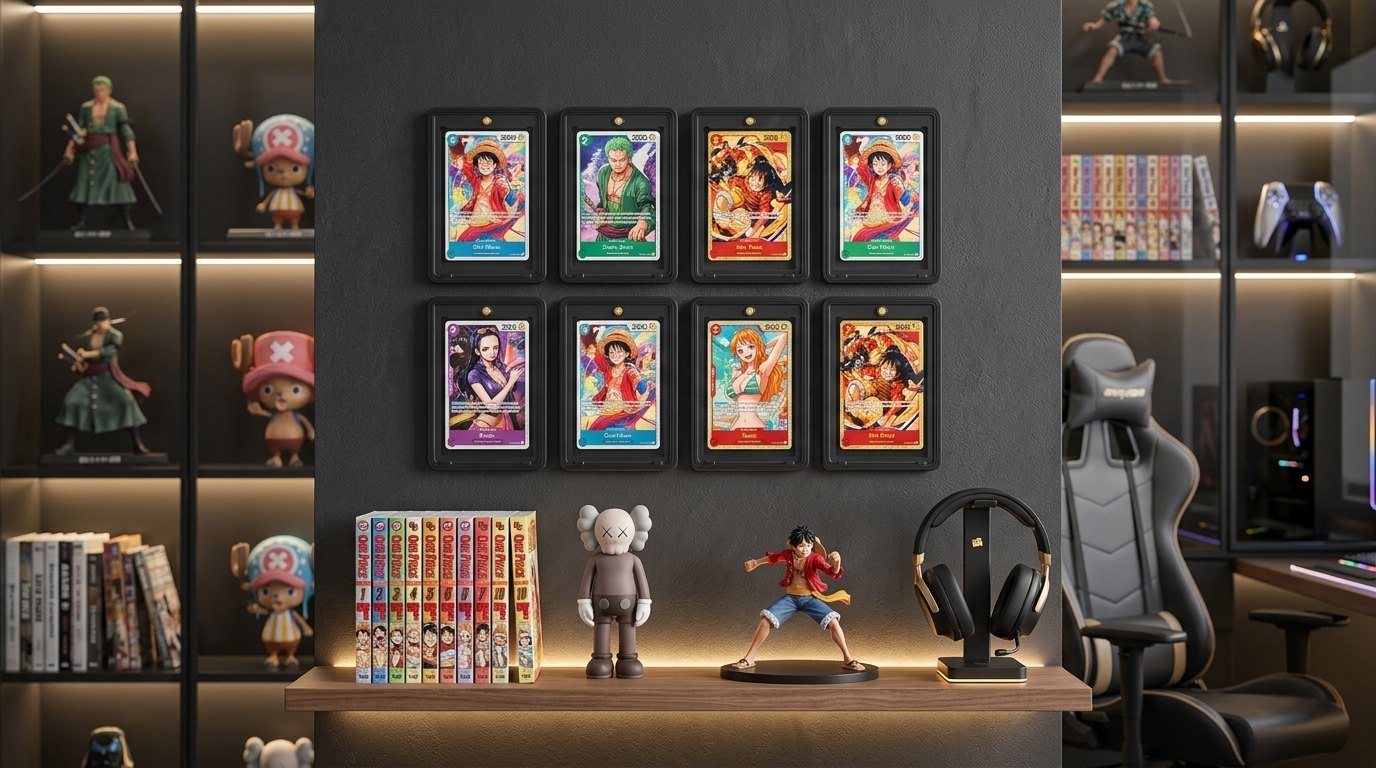
Finally, Ace is a character people love to display. A framed Ace card on a shelf or a wall draws the eye, which is exactly why consistency matters: three well chosen cards, in the same spirit and the same frame, make a stronger statement than ten cards bought at random and kept in a box.
Which Japanese Ace cards should you target first?
We sort the available Ace cards into three families. SEC (secret rare) cards are the heart of the collection: OP07-119, OP13-119 and OP16-118 are three SEC Ace cards, each from a different set. These are the cards people recognise instantly, the ones that give weight to a set and around which everything else can be organised.
Next come the alternate arts of those SECs: we stock two alternate versions of OP07-119, three of OP13-119 and one of OP16-118. They show the same card with a different visual, which lets you build a series around a single code. Finally, the standout pieces: ST15-005 as an SP, and the AA versions of ST13-010, OP16-001 and PRB02-018.
Our advice: pick your anchor among the SECs, then add the other families as variations. The table below sums up the role of each card in a collection. It deliberately shows no fixed price, since Japanese market values move: check each card's page for the current price.
| Card | Rarity | Versions in stock | Suggested role |
|---|---|---|---|
| OP07-119 | SEC | 2 alternate arts | Centrepiece of an Ace series |
| OP13-119 | SEC | Base version and 3 alternate arts | Ideal for a series built around one card |
| OP16-118 | SEC | Base version and 1 alternate art | Recent anchor, base and alternate pair |
| ST15-005 | SP | Alternate art | Standout piece that breaks the pattern |
| ST13-010, OP16-001, PRB02-018 | AA | Alternate arts | Variations to complete the set on a budget |

SEC, SP or AA: which rarity should you choose for Ace?
SEC is the highest rarity in a regular set. For Ace, it is the clearest choice: a Japanese SEC immediately reads as a key card. If you are buying only one Ace card, take a SEC: the base version if you want something understated, an alternate art if you want the strongest visual impact.
An SP is a special card: generally, it reprints an existing card with new artwork and is inserted into a later set. ST15-005 as an SP shows the principle well: the card originally comes from a starter deck, but its SP version turns it into a genuine collector's piece. It suits anyone who wants one card that stands out within their series.
AA, short for alternate art, here covers alternate illustrations of cards that are not SECs. They are often more affordable and let you expand a collection without changing character. They have their place, as long as you do not stack them without logic: one or two are enough to add variety around your anchor.
How do you build a coherent Ace collection?
Consistency comes from a single thread, chosen from the start. The simplest is a series around one code: OP13-119 in its base version plus its three alternate arts forms an obvious set, readable at a glance, that shows the same card from several angles.
Second approach: the era thread. Ace appears in sets spread over time, OP07, then OP13, then OP16. Gathering one SEC from each gives you a small timeline of the character in the game, which is appealing if you have followed the releases for a while. Third approach: the visual thread, keeping only artworks dominated by fire and warm tones, whatever the code.
Whichever route you take, set a target number before buying, for example three, four or eight cards. A fixed number stops endless accumulation, forces you to choose and makes display easier, since you know from day one how many frames to plan and how much space to clear.
- Pick your thread: one card, one era or one art style.
- Set a target number of cards, and therefore of frames.
- Buy the anchor first: a Japanese SEC in condition A or A-.
- Add variations one at a time, checking code and version.
- Keep the same frame colour for the whole series.
Base version or alternate art: how do you avoid mistakes?
A base Ace card and its alternate art share the same code and the same game effects. What sets them apart is the artwork, the finish and how rarely they are pulled. For collecting, the alternate art is often the most sought after; for an understated series, the base version has its own appeal and is generally more affordable.
On our site, each version has its own ID: the suffix _p1, _p2 or _p4 points to a specific alternate art. This matters, because two listings can show the same printed code without being the same card. Always check the photo and the full ID before adding a card to your basket.
Our position: if your budget allows only one alternate art, put it on your anchor, since that is the card people look at first. Supporting cards can stay in their base version without hurting consistency. Quite the opposite: it creates a clear visual hierarchy, with one centrepiece and the cards that accompany it.
Which condition should you aim for on a Japanese Ace card?
Our cards are bought in Japan to order, and the stated condition is the one given by the Japanese shop: A, A-, B or C. For an anchor card you plan to display, aim for A or A-. A SEC or an alternate art is looked at up close, behind glass, and a worn corner or a scratch shows immediately.
Condition B can work for a supporting card, or if you favour a specific artwork and accept a visible mark. Condition C is best kept for play or for a card you simply want to own. Mixing conditions within one series is not forbidden, but the most visible card should always be the best looking one.
If you are considering grading later, go straight for condition A. Grading is a separate project with its own costs and lead times, and a B condition card is unlikely to benefit. For a display collection, condition A- often offers the best balance between look and budget.
| Condition | What it means | Anchor card | Supporting card | Planned grading |
|---|---|---|---|---|
| A | Near mint | Yes, the best choice | Yes | Yes, recommended starting point |
| A- | Very good | Yes, good balance | Yes | Depends on the card |
| B | Good, visible wear | Not recommended | Yes, if budget comes first | No |
| C | Fair | No | Rather for play | No |

How do you display and protect your Ace collection?
A coherent collection deserves a coherent presentation. Slide each card into a sleeve, then into our aluminium one-touch magnetic frame with double glass, in black or white. Black brings out Ace's warm artwork and flames; white gives a brighter look in a light interior. Pick one colour and keep it for the whole series.
The frames snap together front to back to stack, stand upright like books, and attach side by side on the wall with the adhesive magnetic strip, no drilling needed (1 m for €15, 3 m for €29). Each frame costs €24.80, and when you buy two the third is free: handy for a first series of three Ace cards.
As for ordering, shipping for cards and frames is €4.20, free from €30, and you only pay shipping once per order. Grouping your anchor, its frames and a supporting card in the same basket is therefore the simplest way to launch your collection.
Verdict: for a One Piece Ace card, start with a Japanese SEC (OP07-119, OP13-119 or OP16-118) in condition A or A-, choose a single thread, then add alternate arts, an SP or an AA as variations. Next step: browse our Japanese Ace cards in stock, select your anchor, and plan right now how many frames your series will need.
Frequently asked questions
What is the most sought after Ace card in the One Piece Card Game?
There is no single answer: SECs and their alternate arts are generally the most sought after, since SEC is the highest rarity in a set. In our stock, OP07-119, OP13-119 and OP16-118 are the three SEC Ace cards. Values move, so check each card's page for the current price.
Are Japanese Ace cards identical to the English versions?
The artwork and effects are generally the same; only the text language changes. Sets release in Japan first, which gives earlier access to new Ace versions. For display, many collectors appreciate the look of Japanese text.
How many cards do you need for a coherent Ace collection?
Three cards are enough for a readable set: one anchor and two variations. Beyond that, set a target number before buying, such as four or eight, to stay consistent and plan the right number of frames.
How can I be sure I am ordering the right version of an Ace card?
Check the full ID shown on our site, with its _p1, _p2 or _p4 suffix for alternate arts, and compare the photo. The printed code alone is not enough, because several versions share the same code.
Read next

Buying guides
Buy One Piece cards as singles: the math that beats opening boosters
Buying a single One Piece card usually costs less than opening boosters to chase it. Here is the calculation, the exceptions and a clear method.
November 13, 2026

Buying guides
Buying Japanese One Piece cards from Europe: the complete guide
Where to buy Japanese One Piece cards in Europe, what they really cost once delivered and how long they take: a clear method to buy without bad surprises.
November 13, 2026

Buying guides
Japanese or English One Piece booster: differences and which to choose
Japanese or English One Piece booster? Real differences in content, price, rarity and resale, and which version to pick for your goal.
November 13, 2026