Japanese One Piece starter deck: who it's for and which one to pick
A Japanese starter deck is the best way to learn the game, rarely a collector's buy. Who it suits, how to choose one and what to do next.
Published on November 13, 20267 min read

Key points
- A Japanese One Piece starter deck is a preconstructed deck with fixed contents: a leader, a playable deck and DON!! cards, with no random pulls at all.
- Japanese starter decks mainly suit beginners, players testing a colour, pairs who want to play together and fans who want one specific leader.
- A starter deck is not a speculative product: every box of the same code holds the same cards, and it rarely contains sought-after rarities such as SEC or parallel cards.
- To improve a starter deck, buying the missing single cards in the leader's colour works better than buying a second copy of the same deck.
You are discovering the One Piece Card Game, you want to play with a friend or give someone their first deck, and you run into Japanese starter decks coded ST01, ST15 or ST28 without knowing which one to take, or whether they are even worth it compared with a booster. That hesitation is normal: the range is long, the card text is in Japanese, and advice online often mixes playing and collecting, two goals that call for very different purchases.
The short answer: a Japanese starter deck is the best buy for learning the game and testing a colour on a moderate budget, and a poor buy if you are hunting rare cards or value. In this guide we settle who it is for, how to choose the right one among ST01 to ST36, what not to expect from it, and what to buy next so you progress without wasting money.
In this article
- 1. What exactly is a Japanese One Piece starter deck?
- 2. Who is a Japanese starter deck really useful for?
- 3. Starter deck, booster, booster box or single card: which should you choose?
- 4. How do you choose the right Japanese starter deck among the ST codes?
- 5. Is Japanese text a problem when playing a starter deck?
- 6. What comes after a starter deck: boosters, a booster box or single cards?
- 7. Should you keep or display the cards from a starter deck?
What exactly is a Japanese One Piece starter deck?

A starter deck is a preconstructed box published by Bandai: inside you get a leader, a complete deck built around it, the DON!! cards you need and material to learn the rules. Unlike a booster, its contents are fixed: two boxes with the same code contain exactly the same cards. You know what you are buying before you open it, which is unusual in a trading card game.
Starter decks carry the ST prefix followed by a number. Our Japanese catalogue lists them from ST01 to ST36, which shows how much the range has grown since the game launched. Like boosters, they come out in Japan first; some later arrive in English, sometimes on a different schedule, which is why a recent deck can be available in Japanese well before its European release.
In terms of rarity, a starter deck relies mostly on common and uncommon cards, with a leader of rarity L and a few stronger cards. It is not designed for the thrill of the pull: it is designed so you can play a coherent game straight out of the box, with cards that actually work together.
Who is a Japanese starter deck really useful for?
A Japanese starter deck answers four precise profiles. For everyone else, the same budget can be spent better. Here is how to tell whether you are the target before ordering.
On the other hand, if you dream of spectacular cards, parallels or SEC, a starter deck will disappoint you. That is not its job, and buying one in the hope of finding a gem is the most common mistake newcomers make.
Gifts deserve a nuance. A starter deck is an excellent first present for someone who wants to play. For a fan who mainly wants a beautiful card of their favourite character, a well-chosen Japanese single card in a frame will make far more of an impression than a game deck left in a drawer.
- The complete beginner: you want to understand the turn structure, DON!! and attacks without building a deck yourself.
- The player testing a colour: before investing in single cards, you try out how a leader plays.
- The pair who want to play together: two starter decks in different colours let you face off the same evening.
- The fan of one leader: you want a deck's leader to keep or display, without relying on booster luck.
Starter deck, booster, booster box or single card: which should you choose?
The four formats do not meet the same need. A starter deck gives you a playable deck, a booster gives you chance, a booster box gives you a lot of chance at once, and a single card gives you exactly the card you want. Compare them by goal, not by the price on the box.
A Japanese booster box contains 24 boosters of 6 cards: it is the format for people who want to open packs, complete a set or share an opening with friends. It is not a format for learning, because you get cards in every colour with no coherent deck ready to play.
Our view: start with a starter deck if you do not know how to play yet, move on to single cards to improve your deck, and keep the booster box for the pleasure of opening or for collecting a full set.
| Criterion | Starter deck | Booster | Booster box (24 boosters) | Single card |
|---|---|---|---|---|
| Playable out of the box | Yes | No | No, deck to build | No, deck to assemble |
| Contents known in advance | Yes | No | No | Yes |
| Chance of rare cards | Low | Depends on the pull | Depends on the pull, over a large volume | You pick the card |
| Best for | Learning, testing a colour | The fun of opening | Opening, completing a set | Targeting a character or version |
| Budget | Moderate | Low | High | Depends on the card |
How do you choose the right Japanese starter deck among the ST codes?

With more than thirty codes, the choice can be paralysing. Rather than a fixed ranking that ages with every new set, apply these criteria in order: they remain valid whichever deck you are looking at.
Recent starter decks generally benefit from cards designed for the current game environment, while older ones are mostly useful for learning the basics. For a beginner who wants to play with friends, a recent deck in a colour you like is the safest choice.
For a pair, pick two decks in different colours from a similar period: games will be more balanced, and each of you will discover a different play style before deciding where to invest.
- The character: take a leader you like. You will play more and enjoy keeping the card.
- The colour: a single-colour deck is easier to understand; a two-colour deck offers more options but needs some experience.
- The play style: aggressive, control or resource management. Read a translation of the leader card before buying.
- Upgrade potential: check that recent sets offer cards in the same colour and type to improve the deck.
- What people play around you: ask at your local shop or within your group of friends before choosing.
Is Japanese text a problem when playing a starter deck?

Less than you might think. One Piece cards follow a consistent layout: cost, power, colour, counter and type are readable without speaking Japanese. Only the effect text needs translating, and the card code lets you find it in seconds.
Many European players choose Japanese for the print quality and because products come out in Japan first. Among friends or in casual play, the language stops being an issue once you have memorised the deck's effects, which happens quickly with a starter since you always play the same cards.
The real limit lies elsewhere: at official European tournaments, the English version is generally expected. If local competition is your goal, check the rule with your shop before buying, so you do not have to buy the same deck again in another language.
What comes after a starter deck: boosters, a booster box or single cards?
After a few games you will want to improve your deck. The temptation is to buy a second copy of the same starter to double up on the best cards. That is rarely efficient: you also pay for every card you will never play.
The most economical method is to buy the few missing cards individually, in your leader's colour. That is exactly what our Japanese single cards allow: you choose the card and its condition (A, A-, B or C), and you only pay for what you use. Shipping costs €4.20 and is free from €100.
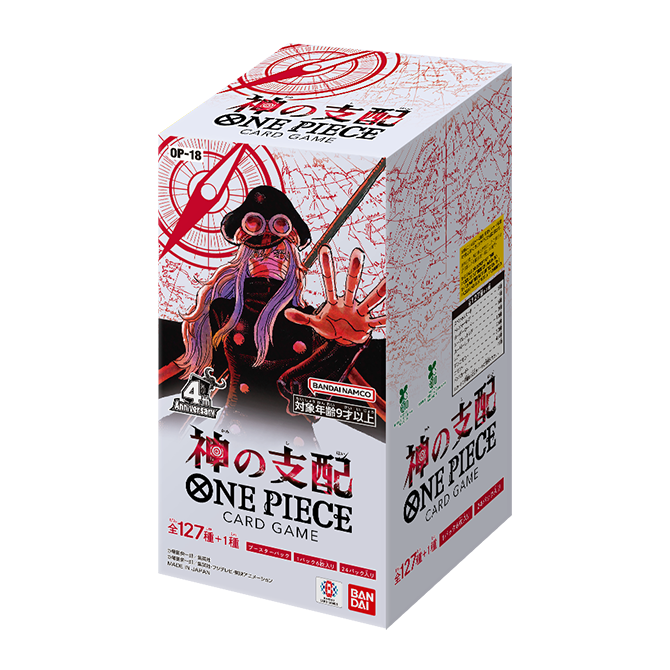
If you enjoy opening packs and want to grow your collection at the same time, a Japanese booster box becomes interesting. On OPCG.Shop, the Japanese OP18 booster box is on pre-order at €129, paid in full and refunded in full if the product does not reach us. For sealed products, shipping is €6.90, free from €199.
Should you keep or display the cards from a starter deck?
A starter deck is not meant to gain value, and we do not recommend stockpiling them in the hope of reselling. Its contents are identical from box to box and its collectible value generally stays limited, even if some older boxes become harder to find over time.
The leader of your first deck, however, often carries real sentimental value. Protect it like a precious card: sleeve first, then a frame. Our one-touch magnetic frame in aluminium, with double glazing, in black or white, costs €24.80, and when you buy 2 frames the 3rd is free.
To give your first deck some presence, frame its leader next to a rarer version of the same character bought as a single: the contrast between the game card and the collector card tells the story of your time in the game, and it is often how a collection wall begins.
- Protect: slide the card into a sleeve before placing it in the frame.
- Stack: the frames snap together face to back and stand upright like books.
- Display: set them on a shelf or attach them to the wall with the adhesive magnetic strip, no drilling.
Verdict: the Japanese One Piece starter deck is the best first purchase for learning the game, testing a colour or playing as a pair, and a poor choice for hunting rare cards or value. Choose it by character, colour and play style, read the effects using the card codes, then improve it with single cards rather than a second copy. Your next step: find the leader you like, complete your deck with our Japanese single cards, or move on to the OP18 booster box on OPCG.Shop if the thrill of opening appeals to you.
Frequently asked questions
What is inside a Japanese One Piece starter deck?
A leader, a playable deck built around it, DON!! cards and material to learn the rules. The contents are fixed: two boxes with the same code hold the same cards. Check the exact list of the deck you want before buying.
Can you play a Japanese starter deck at tournaments in Europe?
Among friends or in casual play, without any problem. At official European tournaments, the English version is generally expected. Ask the shop organising the event.
Starter deck or booster to begin the One Piece Card Game?
The starter deck, without hesitation: it gives you a coherent deck you can play straight away. A booster gives random cards in several colours, more fun to open than to play when you are starting out.
Does a Japanese starter deck gain value over time?
Generally not: its contents are the same from box to box and it is aimed at players first. Buy it to play, not to speculate, and keep your collecting budget for single cards or sealed products you truly like.
Read next
 Buying guides
Display OP16 or OP15: which one to catch up on at 129 €, plus 6 singles
November 25, 20267 min read
Display OP16 or OP15 at 129 €: the verdict by character, 6 named cards with their prices, and when buying singles is the smarter move.
 Buying guides
Which Japanese One Piece display to choose: OP18, OP17 or EB05 at 129 €?
November 25, 20267 min read
OP18, OP17 or EB05 at the same 129 €: a decision table, 5 reference cards with prices, and the maths on two displays with free shipping.
 Buying guides
One Piece Mystery Box: how it works, 6 steps from payment to frame
November 25, 20268 min read
Payment, age check, online reveal of your 3 cards, purchase in Japan, shipping: the Mystery Box at 29,90 € step by step, and what you don't choose.