Manga rare One Piece Card Game: how to spot one and buy it safely
Manga rare One Piece: how it differs from a parallel, why it costs so much, how to avoid fakes and buy the exact Japanese card you want.
Published on November 13, 20269 min read

Key points
- A manga rare in the One Piece Card Game is an alternate version of an existing card, drawn in the black and white style of the manga, and it is often the rarest version in a set.
- No Japanese display of 24 boosters guarantees a manga rare: buying singles is the only reliable way to get one specific card.
- To authenticate a manga rare, compare the linework, screentones, Japanese text and card back with official images, and be wary of any price far below the market.
- For a manga rare meant for display, aim for condition A or A-, then protect it in a sleeve inside a double glass frame, away from direct sunlight.
You came across a One Piece card whose artwork looks cut straight out of the manga, with ink lines, screentones and panels, and the price stopped you in your tracks. It is almost certainly a manga rare, the most coveted version in the One Piece Card Game. You want to know what makes it so special, whether it is really worth the money, and how to buy one without ending up with a counterfeit or an unreliable seller.
The short answer: a manga rare is a parallel version of an existing card, drawn in the style of Eiichiro Oda's manga pages and slipped into boosters in tiny numbers. Its scarcity, its direct link to the original work and the popularity of the characters involved explain the demand. Buying one safely follows a clear method: target a specific Japanese single, check condition and authenticity against concrete criteria, then protect it as soon as it arrives. This guide covers every step.
In this article
- 1. What is a manga rare in the One Piece Card Game?
- 2. Why are manga rares in such high demand?
- 3. How do you recognise a genuine Japanese manga rare?
- 4. Should you open boosters or buy your manga rare as a single?
- 5. What condition should you aim for on a manga rare?
- 6. How do you protect and display a manga rare?
- 7. What are the risks, and what method keeps your purchase safe?
What is a manga rare in the One Piece Card Game?
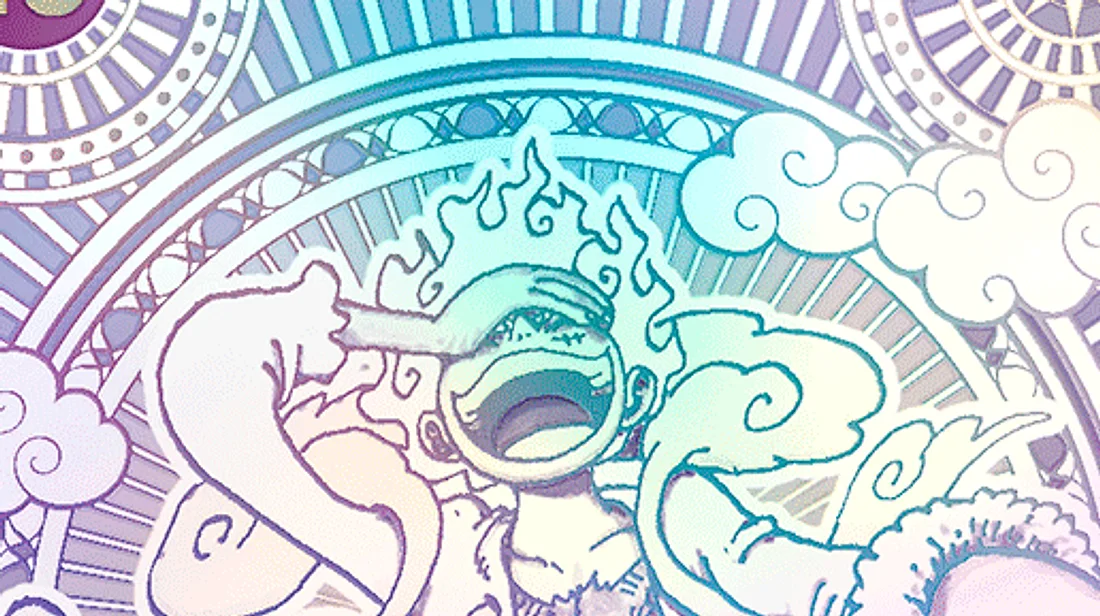
A manga rare is not an official rarity like C, UC, R, SR, SEC or L. It is the nickname players gave to an alternate version of a card already in the set, whose artwork borrows the look of the manga: black and white inking, screentones, panels and sometimes sound effects. In Japan it is often called a 'comic parallel'. The printed rarity is generally the same as the base card, so it is the artwork that gives it away, not the code.
These versions almost always feature major characters, often cards that are already strong or iconic in their regular form. They appear in the boosters of main sets, in very small numbers per set, alongside the standard parallels. Their exact number and list change from one set to the next, so before buying, check the official card list for that set rather than a ranking copied from forum to forum.
Do not confuse them with regular parallels, which offer a different artwork in colour, or with SP cards, which bring back a card from an earlier set with special treatment. The manga rare sits at the top of this visual hierarchy: it is the version collectors chase last, because it is the hardest to get.
| Version | Artwork | Availability in boosters | Best for |
|---|---|---|---|
| Regular version (R, SR, SEC, L) | Standard artwork in colour | Most common | Playing, tight budgets |
| Standard parallel | Alternate artwork in colour | Rare | Collecting, display |
| SP | Card from an earlier set, special treatment | Rare | Fans of one character |
| Manga rare | Black and white manga style, screentones, panels | Rarest in the set | The centrepiece of a display |
Why are manga rares in such high demand?
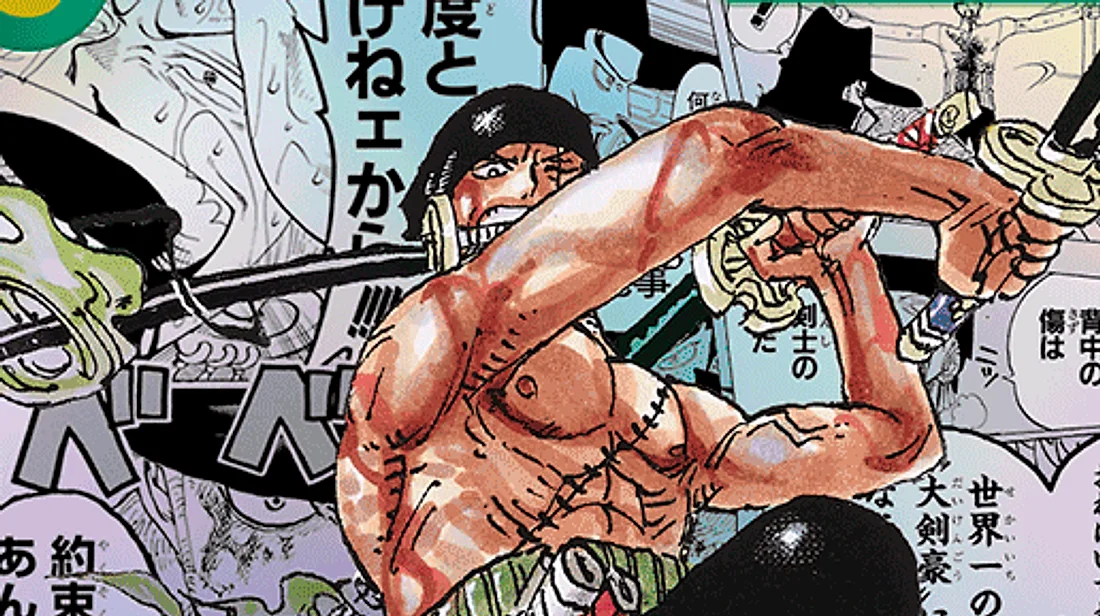
Three reasons add up. The first is scarcity: a standard parallel turns up regularly when you open a few displays, while a manga rare may never appear, even after several displays. Supply is therefore very thin, and every copy in good condition finds a buyer. People who pull one often keep it, which shrinks the number of copies actually in circulation even further.
The second reason is emotional. A manga rare points straight back to the pages readers have known for years: a Luffy, a Shanks or a Zoro drawn as in the original volume speaks to every fan, player or not. It is a card you understand without knowing the rules, which widens the audience looking for it far beyond tournament players.
The third is display value. Black and white artwork stands out beautifully behind glass, on a shelf or on a wall, and a manga rare naturally becomes the centrepiece of a collection. Add the game's worldwide popularity and new collectors joining with every set, and demand grows faster than supply, which explains prices that have nothing in common with other versions of the same card.
How do you recognise a genuine Japanese manga rare?

A card this sought after inevitably attracts counterfeits. Crude fakes are easy to spot, but some are carefully made. The right approach is to compare the card on offer with official images of the same card, point by point, and to insist on real photos of the front and back, taken under clear light, rather than promotional visuals.
On a genuine Japanese manga rare, the linework stays sharp even in the finest screentones, the blacks are deep and even, and the Japanese text is perfectly legible. The back matches the colours and design of every other card in the game exactly. The card has the same stiffness and thickness as an authentic card from the same set: if in doubt, lay them side by side.
Finally, look at the seller as closely as the card: where it comes from, return policy, honesty about condition. A seller who grades condition on a clear scale and shows the actual card is making a commitment. One who stays vague about where the card came from leaves you with no recourse.
- Real photos of front and back, unfiltered, with the card's sheen visible
- Sharp lines and fine screentones, no pixelation or print blur
- Japanese text, card code and copyright line legible and properly aligned
- Back identical to an authentic card, colours included
- Glossy finish consistent with official photos of the same card
- A price in line with the market: a cheap manga rare is a red flag
Should you open boosters or buy your manga rare as a single?
Opening boosters to chase a specific manga rare is the most expensive and least certain approach. A Japanese display contains 24 boosters of 6 cards, and nothing guarantees a manga rare inside, let alone the one featuring your favourite character. Opening is great fun, but treat it as a hobby, not as a strategy to land one particular card.
Buying singles flips the logic: you choose the exact card, you know its price and condition before paying, and you avoid piling up dozens of cards you do not need. For a card as expensive and as targeted as a manga rare, it is almost always the most rational choice. That is how our Japanese singles work: every card listed is genuinely for sale in Japan and bought to order.
The Japanese version has a double advantage here. Sets release in Japan first, so manga rares appear there first, and the Japanese market is the deepest: you often find more copies, in a wider range of conditions, frequently at more accessible prices than the equivalent English version. Japanese text is no drawback at all for a card meant for a collection.
| Criterion | Opening boosters | Buying singles |
|---|---|---|
| Getting one specific manga rare | Highly random | Guaranteed |
| Predictable total cost | No | Yes |
| Card condition | New, factory flaws possible | Stated before purchase (A, A-, B, C) |
| Fun of opening | Yes | No |
| Leftover cards | Many | None |
What condition should you aim for on a manga rare?
Japanese shops state condition on a simple scale, which we use as is: A for near mint, A- for very good, B for good with visible wear, C for fair. On a common card, the gap between A and B hardly matters. On a manga rare it matters a great deal, both for the pleasure of displaying it and for its value should you ever sell it.
Manga rares are especially demanding. Their large black areas and fine screentones reveal the slightest surface scratch, and edge whitening shows more on a dark card. Centering, meaning how even the borders are around the artwork, also stands out on a design built from panels. For a display piece, aim for A or A-, and keep B for tight budgets, accepting flaws visible up close.
If you are considering professional grading later, only condition A really makes sense, and even then the photos deserve careful scrutiny. For a card you will display at home, a very good A- in a frame is often the best compromise: behind glass, at normal viewing distance, the difference from an A becomes hard to see.
How do you protect and display a manga rare?
A manga rare needs protection the moment it leaves its packaging. The routine is simple: clean, dry hands, a perfect fit sleeve straight away, then a rigid holder. Avoid ring binders that dent cards and boxes where cards rub against each other. Keep it out of direct sunlight too, as it can dull the print over time.
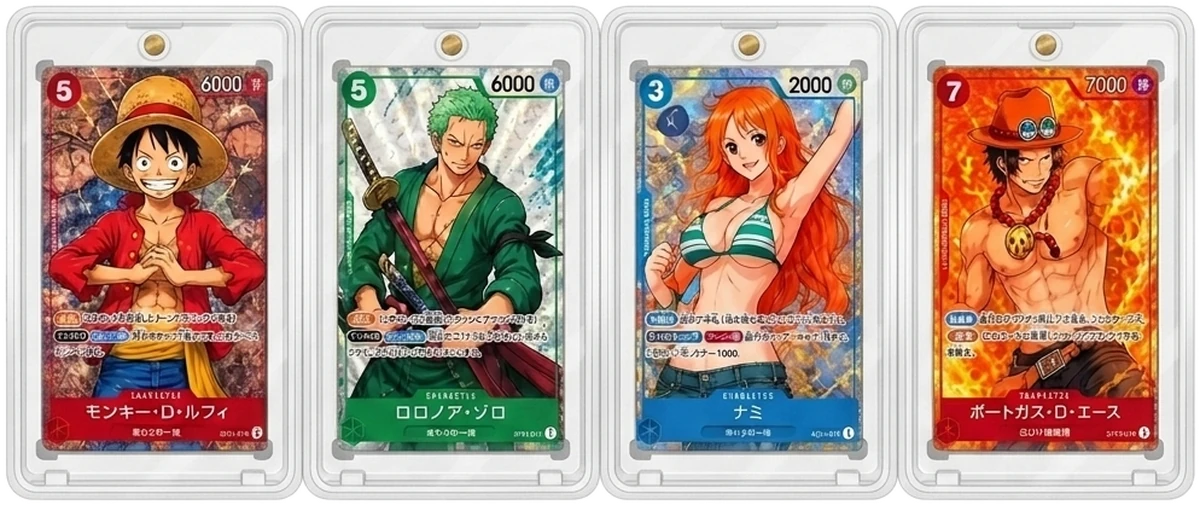
For a card of this value, a holder that both protects and showcases it is ideal. Our aluminium magnetic one-touch frame with double glass comes in black or white at €24.80 each, and when you buy two, the third is free. The frames snap together face to back to stack, stand upright like books, and attach side by side to the wall with an adhesive magnetic strip, no drilling needed.
The colour changes the look. A white frame extends the white of the manga paper for a bright, original page effect, while a black frame emphasises the inking for a more dramatic feel. If your manga rare has already been graded, a PSA slab compatible version is available at €34.80, sold empty.
- Slide the card into a perfect fit sleeve without forcing it
- Place the sleeved card in a one-touch frame with double glass
- Close the frame and check the card sits centred
- Display away from direct sunlight and humidity
What are the risks, and what method keeps your purchase safe?
Manga rares carry every risk of an expensive card: counterfeits, overstated condition, damage in transit and volatile prices. Their value depends on the character's popularity, possible reprints and overall interest in the game. Nothing guarantees a card will gain value, so buy a card you love looking at first, not a bet.
This method avoids most disappointments. With us, shipping costs €4.20 for cards and frames, free from €100, and is paid only once per order, so bundling your manga rare and its frame in the same shipment makes sense. If you enjoy surprises more than targets, the Mystery Box offers a draw of genuine Japanese cards, but it does not replace a targeted purchase of one specific manga rare.
Finally, think about your collection as a whole. A single manga rare looks superb, but several cards of the same character or story arc lined up on a wall tell a story. Building around one centrepiece, with more affordable parallels, gives you a coherent display without blowing the budget.
- Pick a character and a set, then check the official list of its versions
- Compare several listings of the same card in the same condition
- Insist on real photos and a condition stated on a clear scale
- Buy from a seller who sources in Japan and handles shipping
- Protect the card on arrival: sleeve first, then frame
A manga rare is the most desirable version of a One Piece card: scarce by design, tied directly to the manga and spectacular once displayed. It deserves a buying method to match. Target a specific Japanese single in condition A or A-, check the photos and authenticity before paying, then protect it straight away in a double glass frame. Your next concrete step: pick the character that matters most to you, browse our Japanese singles and add the frame to the same order.
Frequently asked questions
What is a One Piece manga rare?
It is an alternate version of an existing card, drawn in manga style, in black and white with screentones and panels. It is not a separate official rarity: the printed rarity is generally that of the base card. It is often the rarest version in a set.
How many manga rares are in a display?
There is no official figure, and no display guarantees one. It is entirely possible to open several displays without finding any. To get one specific manga rare, buying the single is the only reliable method.
Should I choose a Japanese or an English manga rare?
For collecting, the Japanese version is an excellent choice: it releases first and its market is the deepest. It is often more accessible than the English equivalent. Japanese text is no problem at all for a displayed card.
How can I tell if a manga rare is fake?
Compare it with official images: sharpness of lines and screentones, Japanese text, card back, finish. Insist on real photos of front and back and be wary of a price far below other listings. When in doubt, walk away.
Read next
 Buying guides
Display OP16 or OP15: which one to catch up on at 129 €, plus 6 singles
November 25, 20267 min read
Display OP16 or OP15 at 129 €: the verdict by character, 6 named cards with their prices, and when buying singles is the smarter move.
 Buying guides
Which Japanese One Piece display to choose: OP18, OP17 or EB05 at 129 €?
November 25, 20267 min read
OP18, OP17 or EB05 at the same 129 €: a decision table, 5 reference cards with prices, and the maths on two displays with free shipping.
 Buying guides
One Piece Mystery Box: how it works, 6 steps from payment to frame
November 25, 20268 min read
Payment, age check, online reveal of your 3 cards, purchase in Japan, shipping: the Mystery Box at 29,90 € step by step, and what you don't choose.