One Piece bedroom decor: display real Japanese cards the right way
One Piece bedroom decor done right: which cards to pick, where to hang them and which frame protects Japanese cards instead of damaging them.
Published on November 23, 20267 min read

Key points
- To decorate a One Piece bedroom with real cards, pick a common thread (a crew, a character or one of the game's colours) rather than random cards.
- A card displayed in a bedroom should be sleeved and then placed in a closed frame, away from direct sunlight, radiators and damp rooms.
- A wall at eye level, away from the window, is the safest and most visible spot for a decorative One Piece card collection.
- Adhesive magnetic tape lets you mount card frames side by side without drilling, which suits rented homes and children's bedrooms.
You want a bedroom or a desk with a One Piece theme, but posters and plastic merch feel a little ordinary. Good instinct: real One Piece Card Game cards, especially Japanese ones, have a finish, a foil and artwork that stand up to a small piece of art. The catch is choosing them well and displaying them without damage, because a bedroom is not a museum case: sunlight, heat, dust and curious hands are there every single day.
The answer comes down to three decisions. Choose cards that belong together (a crew, a colour, a story arc), place them away from direct light and heat sources, and put them in a closed frame that protects as much as it showcases. This guide walks through each decision, compares the possible spots and shows you how to build an expandable wall without drilling, with a clear budget from the start.
In this article
- 1. Why decorate with real cards instead of posters?
- 2. Which cards should you pick for a coherent look?
- 3. Where should you place cards in a bedroom or office?
- 4. What are the hidden risks of a bedroom for displayed cards?
- 5. Black or white frame: which one suits your room?
- 6. How do you hang frames on the wall without drilling?
- 7. What budget do you need for a One Piece corner with real cards?
Why decorate with real cards instead of posters?

A poster gets replaced, a card gets collected. A Japanese One Piece Card Game card is a carefully printed object, often with a foil, a texture or alternate artwork that no poster can reproduce. On display, it catches the eye up close and from across the room, and it tells a story: your favourite character, a set you followed, a pull you still remember.
The other difference is value. Ordinary decor loses its value the moment you buy it, while a well-kept card generally stays of interest to collectors. You can move it, swap it for another one or sell it one day. Decorating with cards means building a visible collection rather than piling up objects that will end up in a box.
Finally, the format works in your favour. A card is small, so you can compose freely: a single centrepiece above a desk, a row of four above a headboard, or a whole wall that grows with each new set. That flexibility is what turns a One Piece corner into living decor that changes with your taste instead of freezing in place.
Which cards should you pick for a coherent look?

The most common mistake is displaying cards at random: it quickly looks cluttered. A common thread works far better, such as the Straw Hat crew, the Emperors, a rivalry (Luffy and Blackbeard, Zoro and Mihawk) or one of the game's colours. One Piece Card Game cards are sorted by colour (red, green, blue, purple, black, yellow), and an all-red or all-purple wall has a strong graphic impact.
On rarity, there is no need to chase only the most expensive pieces. A Japanese SR or Leader (L) card already looks superb behind glass. Parallel cards, SEC and SP bring the wow factor: richer foil and artwork that fills the whole card. Mixing one or two strong pieces with more affordable cards gives the wall depth without blowing the budget.
Also think about readability from a distance. Full-art illustrations, a character facing forward or a dynamic scene read better from the bed or the desk chair than a text-heavy card. Our Japanese single cards let you choose piece by piece, instead of hoping for the right pull in a booster.
- A theme: crew, Emperors, arc, rivalry or game colour
- One strong piece in the centre: parallel, SEC, SP or Leader
- More affordable supporting cards around it
- Artwork that reads well from the bed or the desk
- A number of cards that fits the wall space
Where should you place cards in a bedroom or office?

Every spot has its strengths. The wall above the bed or desk is the most visible and creates a real focal point. A shelf lets you mix cards, manga and figures, and rotate your selection easily. The desk itself, with a frame standing next to the screen, suits a single piece you want to see every day.
The choice depends mostly on light exposure and the risk of knocks. A wall facing a window gets sunlight for hours every day, and a low shelf in a child's room is within easy reach. The table below compares the spots on practical criteria to help you decide.
Our verdict: the wall, at eye level and away from the window, for the main collection; the shelf for pieces you like to rotate; the desk for one strong card. Avoid the bedside table under a lamp that gets warm, and the windowsill, whatever frame you use.
| Spot | Visibility | Light risk | Knock risk | Our view |
|---|---|---|---|---|
| Wall above the bed or desk | Very high | Low if away from the window | Low | Ideal for the main collection |
| Shelf with manga and figures | Good | Depends on orientation | Medium | Perfect for rotating cards |
| Desk, frame standing near the screen | High for you | Low | Medium (drinks, elbows) | One strong piece only |
| Bedside table under a lamp | Medium | Medium (bulb heat) | High | Avoid |
| Windowsill | Medium | High | Medium | Never |
What are the hidden risks of a bedroom for displayed cards?

The first enemy is direct sunlight. UV rays fade inks over time and dull the foil. Even behind glass, a card that gets sun every day will eventually pale. Choose a wall perpendicular to the window or indirect light, and remember that a room with little sun in winter can get much more of it in summer.
The second is humidity combined with temperature swings. A card is made of card stock: in a damp room or next to a radiator, it can curl. Avoid the wall shared with a bathroom, the space above a radiator and the area just above a humidifier. A bedroom that is aired regularly, neither too dry nor damp, is perfectly fine.
The third is handling. Pins, sticky putty, tape or clips damage a card within days, and the marks never come off. A card meant for the wall should always be sleeved and then placed in a closed frame. This matters even more in a child's room, where cards get touched, taken down and put back all the time.
Black or white frame: which one suits your room?
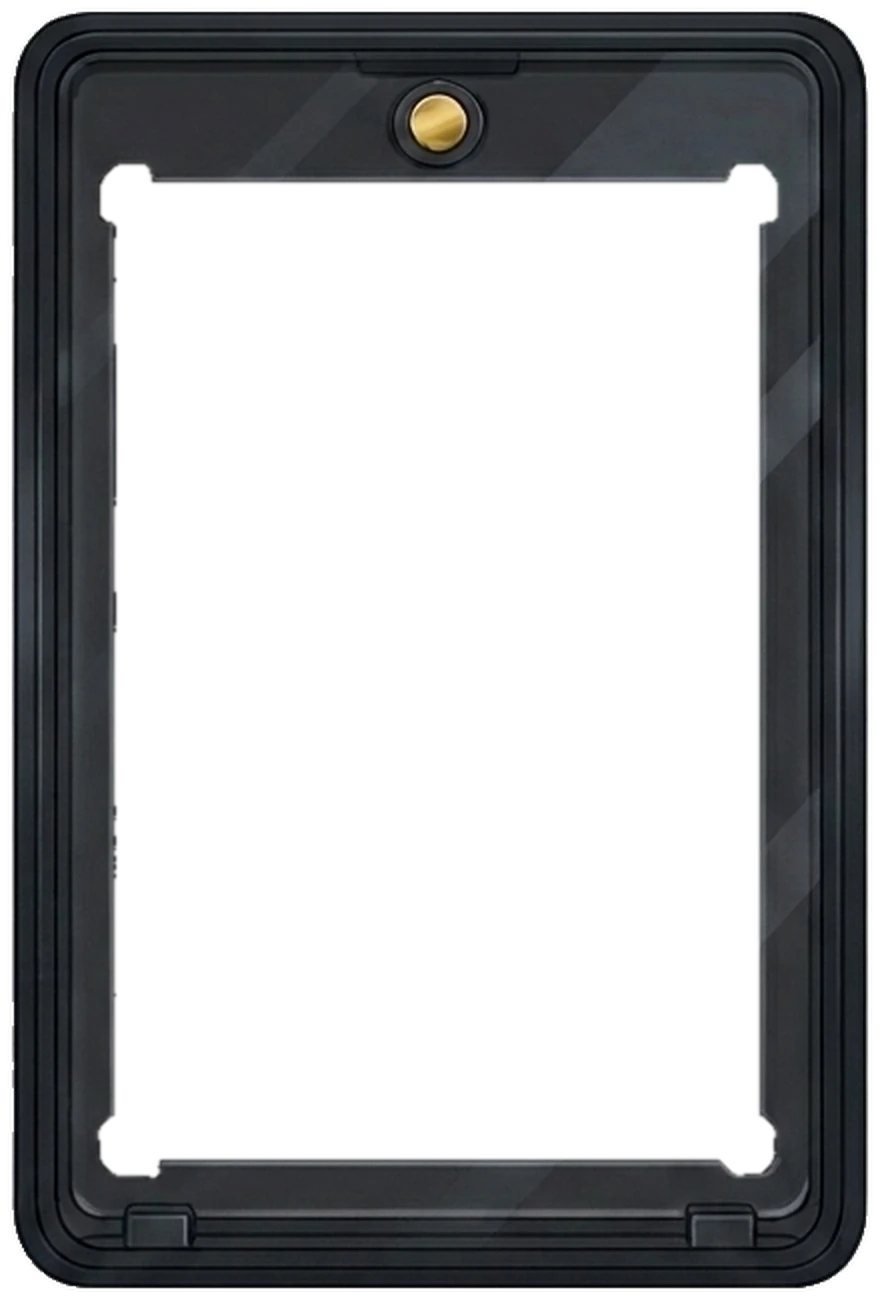
The frame colour changes the whole mood. Black surrounds the card like a dark mount: it makes vivid artwork pop and matches a gaming desk, a dark wall, raw wood or a screen setup. It is the most versatile choice and works almost anywhere.
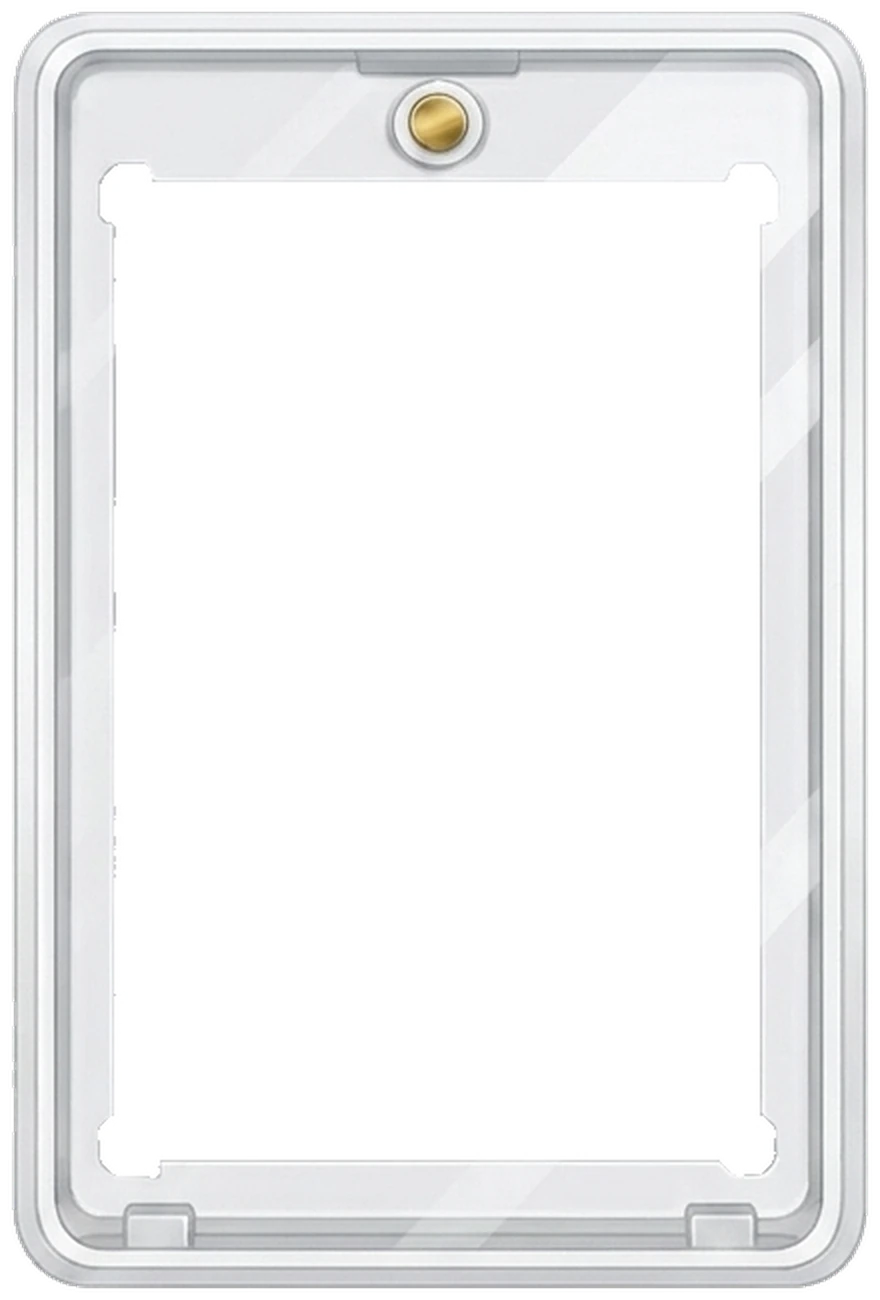
White lightens everything. On a pale wall, in a bright bedroom or a Scandinavian interior, it blends into the background and lets the card float. It suits cards with pastel tones or light backgrounds. You can also alternate black and white on the same wall to give the layout rhythm, as long as you keep a logic, for example one row per colour.
Our one-touch magnetic frame comes in both colours, in aluminium with double glass. The sleeved card is held between the two panes, safe from dust and fingers, and visible from both sides. For a graded card, the PSA slab compatible version takes the whole case.
How do you hang frames on the wall without drilling?
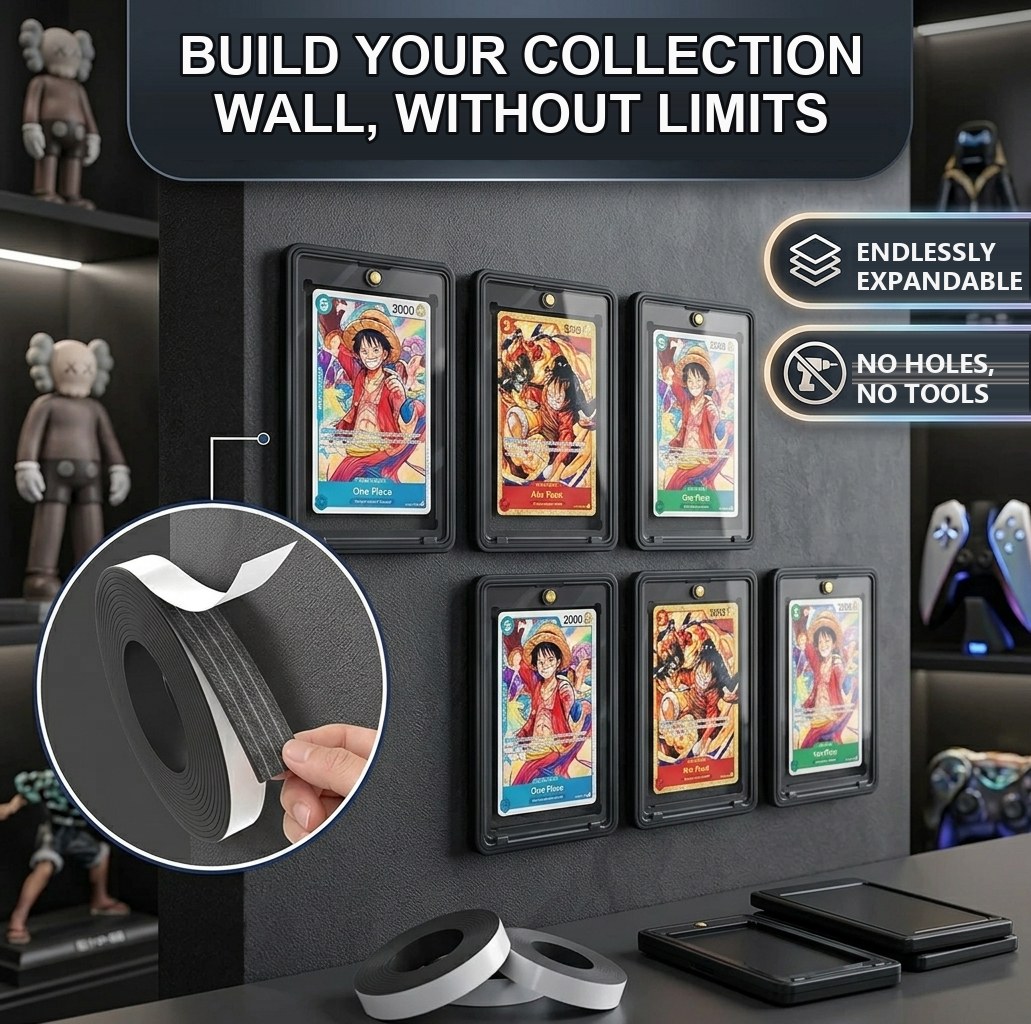
In a rented flat, a student room or a child's bedroom that will change over time, drilling is not always possible or desirable. Adhesive magnetic tape solves the problem: you stick it to the wall once, perfectly level, and the frames attach side by side thanks to their magnet. Adding, removing or rearranging a card then takes a second.
The decorative benefit is real: the wall becomes expandable. Start with three frames on a one-metre strip, then add a second row as the collection grows. And when the frames are not on the wall, they snap together face to back to stack, or stand upright on a shelf like books.
For a clean result, prepare the surface and measure before sticking. A crooked strip shows immediately once the frames are lined up, while a few minutes of preparation are enough to avoid it.
- Clean and dry the wall where the strip will go
- Draw a horizontal pencil guide at eye level
- Peel off the protective film and press the strip along its full length
- Let the adhesive set before attaching the frames
- Place the strongest piece in the centre, then supporting cards on each side
What budget do you need for a One Piece corner with real cards?
The budget splits into two parts: the cards and the display. For the cards, everything depends on your ambition. Affordable Japanese cards are enough for a successful themed wall, and one or two rarer pieces in the centre make the difference. A few well-chosen cards in good condition (A or A-) beat many marked ones.
For the display, the numbers are simple. The magnetic frame costs €24.80 each, and when you buy two the third is free, so a set of three comes to €49.60. Adhesive magnetic tape costs €5.99 for one metre, or €9.99 for three metres for a larger wall. Shipping is €4.20 for cards and frames, free from €100, and it is only paid once per order.
If you enjoy a surprise, the Mystery Box is another way in: a draw of real Japanese cards, bought in Japan and then shipped, which can supply the first pieces of a wall. Either way, move step by step: one great row is better than a rushed full wall.
A great One Piece bedroom with real cards rests on three choices: a coherent theme, a spot sheltered from direct sunlight and humidity, and a closed frame that protects the card as much as it showcases it. A wall at eye level, fitted with magnetic tape and one-touch frames, is the most flexible and safest solution. Your next concrete step: pick three Japanese cards around the same character or colour, take three frames in the colour that suits your room, and put up your first row. The rest of the wall will come with the collection.
Frequently asked questions
Can you decorate a child's bedroom with One Piece cards?
Yes, as long as every card is sleeved and placed in a closed frame, out of reach of the smallest hands. Mounting on magnetic tape avoids drilling and lets the wall evolve with the child's tastes. Keep the most valuable pieces for a higher spot.
Does sunlight damage a One Piece card in a frame?
Yes, repeated direct sunlight fades inks and dulls the foil, even behind glass. Hang your frames on a wall that does not get direct sun, or away from the window. Indirect light is more than enough to show the cards off.
How many cards do you need for a good One Piece wall?
Three or four cards in a row on one theme are enough for a coherent first result. A more ambitious wall is built row by row, keeping the same theme and frame colour logic. Coherence matters more than quantity.
How do you hang card frames without drilling in a rental?
Adhesive magnetic tape sticks to the wall and the magnetic frames attach to it side by side, with no nails or screws. It comes in 1 m for €5.99 and 3 m for €9.99. You can then add, remove or rearrange cards whenever you like.
Read next
 Collecting and display
One Piece Emperors cards: how to build a Yonko display in Japanese
November 25, 20268 min read
Four Emperors One Piece cards: which Yonko lineup to pick, which Japanese versions to target and how to frame and hang the display without drilling.
 Collecting and display
Ace, Sabo and Luffy card collection: how to build a Brothers trio
November 25, 20268 min read
Ace, Sabo and Luffy card collection in Japanese: three ways to match the trio, the buying order, layout and framing that make it one set.
 Collecting and display
Straw Hat crew collection: assembling all 10 members in Japanese cards
November 24, 20267 min read
How to build a Straw Hat crew collection in Japanese cards: the common thread to pick, the buying order and the best way to display all ten members.