
One Piece Navy card collection: admirals and key figures in Japanese
Which admirals and Navy figures to collect in Japanese cards, in what order, at which rarity, and how to display the set without damaging it.
Published on November 26, 20267 min read
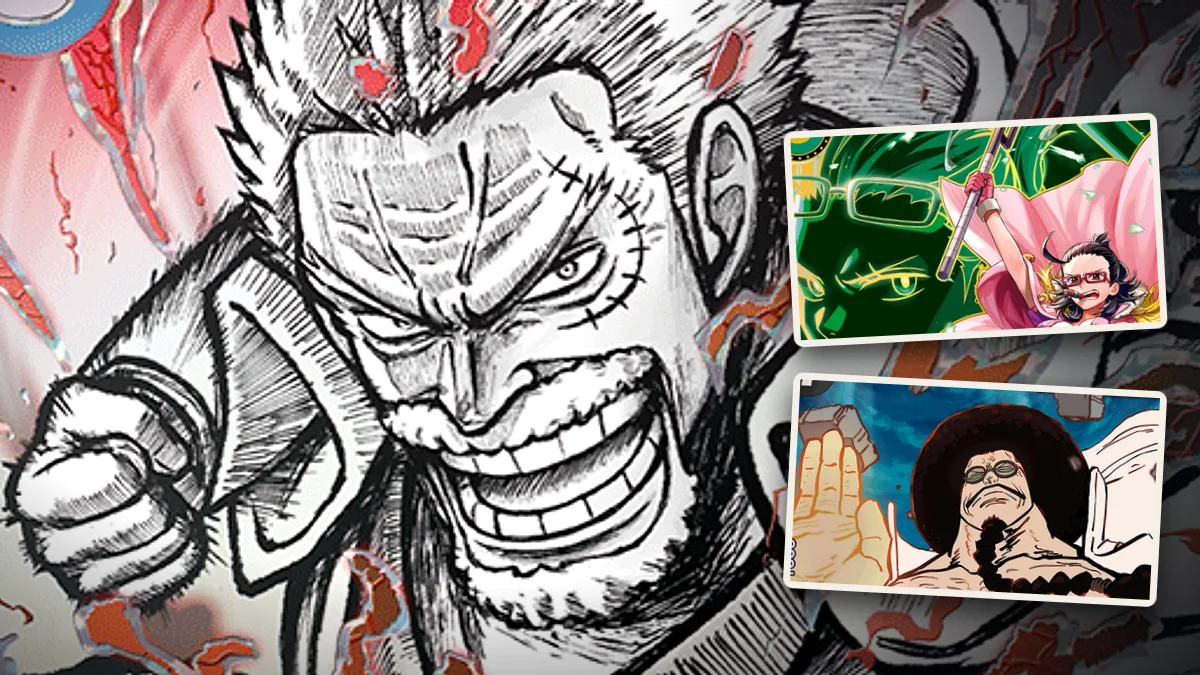
Key points
- A coherent One Piece Navy collection is built around the five admirals (Akainu, Aokiji, Kizaru, Fujitora, Ryokugyu), rounded out by Garp, Sengoku and the East Blue Marines.
- Visually, choosing a single rarity level for the whole set (SR, leader or parallel) matters more than the rarity of any individual card.
- For a theme this specific, buying Japanese singles is usually faster and cheaper than opening boosters, which never guarantee the version you want.
- On a Japanese card, Navy affiliation is shown in the type line (海軍), and any card meant for a frame should be in A or A- condition.
Do you prefer the One Piece Navy to the pirates? The admirals, Garp, Smoker and Koby all have their own cards in the One Piece Card Game, and many collectors want to bring them together without knowing where to start. Which figures belong in the set, which version to pick, and how to avoid spending at random on cards that never become a real series: those three questions come up again and again.
The answer is a method. First, define a core of figures: the admirals, then the institution's big names. Then pick a single rarity for the whole series, buy Japanese cards one at a time, and display everything in matching frames. This guide gives you the order of priority, a table of figures, condition criteria and the mistakes that cost the most.
In this article
- 1. Which characters make a coherent Navy collection?
- 2. Which figures should you start with, and in what order?
- 3. Which rarity should you aim for on each Navy card?
- 4. Why collect the Navy in Japanese cards?
- 5. How do you build the collection step by step without blowing the budget?
- 6. How do you display a Navy collection so it looks impressive?
- 7. Which mistakes should you avoid, and how do you grow the collection?
Which characters make a coherent Navy collection?
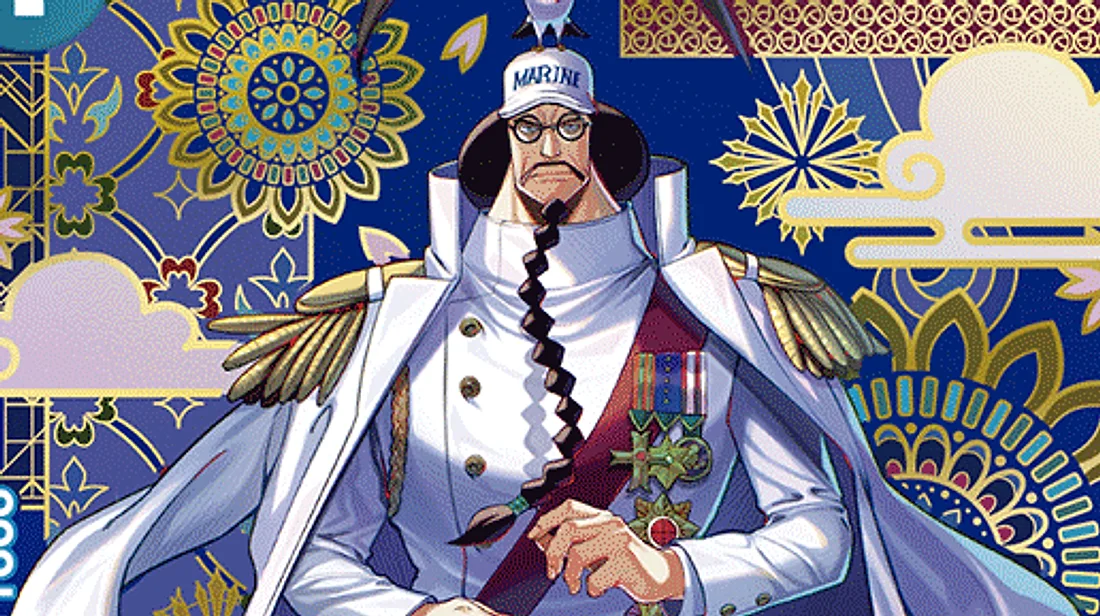
A good Navy collection does not try to own everything. It starts from a clear definition. The core is the admirals: Akainu, Aokiji and Kizaru, the historic Marineford trio, then Fujitora and Ryokugyu, who arrived after the timeskip. Around them sit the figures who give the institution its soul: Sengoku, the former Fleet Admiral, Garp, the hero of the Navy, and Vice Admiral Tsuru.
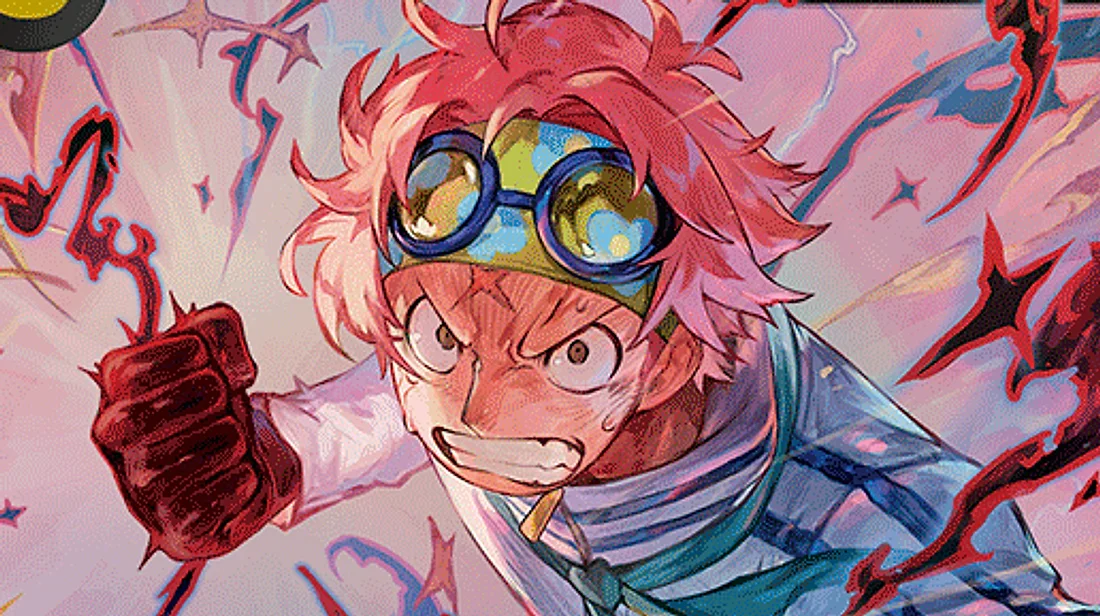
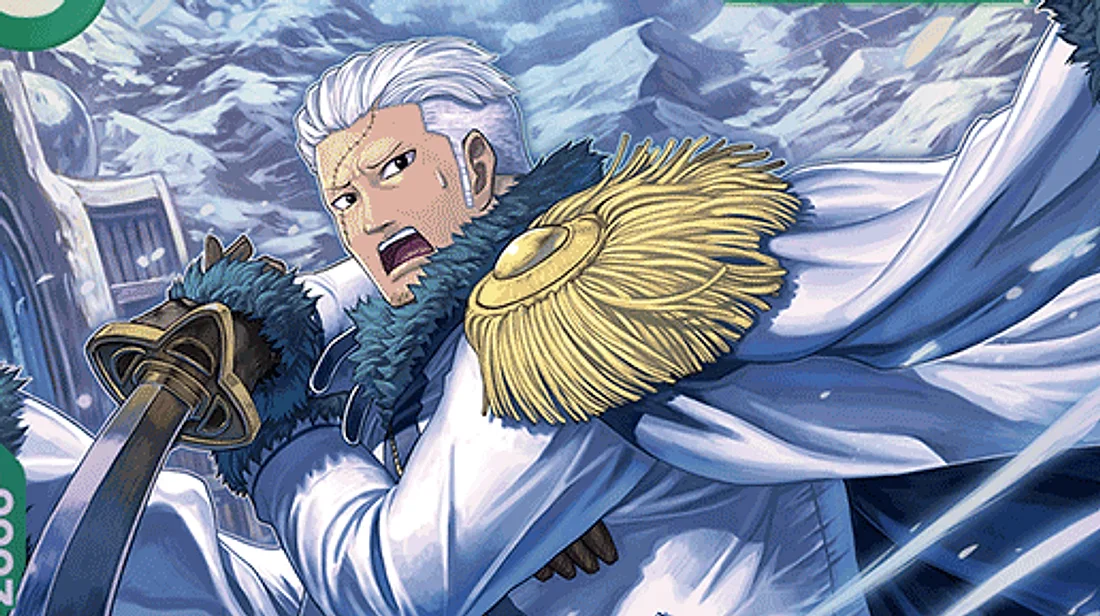
Next comes the Navy that readers have followed since East Blue: Koby, Smoker, Tashigi, Hina and Helmeppo. These characters tell the other side of the story, justice seen from the inside, and their artwork is often more varied than the admirals'. Including this circle gives your wall a narrative dimension rather than a simple display of raw power.
Our advice: settle your list before you buy. A core of five admirals, extended by three to five figures depending on your budget, already makes a readable series. You can expand later, but a written list prevents the impulse buys that dilute a collection.
- The admirals: Akainu, Aokiji, Kizaru, Fujitora, Ryokugyu
- The command: Sengoku, Garp, Tsuru
- The East Blue Marines: Koby, Smoker, Tashigi, Hina, Helmeppo
- Optional: other vice admirals you particularly like
Which figures should you start with, and in what order?
Buying order matters as much as the list. Start with the figures that anchor the series visually: the three Marineford admirals. They are recognizable at a glance and appear in many sets, and together they make a perfect triptych for a first row of frames.
Then add Garp and Sengoku, who carry enormous weight in the story and whose illustrated versions are among the favorites of Navy fans. Fujitora and Ryokugyu complete the admirals, and Koby and Smoker close the loop with the hero's story. The table below sums up this logic without setting prices, since demand shifts with new releases and reprints.
This ranking is not a hierarchy of value but a hierarchy of coherence. At each stage your collection is complete in itself, so you can stop whenever you like without being left with a lopsided set.
| Figure | Role in the story | Value for the series | Priority |
|---|---|---|---|
| Akainu | Admiral, later Fleet Admiral | Centerpiece, in high demand | Stage 1 |
| Aokiji | Marineford admiral | Essential to the trio | Stage 1 |
| Kizaru | Marineford admiral | Essential to the trio | Stage 1 |
| Garp | Vice Admiral, Navy hero | Strong fan attachment | Stage 2 |
| Sengoku | Former Fleet Admiral | Gives the chain of command | Stage 2 |
| Fujitora and Ryokugyu | Post-timeskip admirals | Complete the five admirals | Stage 3 |
| Koby and Smoker | East Blue Marines | Story depth, varied artwork | Stage 3 |
| Tashigi, Hina, Tsuru | Supporting figures | Expand to taste | Optional |
Which rarity should you aim for on each Navy card?
This is the decision that sets your budget. The One Piece Card Game prints the same character at several rarities: common (C) or uncommon (UC) for play versions, rare (R) and super rare (SR) for featured versions, secret rare (SEC) for the showpieces, leader (L) for command cards, plus parallel versions with alternative art, SP cards and promos (P).
For a consistent series, choose one level and stick to it. A wall of SRs and standard leaders stays affordable and very readable. A wall of parallels has far more impact but takes patience and a larger budget. Pairing a parallel SEC Akainu with a common Kizaru breaks the series effect: the eye immediately notices the difference in treatment.
Leaders deserve special attention. Several Navy figures exist as leaders, and their format, with life points and a large illustration, looks excellent in a frame. A series of Navy leaders is an elegant alternative to SRs, depending on which characters are available.
Why collect the Navy in Japanese cards?
Sets release in Japan first, which gives earlier access to new versions of the admirals and vice admirals. For a themed collection this is a real advantage: you do not wait for the Western release to complete a figure, and the choice of singles is generally wider.
Japanese cards are also appreciated for their finish and the visual consistency of their text. On a wall, an all-Japanese series looks more harmonious than a mix of languages. Finally, price gaps between the Japanese and European markets often favor buying singles directly, though you should check card by card.
Stay consistent: a Navy collection works best fully in Japanese. If you already own a few English cards, keep them in a binder and reserve the wall for the Japanese ones. Our Japanese singles are bought in Japan to order, with the condition stated by the original shop.
How do you build the collection step by step without blowing the budget?
The safest method is to buy singles, one figure at a time. Opening boosters to find a specific admiral is a lottery: a Japanese display holds 24 boosters of 6 cards, and nothing guarantees the version you want is inside. For such a targeted theme, buying directly is usually cheaper and faster.
Group your purchases to spread the shipping cost: card shipping is 4.20 euros and becomes free from 100 euros. Ordering two or three figures together rather than one at a time makes a real difference to the total cost of the collection.
Check condition methodically. Japanese shops grade cards A (near mint), A- (very good), B (good, visible marks) and C (fair). For a card going into a frame, aim for A or A-: display highlights every edge or surface flaw.
- Write down the list of figures and your chosen rarity
- Start with the Akainu, Aokiji, Kizaru trio
- Group orders to reach free shipping
- Insist on A or A- condition for display cards
- Sleeve each card on arrival, then frame it
How do you display a Navy collection so it looks impressive?
A Navy collection is especially well suited to a wall, because the institution's hierarchy suggests a natural layout. Put Sengoku or Akainu in the center, the admirals on either side, then the vice admirals and East Blue Marines on a lower row. The eye reads the chain of command at a glance.
Our magnetic one-touch frame, made of aluminium with double glazing, protects each card and lines up perfectly with the others. It costs 24.80 euros each, and the third is free when you buy two, which suits an admiral trio nicely. Black reinforces the Navy's solemn feel, while white echoes the coats of justice and brightens a dark wall.
To mount without drilling, the self-adhesive magnetic strip (1 m for 5.99 euros, 3 m for 9.99 euros) lets you line frames up side by side and add a figure later without redoing the wall. The frames also stack face to back and stand upright on a shelf, which makes it easy to rotate the cards on display.

Which mistakes should you avoid, and how do you grow the collection?
The first mistake is scattering. Buying every new Navy card that comes out, with no list and no fixed rarity, leads to a pile of cards rather than a collection. The second is overpaying for a card at release, when demand peaks: for a themed collection, patience is an asset.
Be wary of listings with blurry photos or no clear condition, and of prices that look too low for a sought-after card. Finally, never display a card in direct sunlight: even behind glass, colors can fade over time.
To grow the collection, work in layers. Once the core is complete, add a circle (the vice admirals, then the East Blue Marines), or move upmarket by gradually replacing SRs with parallels. Each layer stays coherent, and your wall tells the Navy's story set after set.
- Buying with no list and no defined rarity
- Overpaying for a card in its release week
- Mixing languages and rarity levels on the same wall
- Accepting B or C condition for a card you will frame
- Displaying cards in direct sunlight
The verdict is simple: a successful Navy collection rests on a core of admirals, a single rarity and Japanese singles in good condition. Start with the Akainu, Aokiji, Kizaru trio, add Garp and Sengoku, then expand at your own pace. Your next step: write your list, look for these figures among our Japanese cards, and plan the frames for your first row.
Frequently asked questions
What is the most sought-after Navy card?
There is no fixed answer, because demand shifts with releases and reprints. Generally, parallel versions and SECs of the admirals and Garp attract collectors the most. Always check recent prices before buying.
How many cards make a complete Navy collection?
It depends on your definition. A core of five admirals is already a complete series; adding the command and the East Blue Marines often brings you to around ten figures. Aiming for every version of every character is a much longer project.
Are Navy cards all in a single set?
No. Navy characters are spread across several OP sets, Extra Boosters, starter decks and promos. That is one more reason to buy singles rather than betting on a single display.
Should I choose black or white frames for the Navy?
Both work. Black gives a solemn look and makes bright colors stand out, while white matches the Navy coats and brightens a dark wall. What matters is keeping the same color across the whole series.
Read next
 Collecting and display
One Piece Supernovas cards: a coherent and affordable collection
November 26, 20267 min read
One Piece Supernovas cards: how to gather the 11 (or 12) of the Worst Generation in Japanese, which rarities to target and how to display them.
 Collecting and display
One Piece Emperors cards: how to build a Yonko display in Japanese
November 25, 20268 min read
Four Emperors One Piece cards: which Yonko lineup to pick, which Japanese versions to target and how to frame and hang the display without drilling.
 Collecting and display
Ace, Sabo and Luffy card collection: how to build a Brothers trio
November 25, 20268 min read
Ace, Sabo and Luffy card collection in Japanese: three ways to match the trio, the buying order, layout and framing that make it one set.